
Allies of social democrats
In this article, we examine which organizations and movements, from our perspective, are close to social democrats, share common interests with them, and are capable of being their allies in political struggle without harming the development of the social-democratic movement.
To create and develop a political movement, it is useful to understand who your allies are and who your opponents are. If we are talking about political organizations and movements, this is primarily necessary for creating coalitions, conducting joint actions and events, and also to ensure that we do not help movements that are capable of harming the development of our own. If we are talking about social organizations and movements, this is necessary to secure their support and, if possible, carry out mutual integration of members. That is, if you are, for example, social democrats, then when collaborating with an environmental movement, some of its members may join you, and some of your members may join them, while maintaining participation in both organizations. The point is that the goals of members of social organizations and movements can be part of a political organization’s program, and the members of political organizations may most strongly express interests that fall within the sphere of competence of a social organization.
Since there is no clear classification, let us tentatively designate that political organizations and movements are those that have a coherent political program, and social ones are those that have a series of demands concerning state policy in one specific area.
Contents
- Political organizations and movements
- Social organizations and movements
- Antifascists
- Supporters of secularism
- Progressive feminists and masculists
- Anti-corruption movements
- Non-systemic trade unions
- The “Greens”
- Pacifists
- Scientific organizations
- LGBT movement
- Migrants
- Left-wing art
- Protest movements
- Human rights organizations
- Regionalists
- Urbanists
- Allies of conservatives
- Conclusion
Political organizations and movements
Historically, political movements have been divided into right-wing and left-wing, as we examined in the corresponding article. In the same place, we described why this division follows a system of values. Consequently, social democrats should form blocs and cooperate with those organizations and movements that share as many of their values as possible. In the article on progressive values, we listed them. Let us just add that the political movements closest to social democrats are social liberals, democratic socialists, and progressive “greens” (we analyzed the types of political ideologies in detail here). In a separate piece, we already justified that a broad coalition to fight against a dictatorship must be built with democratic movements (as a rule, these are movements that share the demands of parliamentary democracy), but after the overthrow of authoritarianism, ruling coalitions should be built according to a different principle. With whom can ruling coalitions be built, and with what ideologies have social democrats united in the past?

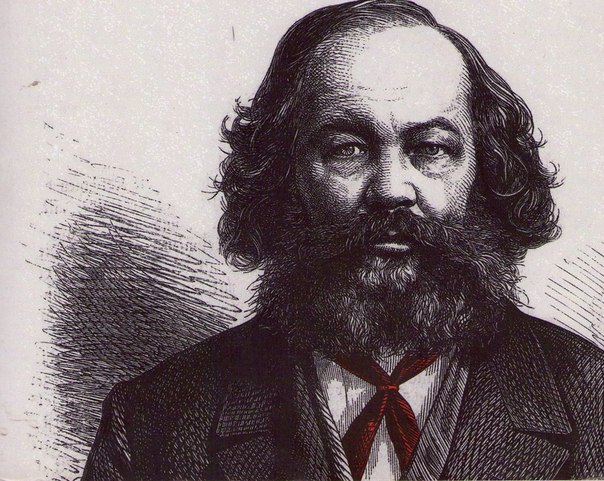
Social democrats have experience collaborating with Marxists and left-wing anarchists during the period of the I International. This organization contributed to the consolidation of the left-wing opposition in different countries of the world, provided financial and organizational assistance to the strike movement, and played a huge role in the distribution of political literature1. It included anarchists, British supporters of trade unions, French socialists, Italian republicans, and other left-wing organizations. However, having been founded in 1864, it dissolved in 1876. Anarchists were the first to leave due to disagreements between Karl Marx and Mikhail Bakunin.
There is experience of collaboration with Marxists and anarchists within the framework of the II International. This organization, founded in 1889, was involved in organizing the fight against militarism and colonialism, creating socialist parties, organizing May Day celebrations, and preparing for socialist revolutions2. In general, the activity of the II International proved productive, although anarchists left it as early as 1896, and communists left in 1919. Nevertheless, we can state that social democrats tend to have only temporary alliances with communists and anarchists.
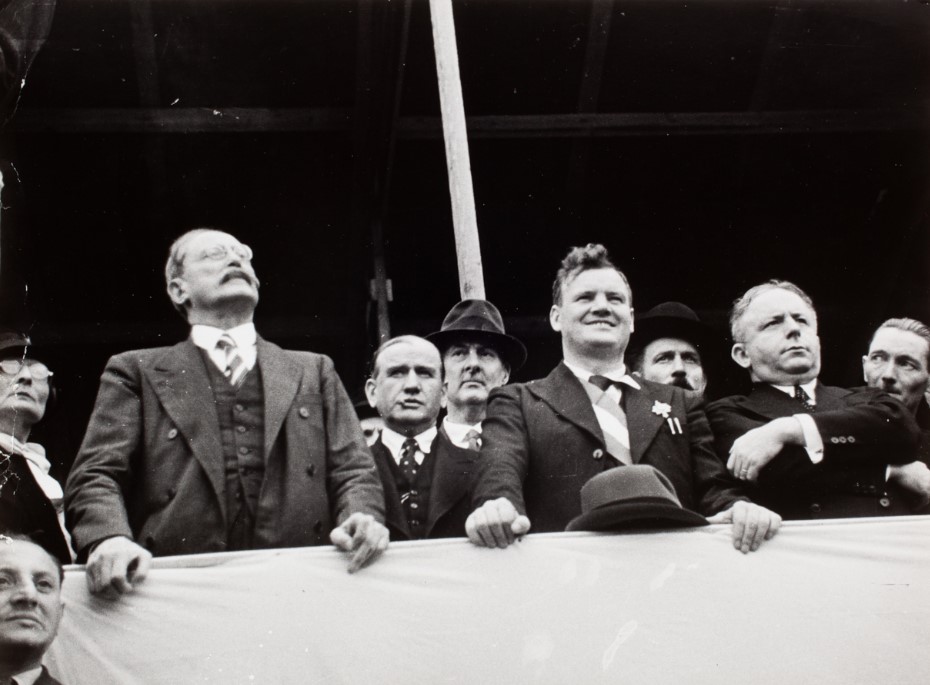
We also have experience forming coalition governments. One of the first examples is the formation of the Popular Front in 1935 in France and in 1936 in Spain. The French Popular Front included the social-democratic French Section of the Workers’ International (SFIO); it united with Stalinists and liberals, won the parliamentary elections of 1936, and formed a government under the leadership of the social-democratic leader Léon Blum3. However, in 1937, the coalition collapsed, and control over national policy passed to more conservative liberals. The Spanish Popular Front included the social-democratic Spanish Socialist Workers’ Party. In addition, it included Stalinists, social liberals, Trotskyists, and anarchists. In 1936, the Popular Front won the elections and formed a government under the leadership of social liberal Manuel Azaña. That same year, a fascist uprising led by General Francisco Franco took place, which escalated into the Civil War. During the war, one of the leaders of the social democrats, Juan Negrín, who formed a government in 1937, made an unforgivable mistake — he allowed himself to be led by the Stalinists and the USSR, launching repressions against Marxists and anarchists. This was one of the reasons for the defeat of the anti-fascist forces by the Francoists.
Between 1941 and 1946, there also existed the Democratic Alliance of Chile, which united Stalinists, liberals, and social democrats. Both times, candidates of the alliance won the presidential elections, but in 1947, the leader of the liberals, Gabriel González Videla, unleashed terror against the Stalinists, banned their party4, and broke up the Democratic Alliance. In 1969-1973, the social democrats of Chile united with Marxists in the “Popular Unity” alliance, and their candidate, Salvador Allende, won the presidential elections. After the fascist coup by Augusto Pinochet in 1973, “Popular Unity” ceased to exist. The Uruguayan Broad Front, founded in 1971 from a wide spectrum of left-wing movements — social democrats, Marxists, and anarchists — had a much happier fate. It still exists today, is frequently in power, and did not collapse even during the period of military dictatorship, when it was in the underground.
Today, one of the main examples of a coalition government is the ruling coalition that occasionally emerges between the Social Democratic Party of Germany and the bloc of Christian Democrats and Christian Socialists5. In Norway, from 2005 to 2013, the Red-Green Coalition was in power, where social democrats united with democratic socialists and social liberals. They won the elections twice, but suffered defeat in 2013. In 2011, a coalition with the amusing name Kukuriku, consisting of social democrats and social liberals, won the elections in Croatia. In the two subsequent elections, the coalition lost, but in 2020, its representative Zoran Milanović (who was also Prime Minister from 2011 to 2016) won the presidential elections, and the coalition still exists today. In Sweden, since January 2019, a coalition of social democrats and “greens” has been in power6.

In general, practice shows that social democrats coexist best in coalitions with the following movements:
- Social liberals;
- Democratic socialists;
- Christian democrats and socialists;
- As well as social movements organized into a political party (for example, “greens” or trade unions).
It is less common to build viable ruling coalitions with neoliberals. Blocs with communists, anarchists, Stalinists, and right-wing liberals harbor dangers. We remember not only the events in Spain but also the events in the USSR, when first the communists banned social-democratic parties, and then the Stalinists organized the mass extermination of the left (we also remember Joseph Stalin’s quotes stating that “It is impossible to put an end to capitalism without putting an end to social democracy in the labor movement”7 and “Social democracy is objectively the moderate wing of fascism”8). Right-wing liberals, meanwhile, aim to push social democrats out of governments due to differing economic courses and use them mainly as a “support group” during elections. Based on this, it is better to avoid ruling coalitions with such movements. However, since right-wing liberals share the principles of democracy and accept its rules of the game, opposition coalitions aimed at overthrowing authoritarian regimes are permissible with them (as with other democratic movements; however, this is discussed in more detail in the article on the broad coalition).
Since many anarchists and Marxists do not recognize the democratic rules of the game, considering demands like multi-party systems “bourgeois”, ruling coalitions with them are possible only if they participate in them as a junior partner.
Today, we can also look to the Progressive Alliance of Socialists and Democrats and to the experience of its members in coalition governments.
Political organizations in Russia that, as of September 2020, can be called allies of social democrats:
- LevSD (democratic socialists, social democrats, Trotskyists);
- SDS (democratic socialists, social democrats);
- Yabloko (social liberals, social democrats, neoliberals, classical liberals);
- Vesna (social liberals);
- RSD (democratic socialists, Trotskyists);
- Autonomous Action (anarchists);
- Left Bloc (democratic socialists, Trotskyists);
- Socialist Alternative (democratic socialists, Trotskyists);
- People’s Self-Defense (anarchists);
- Green Alternative (greens).
Social organizations and movements
Let us now talk about movements that put forward demands concerning state policy in one specific area. There are quite a few movements whose values intersect with social-democratic ones; one should cooperate and form blocs with such movements. These movements should be popularized in every possible way and provided with your assistance.
If you represent any of these movements, you can contact us for possible cooperation and coordination of protest actions in the future. Or we can mention your organization (if it has significant numbers) in an article if you wish.
Antifascists
One of the most useful allies of social democrats is Antifa. This includes anti-racists, left-wing skinheads, cosmopolitans, and those opposed to nationalism. As Alexander Vinnikov from the St. Petersburg Human Rights Council notes, one can distinguish three main types of anti-fascism: Soviet anti-fascism (the essence of which boiled down to sticking the label “fascist” on any opponent of the Soviet system), intellectual anti-fascism, and left-wing anti-fascism9. Representatives of the latter two types are allies of social democrats.
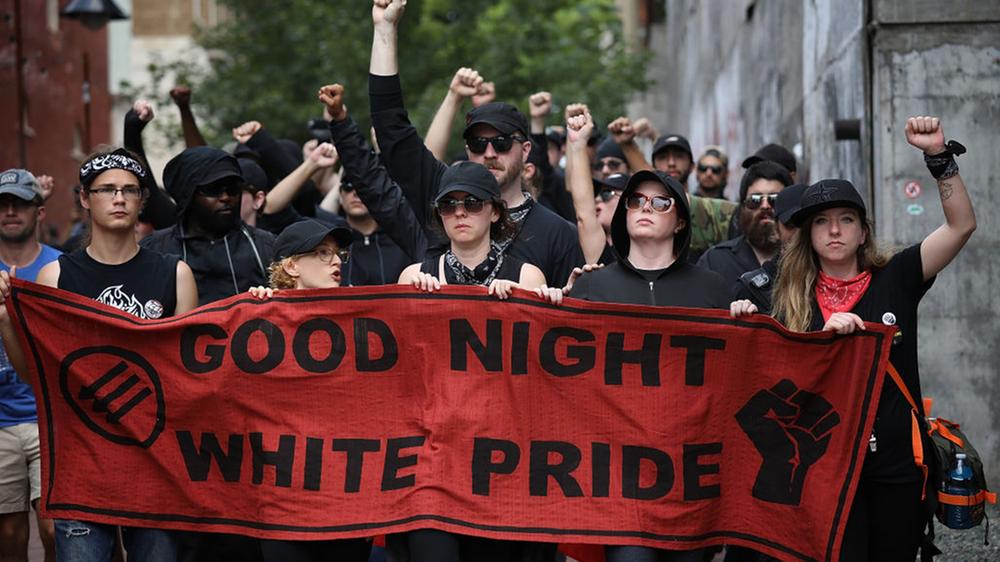
Antifascists stand in defense of one of the fundamental progressive values — the equality of people of all races and nationalities. This fully meets the requirements of the social-democratic program, and it, in turn, best meets the requirements of anti-fascists, which is reflected in the post-national policy of the social democrats.
In Russia, anti-fascists are represented by RASH and SHARP movements, consist of anarchistic and other left-wing organizations, or are punks. There is a less radical and more systemic movement, “Russia for All”. In general, the anti-fa movement is on the verge of legality due to the nature of the political bias of the Russian government, so finding an organized group for cooperation is not very easy.
Supporters of secularism
According to the Merriam-Webster dictionary, secularism is indifference to, rejection of, or exclusion of religion and religious considerations from life10. Today, this can include not only supporters of a secular state and limiting the interference of religion in public life but also anti-religious trends — atheists, Pastafarians. This movement defends the demand for a secular state, which is one of the values of social democrats. The religious policy of social democrats fully expresses the interests of these groups.
Today in the Russian Federation, among such secular organizations, one can note the Atheist Society of Moscow (ATOM), the Russian Humanist Society, and the “Zdravomyslie” (Common Sense) Foundation (a member of the International Atheist Alliance).
Progressive feminists and masculists
The definition of feminism according to the Ozhegov dictionary is a social movement for the equality of women with men11. Advocating for the overcoming of gender inequality, feminism is aimed at dismantling the patriarchal model of society’s organization and rejecting traditional notions of gender roles, which are the foundation of the conservative stance that “a man must do this, a woman must do that”. Thus, feminism strives for the development of an egalitarian society in which every person, regardless of gender, will possess equal opportunities for self-realization, which fully corresponds to social-democratic policy.

This also includes groups that do not always associate themselves with feminism, but whose goals also fall within the spectrum of its demands, for example, the movement for reproductive choice, or pro-choice12 — a movement defending a woman’s right to have an abortion, as well as the corresponding ethical-political position. The right to abortion, as a matter of protecting inalienable personal choice related to a woman’s body, her personal health, and her well-being, fits into the context of social-democratic values regarding individual freedom and the priority of a person’s health and standard of living.
Allies of social democrats are also progressive masculists — fighters for gender equality who advocate for the elimination of unjust discrimination against men based on gender, the dismantling of gender stereotypes about men and male expendability; the elimination of misandry, gayphobia, and transphobia; an equal retirement age for men and women, the protection of and increased attention to male health; the changing of legislation from sexist to gender-neutral; the abolition of universal military registration for men and the conscription army, and so on.
Feminism in our country is represented mainly by the RFO “Ona”, the “Rebra Evy” project, the Soc-Fem community, the “Vysshaya Shkola Ravnopraviya” project, and the “DAPTAR” project. The only masculist and anti-sexist project in Russia that adheres to progressive values at the moment is the Masculist Initiative.
Anti-corruption movements
Corruption hinders economic growth and is the foundation of inefficient public administration. At a high level of corruption, public funds are distributed by authorized officials in such a way that they and those close to them can illegally misappropriate part of these funds, contrary to the interests of society. Corruption makes the implementation of the principle of fair distribution of capital practically impossible. Mechanisms for controlling corruption include, for example, such democratic institutions as the rotation and transparency of power, political pluralism, an independent judicial system, and freedom of the press. Thus, opposing corruption is not only an important task for social democrats, but it is also largely carried out through the implementation of progressive values; therefore, anti-corruption movements and committees can become valuable allies for social democrats. We have already written an article on social-democratic anti-corruption policy measures, which should be close to organizations fighting corruption.

In Russia today, this is represented mainly by the organization Transparency International and the Anti-Corruption Foundation (FBK).
Non-systemic trade unions
Independent trade union movements, unlike the “traditional” trade union organizations inherited from the USSR — which most often side with the employer in labor disputes — truly defend the rights of wage earners. By advocating for decent working conditions and fair wages, exercising control over the employer’s compliance with labor legislation, having the ability to initiate and participate in collective bargaining, and representing the interests of workers, non-systemic trade unions fight for the improvement of the standard of living of citizens, which is one of the most important social-democratic values. In turn, the system of professional councils that we propose best expresses the interests of independent trade unions.
Among Russian non-systemic trade unions, one can note the “Deystvie” medical workers’ union, the MPRA, the “Uchitel” (Teacher) union, the “Community” student union, the “Kuryer” (Courier) union, the IT workers’ union, the journalists’ union, the “Uchenik” (Student) union, the Doctors’ Alliance, and the Teachers’ Alliance.
The “Greens”
“Greens” is a general name for groups, currents, non-governmental and political organizations engaged in the fight against environmental destruction and striving for greater harmony in the relationship between man and nature13. If one looks at the basic principles of green policy, we will see that the “Greens” are a left-wing political movement that shares, in addition to environmental protection, many social-democratic values: progress, social justice, democracy, civil liberties, feminism, and pacifism.

The Krugosvet encyclopedia notes that the “Greens” managed to enter the governments of a number of countries, as a rule, in coalition with social democrats and other left-wing organizations, sometimes as part of a broader coalition: France (1992–1993, 1997–2002), Finland (1995–2002), Italy (1996–2001), Germany (since 1998), Belgium (since 1999). There is no doubt that the “Greens” and environmental defenders are important political allies for social democrats.
Besides the branches of the global organizations Greenpeace and WWF, as well as the aforementioned “Green Alternative” party, it is difficult to find any non-systemic environmental organizations in Russia.
Pacifists
Pacifism, by opposing violence and military methods for resolving political conflicts, promotes anti-militarist ideas, stands against the propaganda of nationalism and xenophobia, and opposes compulsory military service. We have already analyzed why nationalism and xenophobia are harmful to society in a separate article. In the opinion of social democrats, the conscientious refusal to perform military service based on moral convictions should be the right of every citizen. In 1993, the Human Rights Committee stated in its General Comment No. 22 on Article 18 that the right to conscientious objection to military service can be considered a right to freedom of thought, conscience, and religion14. A prosperous, peaceful life and the ability for every person to independently determine their own destiny are the most important priorities for social democrats, which is why pacifists, anti-militarists, and conscientious objectors are their allies. The peaceful foreign policy of social democrats expresses the interests of pacifists.
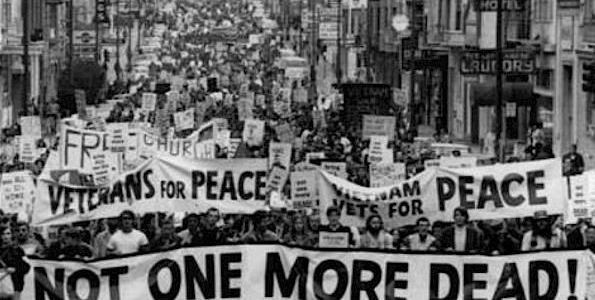
In the Russian Federation, they are represented by the Russian Anti-War Movement, the Conscientious Objectors’ Movement, and the public movement “Stop the Draft”.
Scientific organizations
One of the values of modern social democrats is scientific progress. Landmarks for the development of science include, among other things, the course toward the Fourth Industrial Revolution, space exploration, and terraforming. However, as long as society is captivated by pseudoscience and conspiracy theories, this can become a serious obstacle to an objective perception of reality and events occurring in the world. For example, in our day, the development of artificial intelligence and robotization are perceived by some people as a threat, much like the appearance of the first steam engines or automated manufacturing was perceived during previous industrial revolutions. For this reason, scientists, as well as independent research centers and organizations that are engaged in the popularization of science, examine widespread prejudices, misconceptions, and myths from a scientific perspective, fight directly against conspiracism, and will be valuable support for social democrats.
This includes, for instance, organizations such as the charitable foundation for the support and development of educational and social projects “PSP-Fund”, or science popularizers like Antropogenez.ru.
LGBT movement
The four letters in the LGBT acronym stand for lesbian, gay, bisexual, and transgender people15. In fact, one can even use the acronym LGBTQ+, expanding the list of people with non-traditional sexual identities and orientations. If social democrats want to build a just society in which every individual possesses equal opportunities, then the issue of ensuring the protection of the rights of the LGBT community must become one of the most important items on their political agenda. This is relevant for modern Russia, where homophobia is widespread not only at the civilian level but also at the legislative level. We have written previously about why conservatives in power support inequality: when enmity exists between different parts of one’s own society, people start to direct their discontent not at the government, but at each other. Thus, overcoming discrimination (homophobia and transphobia) and ensuring equal rights and opportunities for members of the LGBT community acquires not only an ethical but also a political significance. For these reasons, the LGBT movement is an ally of social democrats.
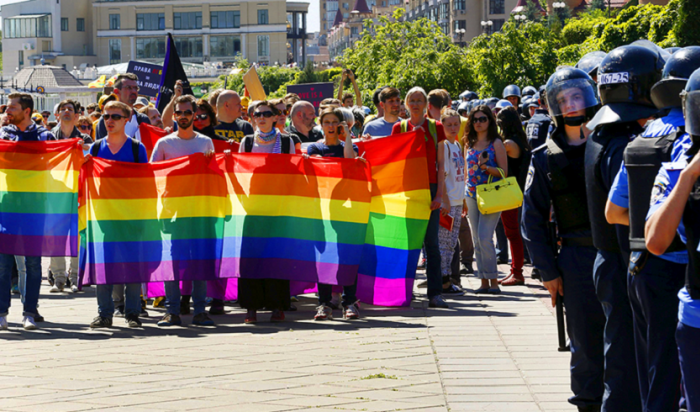
Representatives in Russia include the Russian LGBT Network, the Alliance of Heterosexuals and LGBT for Equality, the organization “Vykhod” (Coming Out), and the Russian LGBT Sport Federation.
Migrants
Migrants are usually subjected to discrimination in many countries, which is why they find the ideas of equality and the fight against xenophobia relatable. While not a political force or a social movement, migrants are united by common interests that do not depend on whether economic or political factors served as the cause for migration, or whether the migration is temporary or permanent. We are talking about interests such as receiving equal treatment and equal opportunities as the other citizens of the country to which they have migrated. Factors such as language barriers and cultural differences serve as obstacles to the full adaptation of migrants. This often becomes a cause for their discrimination and the violation of their rights, provoking the emergence of conflicts. By defending the rights of migrants and providing support for their integration into society (through the implementation of a post-national policy), social democrats defend progressive values (equality of rights and opportunities for all people regardless of ethnicity, nationality, or race), and also prevent the emergence of the consequences to which other types of national policy lead. Therefore, migrant communities (provided they are not conservative) are potential allies of social democrats.
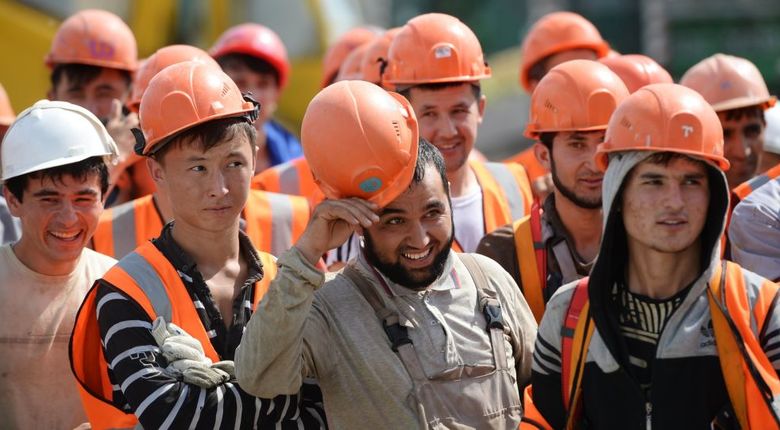
Migrant affairs are handled, for example, by the “Civic Assistance” Committee, the charitable foundation “PSP-Fund”, and the NGO “Children of St. Petersburg”.
Left-wing art
If right-wing art operates with images of the past and considers the preservation of old cultural monuments to be the task of art history, then the left-wing art scene strives to create new institutions that would correspond to an updated social system. Thus, left-wing art is capable of consciously addressing society, raising its everyday and social problems. It is indisputable that support for left-wing art is important for any political movement striving to achieve a social consensus that facilitates the resolution of these problems, which represents one of the primary tasks of modern social democracy. Left-wing artists, musicians, and other creators are usually potential allies of social democrats.
Such art is represented in Russia, for example, by art groups: the “Voina” (War) group, Pussy Riot, the “Chto Delat?” (What to do?) platform, and so on.
Protest movements
Protest movements, being an element of the system of checks and balances in any given political regime, are important as a restraining factor against a government whose actions contribute to the suppression of the interests of certain social classes and/or social groups in order to provide advantages to other classes and/or groups. The presence of such restraining factors as independent trade unions, a strong opposition, free media, and regularly rotated government bodies, among which protest movements stand, are critically important as elements of the institutional foundation upon which it is possible to build a fair state and an efficient economy, contributing to the universal growth of citizens’ welfare. And these are precisely the goals that modern social democrats set for themselves. Therefore, it is necessary for them to build ties with progressive and democratic protest movements.
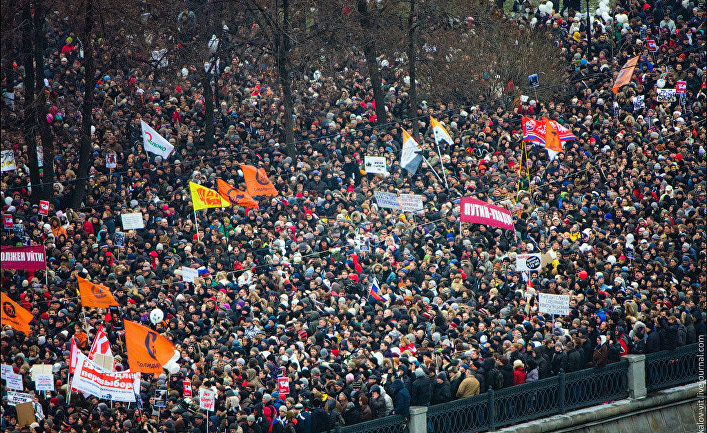
These are mainly groups on social networks and sites like “Putin Must Go”.
Human rights organizations
In addition to the fact that human rights organizations directly provide support to citizens who have suffered from various unlawful actions, they also carry out independent monitoring of human rights compliance, conduct research and educational work, and draw attention to existing problems in the public administration system, contributing to the formation of civil society. As a tool of public control, human rights organizations are one of the mechanisms for preventing human rights violations and ensuring the equality of all citizens before the law. For these reasons, human rights defenders are important allies of social democrats, with whom it is necessary to cooperate. In turn, social democrats are beneficial to human rights defenders for the reason that they advocate for the implementation of the rule of law and other principles of democracy.
Probably the most famous human rights organizations in Russia are the “Memorial” Human Rights Center and the media project “OVD-Info”. There are also the “For Human Rights” public movement, the “Committee Against Torture”, the “Glasnost Defense Foundation”, the “Nasiliyu.net” center, the “Sisters” center, and the “Anna” center.
Regionalists
Since social democrats advocate for the redistribution of the main part of state powers to lower levels — for example, to the regional or municipal level — they unite with regionalists in this. The common goal of these movements is to ensure that regions make as many decisions as possible without control from the center. This is usually reflected in social-democratic programs. In current Russia, the regionalist movement is practically strangled.
Urbanists
Urbanism implies the planning of a comfortable urban environment for living. Social democrats fully share this requirement and have their own requirements for creating a city of the future. Therefore, the union between social democrats and urbanists is a promising direction. Urbanist organizations in Russia include the “Urban Projects” foundation.
Allies of conservatives
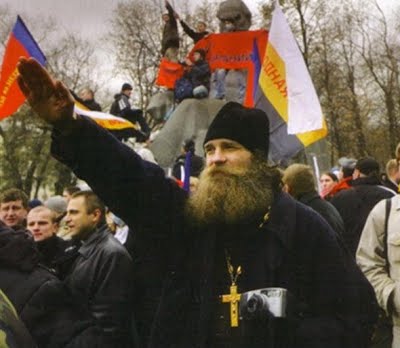
Some movements are traditionally the mainstay of conservatives, and it will be problematic for social democrats to seek support from them; moreover, it will not be very productive. This includes the following movements:
- Religious organizations;
- Patriotic organizations;
- Non-democratic nationalists, fascists;
- Racists, Nazis;
- Traditionalists (right-wing “men’s movement”, homophobic movement);
- Systemic trade unions;
- Militarists (including military-historical organizations);
- Conspiracists;
- Pro-lifers.
Most likely, progressive values will elicit a negative response from these movements, as they are under the strong influence of the conservative value system or are linked to the government by material “ties”. Rather, these are the movements with which social democrats need to conduct an ideological struggle.
Conclusion
There is a significant number of movements with which social democrats can and should cooperate. This cooperation expands the sphere of influence of progressive values and concepts, working to strengthen the movement, and also helps to unite efforts to achieve common goals. Social democrats need to at least be in touch with the organizers of these movements to coordinate joint actions. Unlike communists, who strive to subordinate these movements to themselves or create their own similar, yet communist, versions, social democrats must take into account the interests of independent organizations, building an equal dialogue with them and not trying to give them a pronounced ideological coloring. Social democrats must understand that in most cases, opposition social movements are more knowledgeable in their subject matter than social democrats. They should also strengthen these movements in every possible way and facilitate their growth.
- S. Morozova. Financiers who changed the world. – 284 p. – Moscow: Mann, Ivanov and Ferber, 2014. – p. 61.
- International, Second // Great Russian Encyclopedia. Vol. 11. Moscow, 2008, p. 444. [Electronic resource]. URL: https://bigenc.ru/world_history/text/2014553 (accessed: 23.09.2020).
- M.Ts. Arzakanyan. Popular Front // Great Russian Encyclopedia. Vol. 22. Moscow, 2013, pp. 78-80. [Electronic resource]. URL: https://bigenc.ru/world_history/text/2249989 (accessed: 23.09.2020).
- S.I. Voroshilov, V.G. Revunenkov, V.K. Furaev. Modern History. Small Countries of Western Europe. Countries of Latin America. Canada. Study guide for pedagogical institutes – 227 p. – Moscow: State Educational and Pedagogical Publishing House of the Ministry of Education of the RSFSR, 1960. – pp. 141-145.
- L.N. Brovko. Social Democratic Party of Germany // Great Russian Encyclopedia, 2020. [Electronic resource]. URL: https://bigenc.ru/world_history/text/3638858 (accessed: 23.09.2020).
- Elena Gunckel. Social democrats win elections in Denmark // Deutsche Welle (www.dw.com). June 6, 2019. [Electronic resource]. URL: https://www.dw.com/ru/социал-демократы-побеждают-на-выборах-в-дании/a-49078364 (accessed: 23.09.2020).
- I.V. Stalin. Works. Vol. 10. August-December 1927. – 399 p. – M.: State Publishing House of Political Literature, 1949. – p. 250.
- I.V. Stalin. Works. Vol. 6. 1924. – 430 p. – M.: OGIZ; State Publishing House of Political Literature, 1947. – p. 282.
- A. Vinnikov. Evolution of the anti-fascist movement in Russia: from Soviet anti-fascism to intellectual and humanitarian anti-fascism // Anthropological Forum on-line, No. 14, 2011. – pp. 311-312.
- Secularism // Dictionary by Merriam-Webster: America’s most-trusted online dictionary (www.merriam-webster.com). [Electronic resource]. URL: https://www.merriam-webster.com/dictionary/secularism (accessed: 23.09.2020).
- S.I. Ozhegov, N.Yu. Shvedova. Explanatory Dictionary of the Russian Language: 80,000 words and phraseological expressions / Russian Academy of Sciences. Vinogradov Russian Language Institute. – 4th ed., supplemented. – 944 p. – M.: OOO “A TEMP”, 2006. – p. 850.
- Evgenia Zamoshnikova. From abuse to ageism: decoding the words that have flooded the web // Women’s magazine Woman Day (www.wday.ru). August 11, 2020. [Electronic resource]. URL: https://www.wday.ru/stil-zhizny/kop/ot-abyuza-do-eidzhizma-rasshifrovyvaem-slova-zapolonivshie-set/ (accessed: 23.09.2020).
- Vadim Damier. Green movement (greens) // Krugosvet Encyclopedia (www.krugosvet.ru). [Electronic resource]. URL: https://www.krugosvet.ru/enc/istoriya/ZELENOE_DVIZHENIE_ZELENIE.html (accessed: 23.09.2020).
- Rachel Brett. International Standards on Conscientious Objection to Military Service // Quaker United Nations Office (quno.org). [Electronic resource]. URL: https://quno.org/sites/default/files/resources/International%20Standards%20on%20Conscientious%20Objection%20to%20Military%20Service.pdf (accessed: 23.09.2020).
- Larisa Stebeneva. What is LGBTQIAPP+: decoding the acronym and main questions // Playboy Russia (playboyrussia.com). January 16, 2020. [Electronic resource]. URL: https://playboyrussia.com/emzhe/chto-takoe-lgbtkiapp-rasshifrovka-abbreviatury-i-glavnye-voprosy-119081/ (accessed: 23.09.2020).