Democratization of Russia
Let us imagine two situations that seem fantastical today, yet most often occur suddenly when people are not properly prepared for them. First, a democratic coalition has come to power in Russia (no matter how — for example, by leading an unexpectedly formed spontaneous mass protest). Second, the highest state offices have passed to people who have realized the advantages of democratic development and decided to rebuild the political system in accordance with it. What will their actions be? With this article, we will try to outline the main sequence of actions for them.
In the article about what democracy is, we have already briefly outlined the main features of this political system. Imagine that suddenly in a country like Russia, democratic forces win, or the regime itself realizes the futility of authoritarianism and decides to carry out democratization. Sounds nice, but what needs to be done for this? It would be incorrect and useless to simply state “now we have democracy” and allow the creation of several new government-controlled parties (as the nomenklatura often does to create the illusion of democratization). This requires a whole series of actions. And as for which ones specifically — that is what we will examine below.
Reform of temporary power
This section will describe a set of measures that the temporary power must adopt to stabilize the situation in the country and ensure the possibility of organizing elections to the Constituent Assembly. Many of these reforms can be continued by both the Constituent Assembly and Parliament.
Provisional government
While preparations for the parliamentary elections are being carried out, a government must be created that will implement them, draft a new Basic Law of the Russian Republic (Constitution), and perform other governmental functions in addition to this. The term of operation of this body should be limited to 3 months (until the completion of elections to the Constituent Assembly). We have two scenarios for how events may unfold.
The first option is possible in the event of an agreement with the existing regime or if the initiative for democratization comes from it. In this case, a joint government is created, in which the post of president, a portion of ministerial portfolios, and seats in parliament (to be discussed in detail during negotiations) are transferred to candidates from a broad coalition of the opposition, although today this option seems unlikely.
Now let us consider the second option, which is possible if the regime refuses to carry out democratization and falls. In this case, the broad coalition (if it is the one to which power is transferred) takes the following steps.
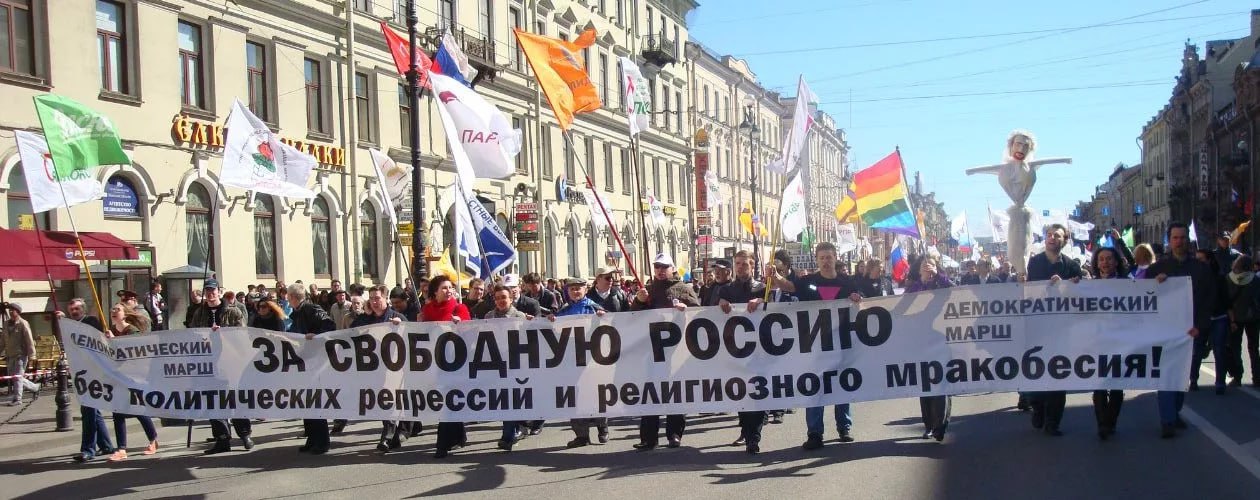
Step 1. Declaration of the transfer of power in the capital and locally into the hands of the Provisional Government, until the convocation of the Constituent Assembly (which will be convened in approximately 3-4 months). All officials and representatives of state structures who have not submitted to this decision and have not recognized the authority of the Provisional Government are declared outlawed and put on the federal wanted list. Commissions are dispatched to the regions (if necessary — accompanied by army forces) with appropriate powers.
The basis of the new authority can be the so-called “Small Constitution”, that is, the prototype of the official Basic Law (Constitution), in effect until its adoption1.
Step 2. Formation of temporary authorities. The All-Russian Public Council is created — a temporary full-fledged parliament (legislative branch), conditionally consisting of the following groups:
- Parties and political movements of the broad coalition;
- Other democratic parties and political movements (parties and political movements not represented in the broad coalition, but having the goal of building a democratic society);
- Independent trade unions;
- Resistance and the “Brotherhood of Dissenters” (you can learn more about them in the article dedicated to how to fight authoritarian regimes);
- Public movements (human rights, charity, ecology, anti-fascism, and so forth);
- Independent youth organizations;
- Independent national organizations of small peoples;
- Emigrant democratically minded organizations of Russian citizens abroad.
Naturally, broader representation will belong to those organizations that participated in the overthrow of the authoritarian regime. This temporary parliament will elect all state bodies of power, such as the Government of Russia, the Supreme Courts, and so on.
In parallel with this, the Provisional Government of Russia (executive branch) is created, headed by the Prime Minister, while being accountable to the All-Russian Public Council, which can dismiss the Government.
Under approximately the same system, authorities should be organized both in the regions and at the level of local self-government.
Step 3. The above-mentioned bodies implement the following measures:
- A commission is appointed to draft and adopt the Basic Law, as well as documents related to the Constituent Assembly (election law, rules of procedure) and various documents for the future Basic Law (Federal and constitutional laws, Codes, and so forth);
- Temporary editors-in-chief of major TV channels and media outlets are appointed for a period of one year from different parties of the Constituent Assembly. Ensuring the independence of part of major state media from the state. The creation of democratic Think Tanks begins, along with every effort to popularize their materials;
- Buildings are prepared for new governments and administrations. It will likely be necessary to move the capital.
Step 4. In the event of the second option of democratization, lustration will be carried out immediately; in the case of the first option, it will be postponed until the convocation of the Constituent Assembly. As written in the article on lustration, it is necessary in order to destroy the methods and mechanisms of backroom administrative decision-making, interpersonal and group interactions in the process of preparing and adopting such decisions, as well as established corrupt links and mechanisms in the highest echelons of power that are organically inherent to the nomenklatura. A complete replacement of the country’s top leadership will make it possible to break such established corrupt connections. At the same time, we include here the abolition of the system of state privileges, as well as depriving the nomenklatura of influence over the mass media. In addition to the nomenklatura (that is, irremovable officials in executive state positions), lustration should also be applied to those who acted as allies of the nomenklatura:
- Leadership of the security services;
- People who collaborated with the security services;
- Top officials and leaders of the “United Russia” party, as well as various pro-government parties (KPRF, LDPR, “A Just Russia”, and so forth) and movements (“All-Russia People’s Front”, “Young Guard”, and so forth);
- Propagandists (these are journalists who support the current regime, contribute to inciting hatred, and threaten people and groups of other views, countries, and so forth);
- Organizers and leaders of informal military groups, such as “Rusich” and PMC “Wagner”;
- Radical parties, as well as ideologically close movements and organizations (“The Other Russia”, “Eurasian Youth Union”, “Izborsk Club”, and so forth).
It is necessary to establish a four-party commission (representatives of the broad coalition, scholars, jurors, international organizations — for example, the International Criminal Court) to investigate the activities of nomenklatura members and their allies. Those whose activities were useful and who were not involved in corruption should be returned to state structures. Subsequently, preparation and conduct of a public trial of the authoritarian regime and its crimes must be carried out.
Step 5. Already in the initial period of the Provisional Government’s operation, a number of things must be done to ensure democratization, namely repealing repressive laws and releasing political prisoners.
Reorganization of the CEC
In our country, the Central Election Commission of the Russian Federation (Central Election Commission or CEC) is a federal state body that organizes the preparation and conduct of elections and referendums in the Russian Federation2. It operates on a permanent basis for 5 years and is a legal entity, consisting of 15 members (5 each from the State Duma, the Federation Council, and the President), aged 30 and over, who must have a higher legal education.
The problem with our CEC (as well as other election commissions) is that it is essentially an assistant to the repressive government — for example, in 2020, the scientific expert council was disbanded, which many believe is related to conflicts over issues like the all-Russian vote on amendments3, and recently the video surveillance procedure for elections was changed, due to which ordinary citizens cannot observe, for instance, what the “Yabloko” party filed a complaint about to the Supreme Court, after which the head of the CEC responded by calling their act “sneaky” and stating that “When there is the most noise from it, and observers are next to none”4. The most frequent reasons for criticism of the CEC are the non-admission of parties and candidates, as well as falsifications5 with absurd turnouts in a number of regions.
The solution to these problems can be changing the method of forming the CEC, and here it is worth considering an option from the “Yabloko” party, which proposes forming the CEC only by political parties on a parity basis: each party that scored over 1% in the last elections appoints one representative to this body6. Election commissions at lower levels down to the district election commission should be formed in a similar way to the CEC so that government authorities cannot exert excessive pressure. During the operation of the temporary power, election commissions should be formed by temporary representative authorities on a parity basis between groups of representatives.
Democratization of the party system and organizations
By the time power is transferred to the Constituent Assembly, it should already have a set of democratic parties sufficient to ensure real political competition. However, if these parties are not created, their creation should be stimulated, while ensuring their independence. It is best that they be created voluntarily, for example through existing coalition parties like “Yabloko”, which, despite its liberal position, largely consists of representatives of different democratic ideologies, such as social democrats, greens, and christian democrats. The minimum necessary set of parties:
- Social democratic;
- Liberal;
- Green;
- Christian democratic;
- Democratic socialist.

It is also possible to create the following parties: social-liberal, national-democratic, radical centrist, as well as parties specializing in a single progressive issue — for example, the development of industry and innovation, women’s rights, the development of space technology, Westernization, and so forth.
A ban on authoritarian, pro-government, and autocratically aligned parties (United Russia, KPRF, LDPR, A Just Russia — For Truth, and so forth) is required, along with the exclusion of their leaders from political life, the confiscation and transfer of the assets of these parties to the parties of the Constituent Assembly, and the securing of financial independence for parties. It is also necessary to provide support for and/or the creation of strong independent organizations capable of guaranteeing the existence of a democratic system, such as trade unions, human rights organizations, environmentalists, anti-fascists, and so forth.
Elections to the Constituent Assembly and drafting a democratic Constitution
The convocation of the All-Russian Constituent Assembly must be organized after three, at most four months from the start of the Provisional Authority’s work in Russia. It is difficult to say what the number of its deputies will be — this will be determined by the temporary authority — but we propose adopting the model presented in the report of the socio-political organization “Zemsky Congress”7, which implies 600 deputies as the optimal number of deputies for a country like Russia, and they will be elected under closed party-list proportional representation without an electoral threshold (an exception can be made for regions with minimal population, where elections can be conducted under a first-past-the-post majoritarian system). Parallel elections should also be held for both regional parliaments and local self-government bodies.
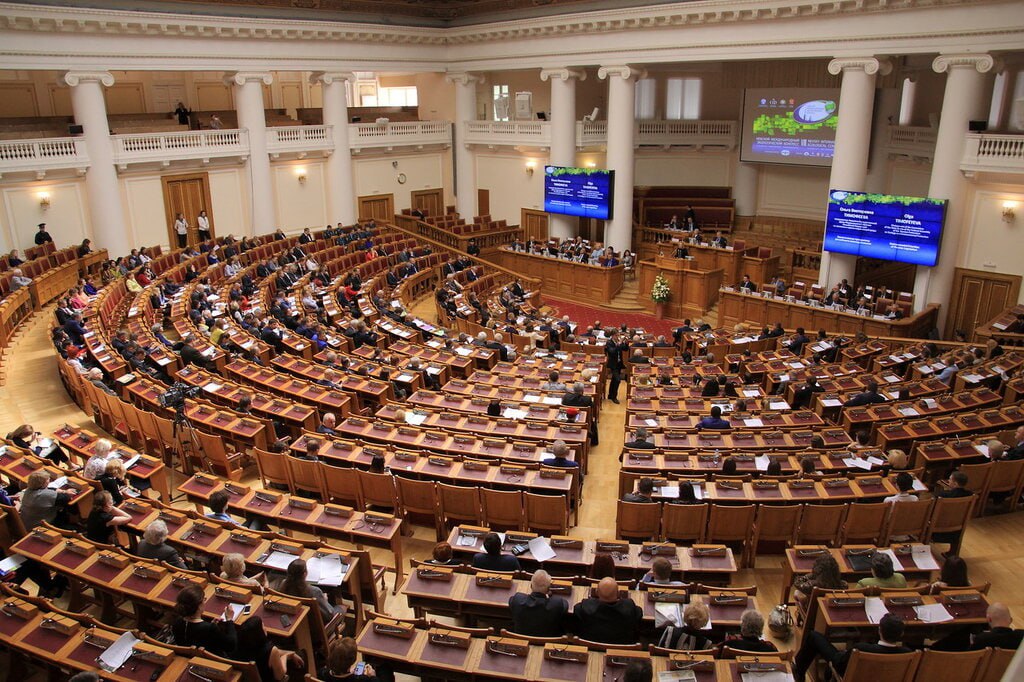
The Assembly will function for 2 years, with 1 year allocated for drafting the Constitution and passing the laws necessary for the Constitution to operate.
A constitution is one of the main normative legal acts of a country, which defines its entire statehood, ranging from basic rights and foundations to designating the bodies of power and their authority. The current version of the Constitution of the Russian Federation suffers from a number of problems, which can be seen in the article where it is described that the institution of the President holds vast powers, while the regions, despite being declared equal, in practice have disparities. We wrote about this in the article on the political structure of Russia. In the article about political systems, we explained that a higher level of democracy specifically requires a parliamentary republic rather than a presidential one. The history of our country has already shown that a presidential republic easily transforms into authoritarianism; moreover, the most developed countries in the world are parliamentary democracies. Therefore, drafting a democratic Constitution that transforms Russia into a parliamentary federal republic is one of the most important tasks of the Constituent Assembly.
As soon as the Constitution is adopted by the Constituent Assembly, it comes into force. The Constituent Assembly and other governing bodies, until the end of their 2-year term of operation, assume the roles of the governing bodies that will replace them, and the Provisional Charter of Russia loses its force. The All-Russian Constituent Assembly finishes its work on the very day the new Parliament begins its work.
One could, of course, recall that the current Constitution provides for a Constitutional Assembly (Article 135 of the Constitution of the Russian Federation8), which also drafts Constitutions, but the current option has flaws, expressed in the absence of a federal constitutional law (the only one not adopted as of April 3, 20229), and its adoption process is quite difficult, it is convened only by the Russian parliament, and it has limited powers. Updating the Constitution makes no sense, as it would be legally complicated as well as lengthy, so it would be more expedient to hold elections to a Constituent Assembly.
Reform of the All-Russian Constituent Assembly
Below, the reforms will be described that should take place during the operation of the Constituent Assembly. It is worth noting that many of these reforms may be long-term in nature, which is why part of them will have to be continued by the Parliament.
Federalism and local self-government
Most often, federations — that is, states where relatively autonomous state entities exist as constituent parts10 — are large states where different territories have different ways of life and political, economic, geographical, historical, and cultural characteristics (FRG, USA, Canada, and so forth). Under the current Constitution, Russia is a federation, but in practice, there are problems.
Economic problems. Currently, the economic indicators of various constituent entities of the Russian Federation differ by several times, and in some cases by tens of times, not only in absolute terms but also in relative per capita terms. Thus, according to the Ministry of Finance of the Russian Federation, the level of estimated fiscal capacity of the constituent entities of the Russian Federation in 2019, even after the distribution of subsidies to equalize the fiscal capacity of the constituent entities of the Russian Federation, varies almost 4.5-fold11. This is also confirmed by global experts — for instance, according to the World Bank (2018 report “Toward a New Social Contract”), Russia has the highest level of regional inequality among large emerging economies such as Brazil, China, and India12.
Out of more than 80 constituent entities of the federation, there are currently only 23 regions that do not need subsidies to equalize fiscal capacity (the rest require subsidies)13. Thus, it is obvious that Russia is currently a country with significant economic differentiation among its constituent entities.
Administrative problems. In Russian regions, a problem is the so-called “carpetbaggers” (officials who never lived or worked in the region before their appointment, but ultimately became heads of regions — out of 88 new appointments by the President from 2004 to 2020, 24 times (in 27% of cases), the heads of constituent entities of the RF were these very “carpetbaggers”14), insufficiently competent regional heads (most often from the “United Russia” party), the emphasis on Moscow, and the presence of the municipal filter. A head of a region can be dismissed for “loss of trust”, but this concept suffers from the problem of subjectivity15. One can also recall federal districts, whose heads are de facto representatives of the President, but they allow federal bodies to exert excessive influence on the regions, which is not very beneficial for the development of federalism and democracy.
All the problems described above, namely political and financial ones, also affect local self-government, and in order to ensure federalism, a number of reforms must be carried out, for example:
- Revision of the territorial division of regions towards consolidation, taking into account cultural, political, geographical, economic, and other factors (here, the active participation of citizens and public organizations is important);
- Convocation of Regional Constituent Assemblies, which must draft Regional Constitutions (Charters);
- Change the tax system in favor of regions and local self-government;
- Abolish Federal districts;
- Review the system of powers between the Federation and the Regions, providing the latter with greater autonomy (as an example, one can take the experience of Germany, where the system of powers is flexible);
- Abolition of the municipal filter;
- Prohibition of higher-level authority bodies from interfering in the formation and activities of lower-level authority bodies, except in certain cases (natural disasters).
Ethnic republics
Special attention should be paid to such administrative units as ethnic republics, which we mentioned in the article dedicated to the political system of Russia. These regional units differ from others in that they have their own Constitution (others have Charters instead), are formed primarily along ethnic lines, and can also establish their own state languages alongside Russian.
Unlike other regions, these regions are the most complex regarding issues of federalism, and while some of them can integrate into the same new regions without problems, in many of them the population is represented by peoples who, in the event of democratization, may express a desire to secede from Russia.
Important remark: We do not publicly call for actions aimed at violating the territorial integrity of the Russian Federation. Everything described here is a hypothetical scenario.
It is necessary to discuss an action plan for interaction between Russia and the newly elected regional authorities of the ethnic republics. If they agree to remain part of Russia, they will have to democratize in the same way as other regions so that the Federation is free, democratic, and capable of development. If all of them, or part of them, express a desire to secede from Russia, referendums on remaining in or seceding from Russia must be held there, and prior to this, a plan and procedure for this secession must be drawn up, which should specify the following:
- Russian as an additional state language in ethnic republics;
- National-cultural autonomies for small indigenous peoples in ethnic republics;
- A plan for a unified space to avoid a sharp drop in the standard of living and economy in ethnic republics;
- If possible, designate the territory that voted to remain in Russia and keep it in Russia (if boundaries allow), for example, for a certain fee or debt forgiveness.
The plan itself should be designed for several years (from 5 to 10 years) with the prospect of deepening cooperation: this could include, for example, a visa-free regime, a unified economic space, and so on. If, after completion of the plan, questions arise with a number of republics (for example, refusal of dual citizenship), separate decisions will be made with them — for instance, an agreement on dual citizenship.
Freedom of the press and public media
As noted in the article on press freedom, the latter is one of the mandatory attributes of democracy, as well as a tool that positively affects the standard of living and the economy. For Russia to become a democracy, it is necessary to ensure freedom of the press, which can be served, among other things, by the following measures:
- No more than one state-owned media outlet of each type: newspaper, TV channel, radio station, and so on. Oversight to prevent media concentration in the hands of a single person or affiliated group, in particular the introduction of restrictions on share ownership and blocking certain takeovers and mergers;
- Legislative protection of journalists (measures must be taken to ensure the anonymity of journalists and witnesses if they so desire); if necessary, round-the-clock police protection must be provided to journalists who require it, as well as punishment for forcing journalists to disclose confidential information sources to law enforcement agencies;
- Administrative barriers to media operations (for example, requirements regarding registration, licensing, and accreditation) must be kept to a minimum. Ensuring free access to most government documents. Obstructing it should be punishable;
- Combating fake news and hate speech;
- Financial assistance to media outlets, particularly newspapers, to ensure diversity of information. Development of the press of political parties;
- Establishment of the post of Media Ombudsman;
- Support for international initiatives to expand press freedom, for example, supporting the RSF initiative to establish the post of a Special Representative to the UN Secretary-General for the safety of journalists;
- Review of journalism education and the introduction of a professional standard.
One of the important measures should be the introduction of public service media, which will be formed from the currently existing state channels and will be funded by taxpayers’ money, yet will be uncontrolled by and unaccountable to the state and act independently from it. The editorial board will be formed democratically — through the election of the editor-in-chief by employees and shareholders while observing the rules of rotation. The distribution of shares in major media outlets must be implemented without a controlling shareholder (that is, in this case, there is no owner of a controlling stake of shares — more than 20%), with a separation of ownership rights and control; a single person should not have the right to own shares in more than three media outlets.
Courts and the security apparatus
As was noted in the article dedicated to the rule of law, a high level of the rule of law is an extremely important and fundamental part of a prosperous society, and accordingly, during the democratization of society, it is necessary to carry out reforms in this area, the most important of which we mentioned in our article. In the field of security agencies, it is necessary to abolish a number of organizations, in particular the Federal Security Service (FSB), which possesses an excessively broad set of powers. Instead, a number of independent special services should be created; however, resolving the issue with the FSB is a separate topic that will require separate investigation and the development of proposals.
Values and cultural policy
As noted in the article dedicated to progressive values, they play an important role in politics, as they help formulate the priority goals of a political movement’s program and the ways to achieve them. Values are also important on the scale of the entire country, since it is they that largely shape the orientation of the development of the state and society, establishing certain rules, norms, and so forth.
The current system of values in Russia is in many ways the implementation of the classical idea of Sergey Uvarov, Minister of National Education of the Russian Empire under Nicholas I, outlined in the form of the “Theory of Official Nationality” consisting of 3 points16:
- Orthodoxy;
- Autocracy (the personalism of power, its absolute nature);
- Nationality (proclamation of the unity of the people and the sovereign, the devotion of the people to power).
To these, one can also add the Slavophile idea of “Russia’s Special Path”, which today is expressed as setting oneself in opposition to Europe and its values (which was also the case with Uvarov), and other conservative values. As was noted in the article about statists, Nicholas I was a reactionary and an autocrat. In our article about progressive values, an alternative is outlined in the form of a list of values. On their basis, it is necessary to conduct a new cultural policy, about which we also wrote in a separate article.
Democratization of the economy
We, as social democrats, consider it insufficient to carry out political transformations alone and advocate for the introduction of democratic elements into the economy as well. First and foremost, one should strive where possible to implement the optimal form of ownership for large enterprises — joint-stock, without a controlling shareholder, with a separation of ownership rights and control and the maximization of value for shareholders. Simply put, this means that in such a joint-stock company:
- There is no owner of a controlling stake of shares (which is usually understood as the owner of more than 20 percent of shares);
- Shareholders own and receive profits, while managers manage.
Secondly, working people must exert influence on the activities of companies, being represented on the board of directors through trade unions — for example, in Germany, large companies have a two-tier board structure. The management board (the equivalent of a board of directors in other countries) under such a system must obtain approval for the most important decisions, such as mergers and factory closures, from a supervisory board in which worker representatives hold half the votes, although the management side appoints the chairman, who has the casting vote17.
Thirdly, for the development of democracy, it is also worth considering the idea of introducing certain democratic institutions into labor issues. Let us start with such a concept as industrial democracy, which is a mechanism of direct or indirect participation of the workforce in the management process of an enterprise, and for an example, let us consider Germany, where there are such bodies as works councils. These are representative bodies of employees that operate at the enterprise level and represent all employees of a given enterprise18. They consist exclusively of employee representatives and are elected at enterprises (or joint ventures of several organizations) with a headcount of no fewer than five permanent employees, three of whom can be elected to the council19. They are regulated by the Works Constitution Act of 197220.
Many might notice that in Russia there are similar bodies, which are also called works councils, but unlike the German ones, the Russian ones are weaker in terms of powers, as they are advisory bodies and are formed on the initiative of the employer (in Germany they are created on the initiative of employees — G.R.), and such issues as the powers, composition, procedure of activity of the works council and its interaction with the employer are established by a local normative act (an internal company document that regulates and prescribes the rules of conduct within the organization21)22.
Elections to works councils are carried out by means of direct and secret voting in accordance with the principles of proportional representation elections. However, in the case of presenting only one candidacy or electing a works council under a simplified election system, elections are conducted according to the principles of a majoritarian system.

For small businesses (enterprises with 5 to 50 employees), the Law provides for a simplified procedure for conducting elections, which includes two stages. At the first election meeting, an electoral board is formed. At the second election meeting (held one week after the first), the works council is elected by secret and direct vote.
Regular elections of the works council take place every four years from March 1 to May 31. All employees of the enterprise who have reached the full age of 16 possess the right to vote. Passive voting rights (the eligibility to be elected as members of the works council) belong to all employees who have reached 18 years of age, possess active voting rights, and have been employed at the enterprise for six months, as well as home workers (that is, those who work from home — G.R.) of the given employer.
The size of the works council varies depending on the number of employees at the enterprise. Thus, at enterprises with a workforce of 5 to 20 people, the works council consists of one person, from 7,000 to 9,000 — of 35 members (after 9,000, the number of works council members increases by 2 members for every additional 3,000 employees).
https://www.youtube.com/watch?aPiJ-byyQyU
To avoid competition between works councils and another most important representative of workers — trade unions, the functions and sphere of activity of these two representative bodies are clearly delimited by law. In particular, works agreements (which works councils sign with employers — G.R.) do not fix wage levels or other working conditions set or usually set in collective bargaining agreements (collective bargaining agreements are signed by trade unions with employers — G.R.). This rule is aimed at preventing competition between trade unions and works councils. The powers of works councils can be divided into three conditional groups.
The first group — general powers:
- Monitoring the implementation of laws, regulations, safety rules, and collective agreements in the interest of employees;
- Addressing the employer with proposals for measures that improve the enterprise’s operation and are aimed at the benefit of its employees;
- Considering employees’ proposals;
- Conducting negotiations with the employer regarding the implementation of employees’ proposals if approved;
- Informing employees about the course of negotiations with the employer and their results;
- Caring for employees who need special protection;
- Organizing elections for the youth representation body of the enterprise and cooperating with it regarding the defense of the interests of young employees at the enterprise;
- Promoting the employment of older workers;
- Promoting the integration of foreign workers and developing mutual understanding between them and German workers.
The second group — personnel powers:
- The opportunity to make proposals to the employer regarding job security guarantees and employment promotion;
- The opportunity to make proposals to the employer on introducing workforce planning and its implementation;
- At enterprises with more than 20 employees, the employer is obliged to inform the works council of proposed hiring of new employees, their transfers, and reassignments, for which the consent of the works council is required, which it may withhold in certain cases — for example, if there is a justified threat that personnel decisions could lead to employee layoffs or other consequences adverse to workers.
The third group — co-determination powers:
- Issues of internal regulations of the organization and labor discipline;
- Beginning and end of the workday, including breaks and the distribution of working hours during the week;
- Temporary reductions or increases in standard working hours;
- Time, place, and method of wage payment;
- Establishment of general principles regarding the granting of annual leave, drafting of leave schedules, establishment of the time and duration of leave for an individual employee if no agreement has been reached between the employee and the employer on this matter;
- Installation and operation of technical equipment designed to monitor the behavior and performance of employees;
- Regulations on the prevention of occupational accidents, occupational diseases, and health protection within the framework provided by legislation and other occupational safety provisions;
- Formation, determination of the structure, and administration of social services whose activity is limited to the scope of the enterprise or group of companies, providing company housing to employees or depriving them of it, leasing such housing to them in connection with the performance of their job duties, as well as determining the terms of such lease;
- Issues concerning the determination of remuneration schemes in the organization, in particular the establishment, alteration, and introduction of new methods of remuneration for labor;
- Determination of job grading, bonuses, and other performance-related payments;
- Establishment of principles for handling suggestion schemes;
- Establishment of principles for carrying out group work.
It is important to note that members of the works council hold office free of charge on an honorary basis, while employers must release them to the necessary extent without any reduction in remuneration for work in the council. Dismissing an employee who is a member of the works council just like that is not permitted: they can only be dismissed in exceptional cases, in the presence of such compelling grounds as a gross breach of labor discipline, and only with the consent of other workers or by decision of the labor court (in the FRG, courts are specialized — G.R.).
It is also worth noting that, on the whole, the system of works councils can be very extensive. If a company has several works councils, a Central Works Council must be created, which is formed through the delegation of works council members and is responsible for resolving issues that affect the entire enterprise or several establishments and cannot be regulated by individual works councils in their establishments. In addition to the central works council, in some cases a Group Works Council is also created at the corporate group level (a form of integration of independent enterprises linked by systems of equity participation, financial links, agreements on common interest, interlocking directorates, patent and licensing agreements, and close production cooperation23) by decisions of individual central works councils. Each central works council appoints two of its members to the Group Works Council. Like the central one, it is responsible for resolving issues that affect the group or several enterprises of the group and cannot be regulated by individual central works councils within the framework of their enterprises.
Ultimately, it can be said that these bodies can assist not only with upholding rights, but also with the opportunity both to expand democracy and to form and strengthen democratic traditions in Russian society.
Democratization of education, the Church, and the Cossacks
Schools, universities, and other educational organizations in present-day Russia act as channels for statist ideology and authoritarianism. A large-scale educational reform is required that will significantly alter the Russian system of teaching and training. We must completely remove the indoctrination of statism from it. However, the issue of educational reform is complex and cannot be considered within the scope of this article.
We also believe that religious organizations should be independent of the state, but it must be acknowledged that they are part of society and spread their own rules and values. As noted in the article on religious policy, one of the key measures to improve religious organizations (in the article, the ROC is used primarily as an example, but this applies to other religious organizations as well — G.R.) is their democratization; that is, the leadership should be elected, subject to rotation, decentralized, and independent of state control (as far as possible).
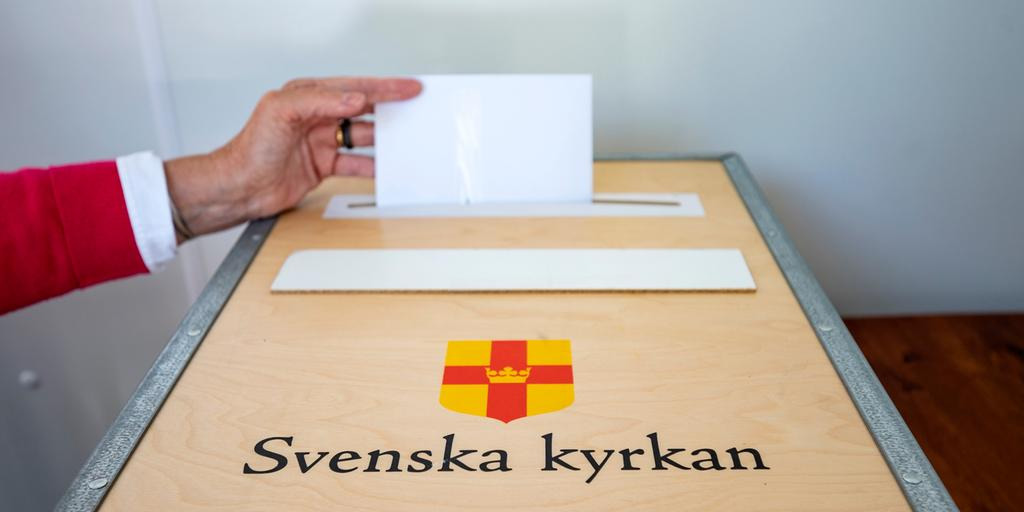
An interesting idea is the introduction of elections to representative assemblies of believers, which can be seen in the system of church councils in the Church of Sweden, which are elected at the local and regional levels, and at the national level24 have specific powers (for instance, the General Synod, the highest body of the Church of Sweden, decides matters of church order — the rules of the Church of Sweden), and are also elected directly by believers from the age of 16 (registration is required to vote)25. Members are elected there under a proportional system, that is, by list, but participants are not political parties but nominating groups that may be directly, indirectly, or not at all affiliated with parties (for a group to be registered, the support of a certain number of people entitled to vote in elections is required: at the local level — 10 people, at the regional level — 100 people, and for the national General Synod — 300 people26).
Another important point for democratization is the absence of privileges; that is, religious organizations must participate in the economic life of society on an equal footing with other organizations and pay all required taxes; no repressive laws should be passed in their favor, and exposure to their principles should not be compulsory and cannot be included in the school curriculum. Other measures have already been highlighted by us in the article on religious policy.
It is important to note the following: our job is to provide tools that will allow the democratization of religious organizations. We cannot carry out the reform ourselves; we can only conduct negotiations with democratic groups (such as the Synod) and offer advice, but the decision itself will be up to them. For our part, we can continue the discussion and defend our principles within the debate, using “soft power” to influence the Church so that it carries out reforms.
One of the rather reactionary social groups is the Cossacks. This term refers to the military estate in Russia from the XVIII to the early XX century, which began forming on the southern and southeastern outskirts of the Russian state from freedom-loving peasants fleeing serfdom27. Today, the Cossacks are part of the state system of the RF, as expressed in the following components of state policy:
- The Presidential Council for Cossack Affairs of the Russian Federation (established to promote the implementation of state policy of the Russian Federation regarding Russian Cossacks);
- The State Register of Cossack Societies in the Russian Federation28;
- The All-Russian Cossack Society (VsKO)29, which consists of registered Cossack societies (Volga, Siberian, Transbaikal, Terek Military Cossack Society, Ussuri, Yenisei, Orenburg, Kuban, Irkutsk Military Cossack Societies, “Great Don Army”, “Central Cossack Army”).
Today, Cossacks are paramilitary organizations, largely subject to criticism due to violence and threats303132. Organizationally, Cossacks are part of the state system, which can be examined through the structure of the “Great Don Army” (an association of Cossacks from the Rostov, Volgograd, and Astrakhan regions, as well as the Republic of Kalmykia33)34:
- The Great Military Assembly (Krug) of the Don Army is the highest governing body, a convention of elected Cossacks from district Cossack societies based on an average representation norm of members of stanitsa Cossack societies, determined by the council of atamans based on the total number of the Don Army and the number of district Cossack societies included in it. The date of convocation and the venue for sessions of the Military Assembly are determined by the council of atamans in agreement with the federal executive body authorized by the Government of Russia for interaction with Cossack societies and the Presidential Council for Cossack Affairs of Russia;
- The Military Ataman (the highest official exercising overall leadership over the activities of the Don Army), although elected by the Military Assembly (one can be elected as military ataman for no more than two consecutive terms35), is appointed to office by the President of Russia.

The termination of powers of the military ataman is carried out by the Military Assembly upon proposal by the federal executive body authorized by the Government of Russia for interaction with Cossack societies or the Presidential Council for Cossack Affairs of Russia.
It is worth noting that Cossack Assemblies (Krugs) are characterized by the principle of multi-tier formation; that is, the Assemblies of primary Cossack communities (City, Khutor, Stanitsa) are general assemblies of Cossacks who are members of the Cossack community36, who elect representatives to district Assemblies37, then members of district Assemblies elect Military Cossacks, and the elected Military Cossacks elect Cossacks to the All-Russian Assembly38.
At the federal level, the Cossacks are represented by the “All-Russian Cossack Society”, whose ataman is appointed to and dismissed from office by the President of Russia39 (unlike regional atamans, he is not elected at all). The institution of Cossackdom also contains a number of other authoritarian features, for instance, the Council of Atamans (where a higher-level Ataman is approved by a lower-level ataman, as a result of which the body itself is essentially formed of district atamans dependent on the Military Ataman) or authoritarian traditions in the spirit of “Uvarovism”.
It can be said that Cossacks, besides needing to be completely demilitarized (their exclusion from law enforcement and military activities, the abolition of Cossack ranks, and so forth) and ceasing to be part of the state apparatus (rejection of state Cossack educational organizations, cancellation of appointments of atamans by government bodies at the level of regional groups and Russia), must also become secular and civic entities with democratic institutions — only then will Cossacks be able to pursue their interests as independent individuals, rather than as a tool of state power.
Our task, as in the case of religion, is to provide tools that will allow the democratization of Cossack organizations. We cannot carry out direct reforms; we can only conduct negotiations with democratic groups within Cossackdom, but the decisions will be made by them.
Foreign policy
In order to strengthen democratization, a change in foreign policy is also necessary, and for this, a number of actions must be implemented, such as:
- Normalization of relations with the countries of the European Union and the USA;
- Restoration of normal relations with neighbors, in particular Ukraine and Georgia;
- Resumption of the process of joining the Organisation for Economic Co-operation and Development;
- Return to the Council of Europe and restoration of a number of normative legal acts;
- Cessation of interference in the internal affairs of Ukraine, Belarus, and other states in the post-Soviet space, recognition and respect for their state sovereignty and borders;
- Rejection of Russia’s participation in armed conflicts abroad and in foreign civil wars. Termination of political, military, and economic support for dictators and authoritarian regimes;
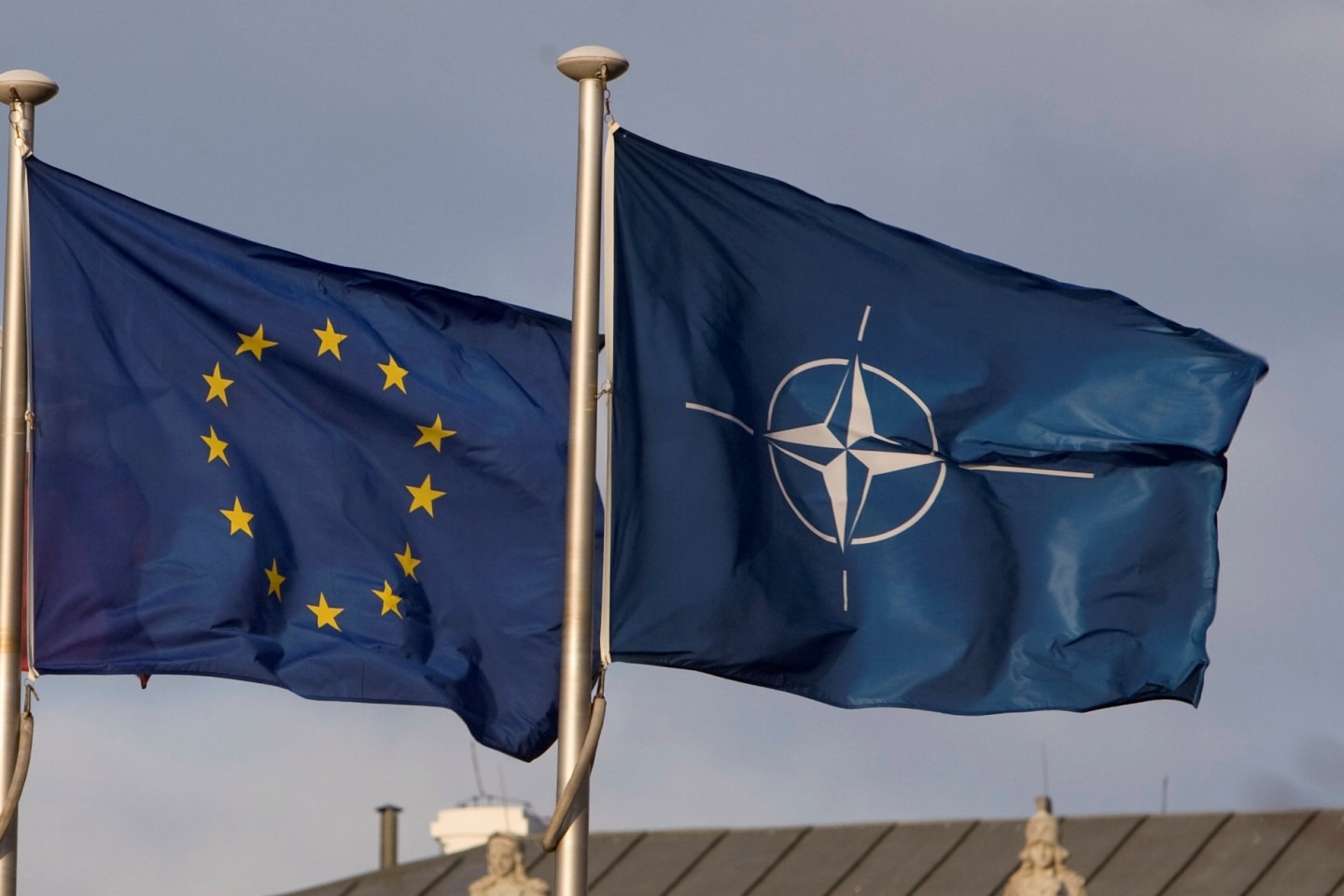
- Initiation of alignment with EU and NATO standards;
- Ratification of a number of documents, for example, full and unconditional ratification of the UN Convention against Corruption and bringing legislation into compliance with it.
All these measures will not only allow Russia to democratize, but will also strengthen existing democracy (for example, in Europe) and set an example for many countries (especially EU countries).
Defense of democracy
In Grigory Yavlinsky’s program, it was quite accurately stated that “Russia must become an equal partner in a broad coalition of leading democratic states that share common interests in countering global threats. Together we are capable of effectively fighting terrorism and the proliferation of weapons of mass destruction, curbing the claims of individual powers to global hegemony, and creating a system of mutual guaranteed defense”40. Here it can be said that Russia must have the strength to protect both itself and its allies from hostile forces, which is certainly expressed in changing the security structures, and especially the army. The main goal of reforms here should be changing the characteristics of the armed forces. To achieve this, points from the “Yabloko” party program can be used:
- Reduce the size of the armed forces (to approximately 800,000 people) by improving their quality, level of material support and technical equipment, and readiness to counter real security threats;
- Abolish military conscription, and within 2-3 years transfer the enlisted personnel to contract service;
- Increase the pay of military personnel, increase funding for medical care programs and provision of housing for military personnel;
- Provide officers with housing, medical care, and pay immediately upon graduation from military educational institutions. Retain for military retirees the medical care system and the 20-year length of service threshold that entitles military personnel to receive a military pension. A person who has chosen military service must have state guarantees of decent living conditions in the present and future.
It is also important to foster among the military an understanding of the importance of human dignity, freedom, democracy, and orientation toward the principles of equality and justice, as well as to form the concept of a “citizen in uniform”, according to which a service member is a combat-ready soldier, a free individual, and a citizen aware of their responsibility to society.
Conclusion
What conclusion can be drawn from the above? Democracy is a very complex process that affects many spheres of life, and to implement all measures, civic activity must be shown, including participation in public life (party, trade union, social movement, and so forth), as well as not being afraid to fight tyranny in its most diverse manifestations, which is always relevant, regardless of time and place. As for us, as part of the social democratic movement, we will fight for democracy, and we call on you to also take part in the struggle, while exercising a degree of caution.
- Joanna Marszałek-Kawa. Legal position and functions of the Sejm of the Republic of Poland in the light of the Small Constitution of 1992 // Kyrgyzstan – Russia: milestones of humanitarian cooperation: Materials of the International Symposium dedicated to the 20th anniversary of the Kyrgyz-Russian Slavic University named after B.N. Yeltsin. / ed. by V. I. Shapovalov — 282 p. — Bishkek.: KRSU, 2014. — p. 64-75.
- Federal Law of 12.06.2002 N 67-FZ (as amended on 04.06.2021) “On Basic Guarantees of Electoral Rights and the Right to Participate in a Referendum of Citizens of the Russian Federation”. Article 21. Procedure for the Formation and Status of the Central Election Commission of the Russian Federation
- RBC: expert council under the CEC abolished after criticism of the vote on constitutional amendments // Rambler (https://www.rambler.ru). February 28, 2020. [Electronic resource]. URL: https://news.rambler.ru/other/43756935/ (Date of access: 09.01.2023).
- Pamfilova called “Yabloko’s” lawsuit against the CEC “sneaky” // TVC (http://www.tvc.ru/). July 21, 2021, 15:34. [Electronic resource]. URL: http://www.tvc.ru/news/show/id/216154 (Date of access: 09.01.2023).
- Natalia Zotova “Two-humped Russia” and amendments to the Constitution: scientist found over 20 million “anomalous” votes // BBC (https://www.bbc.com/). July 3, 2020. [Electronic resource]. URL: https://www.bbc.com/russian/features-53271744 (Date of access: 09.01.2023).
- Proposals for reforming the electoral system of the Russian Federation // Yabloko (https://www.yabloko.ru/). 2019. [Electronic resource]. URL: https://www.yabloko.ru/node/41875 (Date of access: 09.01.2023).
- Quality of Political Representation in Modern Russia / ed. by G.B. Yudin. — 55 p. — Novgorod: Zemsky Congress, 2021. — p. 32.
- Constitution of the Russian Federation // President of Russia (http://www.kremlin.ru/). [Electronic resource]. URL: http://www.kremlin.ru/acts/constitution/ (Date of access: 09.01.2023).
- Phantom of the Constitutional Assembly // Rambler (https://www.rambler.ru/). January 20, 2020 [Electronic resource]. URL: https://news.rambler.ru/politics/43529088-fantom-konstitutsionnogo-sobraniya/ (Date of access: 09.01.2022).
- Federation // Great Russian Encyclopedia. Volume 33. Moscow, 2017, p. 226. [Electronic resource]. URL: https://bigenc.ru/law/text/4707346 (Date of access: 09.01.2023).
- S.E. Channov. Economic Inequality of Constituent Entities of the Russian Federation and Municipalities in the Context of Ensuring Constitutional Rights and Freedoms of Russian Citizens // Journal of Russian Law, 2019. — No. 10. — p. 30-41.
- Anton Feinberg. Russia surpassed China, India, and Brazil in regional inequality // Kommersant (www.kommersant.ru). September 26, 2018, 07:58. [Electronic resource]. URL: https://www.rbc.ru/economics/26/09/2018/5baa58cd9a7947f649eea8fa (Date of access: 09.01.2023).
- Order of the Ministry of Finance of Russia of 11.11.2021 N 493 (as amended on 14.12.2021) “On Approval of the Lists of Constituent Entities of the Russian Federation in Accordance with the Provisions of Paragraph 5 of Article 130 of the Budget Code of the Russian Federation”
- How “carpetbaggers” became governors // Kommersant (www.kommersant.ru). July 20, 2020, 21:50. [Electronic resource]. URL: https://www.kommersant.ru/doc/4424871 (Date of access: 09.01.2023).
- S.S. Kochetkov. “Loss of trust” as a legal category. // Bulletin of Moscow University of the Ministry of Internal Affairs of Russia, 2020. — No. 6. — p. 257-260.
- G.V. Ososkov. Official ideology of the Russian Empire of the XIX century “Orthodoxy – Autocracy – Nationality” (socio-philosophical analysis) // Russia: trends and prospects of development. Yearbook, 2007. — Vol. Issue 12, Part 3 — p. 659-662.
- Ha-Joon Chang. Economics: The User’s Guide / Ha-Joon Chang; transl. from English by E. Ivchenko; [sci. ed. E. Kondukova]. — 322 p. — M.: Mann, Ivanov and Ferber, 2015. — p. 124.
- N.L. Lyutov. Works councils in Russia: balance of economic and social rights // Journal of Russian Law, 2014. — No. 5 (209). — p. 95-104.
- K.V. Plamennova. Legal foundations of non-union employee representation in Germany // Journal of Russian Law, 2014. — No. 1 (205). — p. 124-131.
- Betriebsverfassungsgesetz // Federal Ministry of Justice (https://www.bmj.de/). [Electronic resource]. URL: https://www.gesetze-im-internet.de/betrvg/BJNR000130972.html (date of access: 09.01.2023).
- What a local normative act is. Explaining in simple words // Rambler (https://www.rambler.ru). December 29, 2021. [Electronic resource]. URL: https://finance.rambler.ru/money/47864126-chto-takoe-lokalnyy-normativnyy-akt-obyasnyaem-prostymi-slovami/ (date of access: 09.01.2023).
- Prosecutor clarifies // Prosecutor’s Office of Astrakhan Region (https://epp.genproc.gov.ru/web/proc_30). May 27, 2013, 19:14. [Electronic resource]. URL: https://epp.genproc.gov.ru/web/proc_30/activity/legal-education/explain?item=22881720 (date of access: 09.01.2023).
- A.A. Strizhkov. Types of integrated industrial structures // Bulletin of Samara State University, 2013. — No. 10 (111). — p. 82-88.
- Tre olika val // Svenska kyrkan (https://www.svenskakyrkan.se/kyrkoval). [Electronic resource]. URL: https://www.svenskakyrkan.se/kyrkoval/om-kyrkovalet/det-har-rostar-du-pa (date of access: 09.01.2023).
- Om kyrkovalet // Svenska kyrkan (https://www.svenskakyrkan.se/kyrkoval). [Electronic resource]. URL: https://www.svenskakyrkan.se/kyrkoval/om-kyrkovalet (date of access: 09.01.2023).
- Nomineringsgrupper och kandidater // Svenska kyrkan (https://www.svenskakyrkan.se/kyrkoval). [Electronic resource]. URL: https://www.svenskakyrkan.se/kyrkoval/om-kyrkovalet/nomineringsgrupper-och-kandidater (date of access: 09.01.2023).
- History of Cossackdom in Russia // RIA Novosti (https://ria.ru/). February 29, 2020, 15:59. [Electronic resource]. URL: https://ria.ru/20100526/238451459.html (date of access: 09.01.2023).
- Decree of the President of the RF of 09.08.1995 N 835 (as amended on 17.10.2013) “On the State Register of Cossack Societies in the Russian Federation”
- History of creation of VsKO // All-Russian Cossack Society (VsKO) (https://vsko.ru/). [Electronic resource]. URL: https://vsko.ru/istoriya-sozdaniya-vsko/ (date of access: 09.01.2023).
- Vasily Basov. “100 years have passed, nothing has changed”. What Cossacks are entitled to do and why they are called a legalized organized crime group // Medialeaks (https://medialeaks.ru/). [Electronic resource]. URL: https://medialeaks.ru/0705bva-kazaki-razbojniki/ (date of access: 09.01.2023).
- Vladislav Gordeev, Artem Afonsky. Media heads of Yekaterinburg spoke out against “Cossack patrols” // RBC (https://www.rbc.ru/). [Electronic resource]. URL: https://www.rbc.ru/society/11/09/2020/5f5b6f989a794704ace90bf8 (date of access: 09.01.2023).
- Andrey Guselnikov. Icon against soap: in Yekaterinburg, Cossacks targeted gay people again. // “URA.RU” (https://ura.news/). [Electronic resource]. URL: https://ura.news/news/1052449548 (date of access: 09.01.2023).
- Interactive map of the army’s territory // Great Don Army (http://www.don-kazak.ru/). [Electronic resource]. URL: http://www.don-kazak.ru/imap/ (date of access: 09.01.2023).
- Governing bodies // Great Don Army (http://www.don-kazak.ru/). [Electronic resource]. URL: http://www.don-kazak.ru/voisko/org/ (date of access: 09.01.2023).
- Charter of the army (new 2021 edition) // Great Don Army (http://www.don-kazak.ru/). [Electronic resource]. URL: http://www.don-kazak.ru/docs/#ustav-voyska-novaya-redaktsiya-2021-goda (date of access: 09.01.2023).
- Administration of the city of Irkutsk. Resolution of May 23, 2012 N 031-06-1059/12 “On approval of the Charter of the city Cossack society”
- Order of the Governor of Rostov Region of 29.12.2020 No. 9, Rostov-on-Don “On approval of the Charter of the district Cossack society of Rostov District of the military Cossack society ‘Great Don Army'”
- Decree of the President of the RF of November 4, 2019 No. 543 “On the All-Russian Cossack Society”
- Ibid.
- Believe in the Future. Believe in Yourself // Official website of Grigory Yavlinsky. (https://yavlinsky.ru/). [Electronic resource]. URL: https://www.yavlinsky.ru/doroga.pdf (Date of access: 09.01.2023).