European Union political structure
"Logic of Progress" has repeatedly analyzed the political systems of individual countries, but this time we will look at an entire continental association. We are talking about the union of European countries, also known as the European Union. Many have heard of it, but how it is structured and how it works, on the contrary, very few in our country know.
The European Union is a unique structure, as it combines elements of a confederation and a federation, an international organization and a state, bringing together 27 European countries with a total area of over 4 million square kilometers, a total population of 448.4 million inhabitants1, and officially using 24 languages2. Below, we briefly explain the essence of the European Union, both in terms of political institutions and the relations of member states as a whole.
In the article on the national policy of social democrats, we wrote that social democrats (our movement was among the founders of the EU) advocate for creating continental associations similar to the European Union on every continent. In Asia, this could be an Asian Union; in Africa, the African Union already exists. We also believe that such associations should be formed from democratic states. It is precisely this form of association and coordination of humanity, rather than a single world state, that is a priority for social democrats.
Contents
Legal basis, aims, and values of the European Union
Before moving on to the institutions, it is necessary to understand the legal basis of the EU. The European Union is based on the principle of the rule of law. This means that every action taken by the EU is founded on treaties that have been approved voluntarily and democratically by all EU member countries. For example, if a policy area is not mentioned in a treaty, the Commission cannot propose a law in that area.
A treaty is a binding agreement between EU member countries. It sets out EU objectives, rules for EU institutions, how decisions are made, and the relationship between the EU and its member countries. Treaties are amended to make the EU more efficient and transparent, to prepare for new member countries, and to introduce new areas of cooperation — such as the single currency. Under the treaties, EU institutions can adopt legislation, which the member countries then implement.
Today, many legal acts are in force in the EU, the most famous of which is the Treaty of Lisbon, which aimed to make the EU more democratic, more efficient, and better able to address global problems, such as climate change, with one voice3.
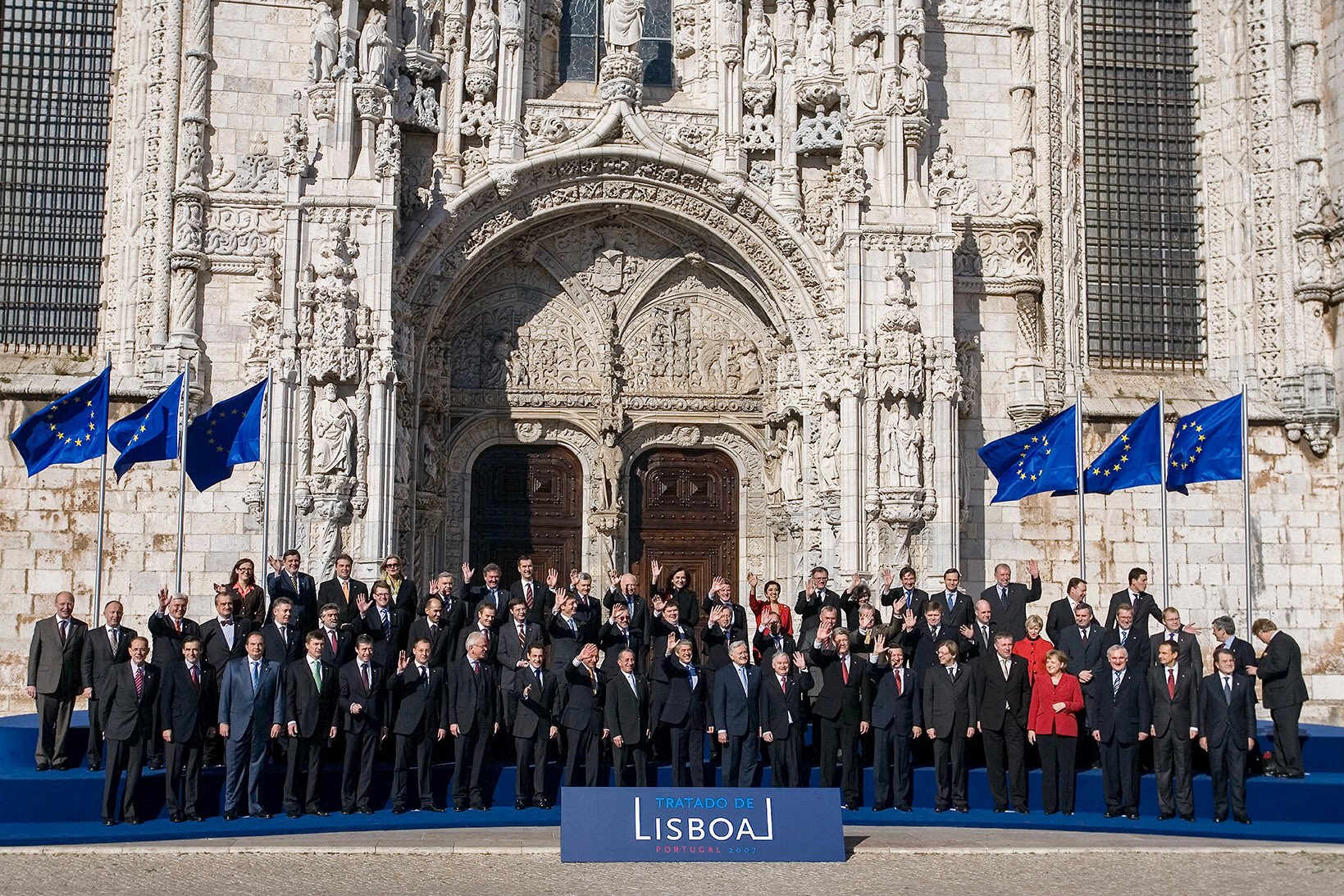
In 2004, an attempt was made to introduce the “Treaty establishing a Constitution for Europe”, designed to act as the constitution of the European Union and replace all previous founding acts of the EU; however, France and the Netherlands did not support it4, as a result of which the Treaty was not adopted, and the Treaty of Lisbon was drafted and adopted on its basis.
The aims of the European Union within its borders are5:
- Promote peace, its values, and the well-being of its citizens;
- Offer freedom, security, and justice without internal borders, while also taking appropriate measures at its external borders to regulate asylum and immigration and prevent and combat crime;
- Establish an internal market;
- Achieve sustainable development based on balanced economic growth and price stability, and a highly competitive market economy with full employment and social progress;
- Protect and improve the quality of the environment;
- Promote scientific and technological progress;
- Combat social exclusion and discrimination;
- Promote social justice and protection, equality between women and men, and protection of the rights of the child;
- Enhance economic, social, and territorial cohesion and solidarity among EU countries;
- Respect its rich cultural and linguistic diversity;
- Establish an economic and monetary union whose currency is the euro.
The EU’s aims in the wider world are:
- Uphold and promote its values and interests;
- Contribute to peace, security, and the sustainable development of the Earth;
- Promote solidarity and mutual respect among peoples, free and fair trade, eradication of poverty, and the protection of human rights;
- Strict observance of international law.
Another important foundation of the EU is its values: respect for human dignity, freedom, democracy, equality, the rule of law, and respect for human rights, including the rights of persons belonging to minorities. These values are common to the Member States in a society in which pluralism, non-discrimination, tolerance, justice, solidarity, and equality between women and men prevail (Article 2)6.
Parliament of the European Union
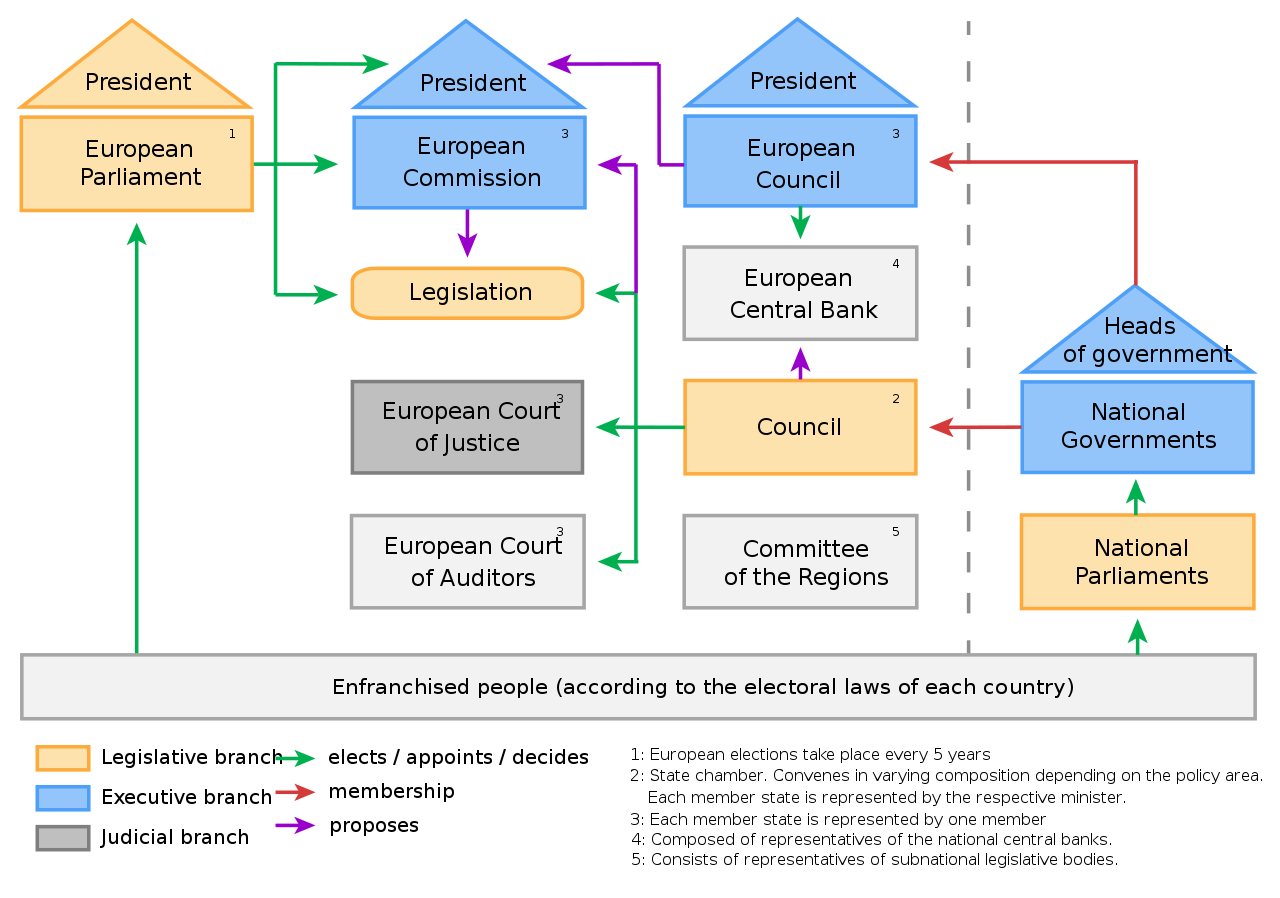
The Parliament of the European Union is de facto represented by two chambers: the Council of the European Union and the European Parliament, according to Article 9a of the Treaty of Lisbon7.
Council of the European Union (Council of the EU)
Usually this body is referred to in documents simply as the Council (which leads to confusion), but for simplicity of understanding we will write the Council of the EU.
It is the de facto upper house of the parliament of the European Union.

The Council of the EU, the European Council, and the Council of Europe are completely different bodies. Let us start with the Council of Europe, which is not an EU organization, has a broader membership than the EU, and until March 2022 included Russia as well. The organization protects democratic institutions and regulates matters of cultural and social cooperation. The Council of Europe has developed more than 160 international instruments that replaced thousands of bilateral agreements previously in effect between European countries. The most important of these is the European Convention on Human Rights8. As for the European Council, we will cover it separately later.
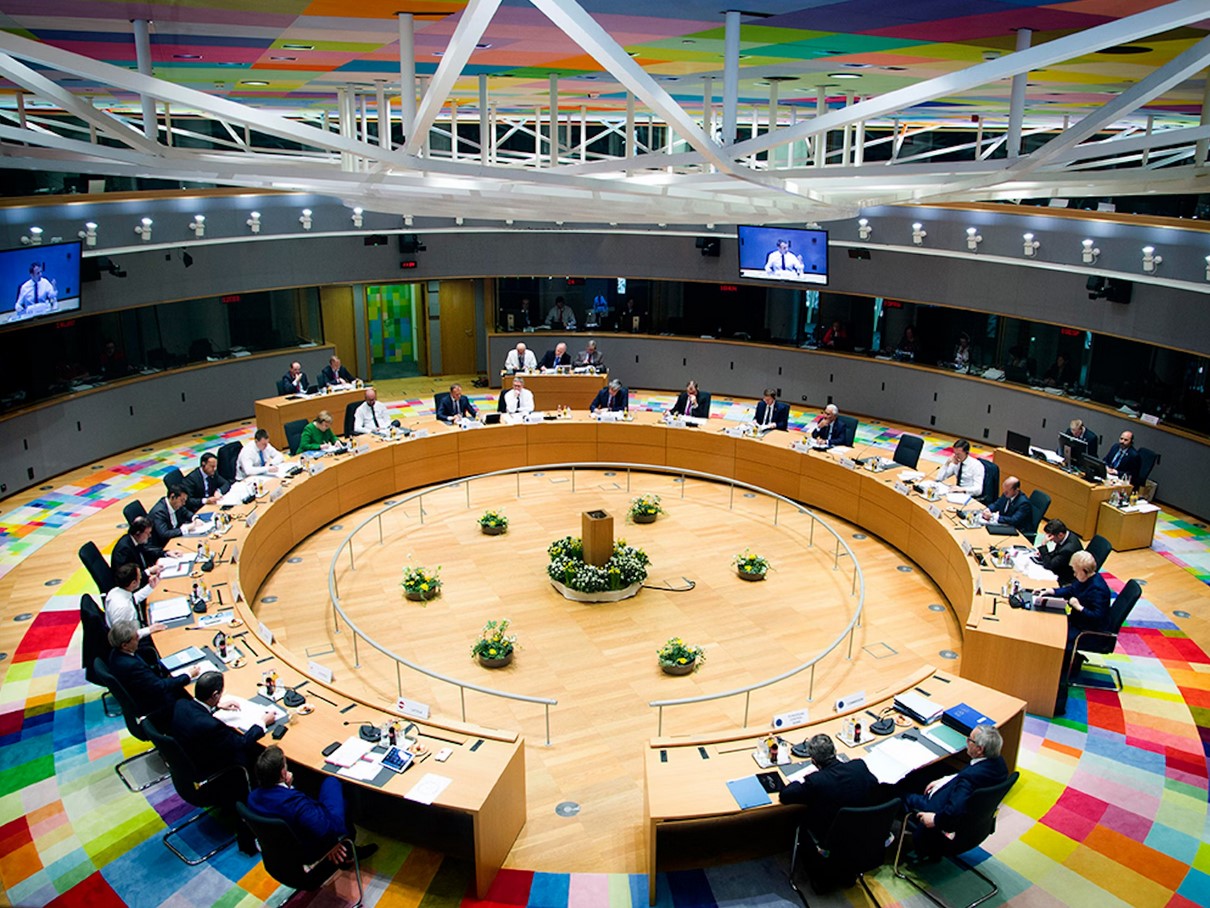
The Council of the EU consists of national government ministers from each member state, grouped by policy area.
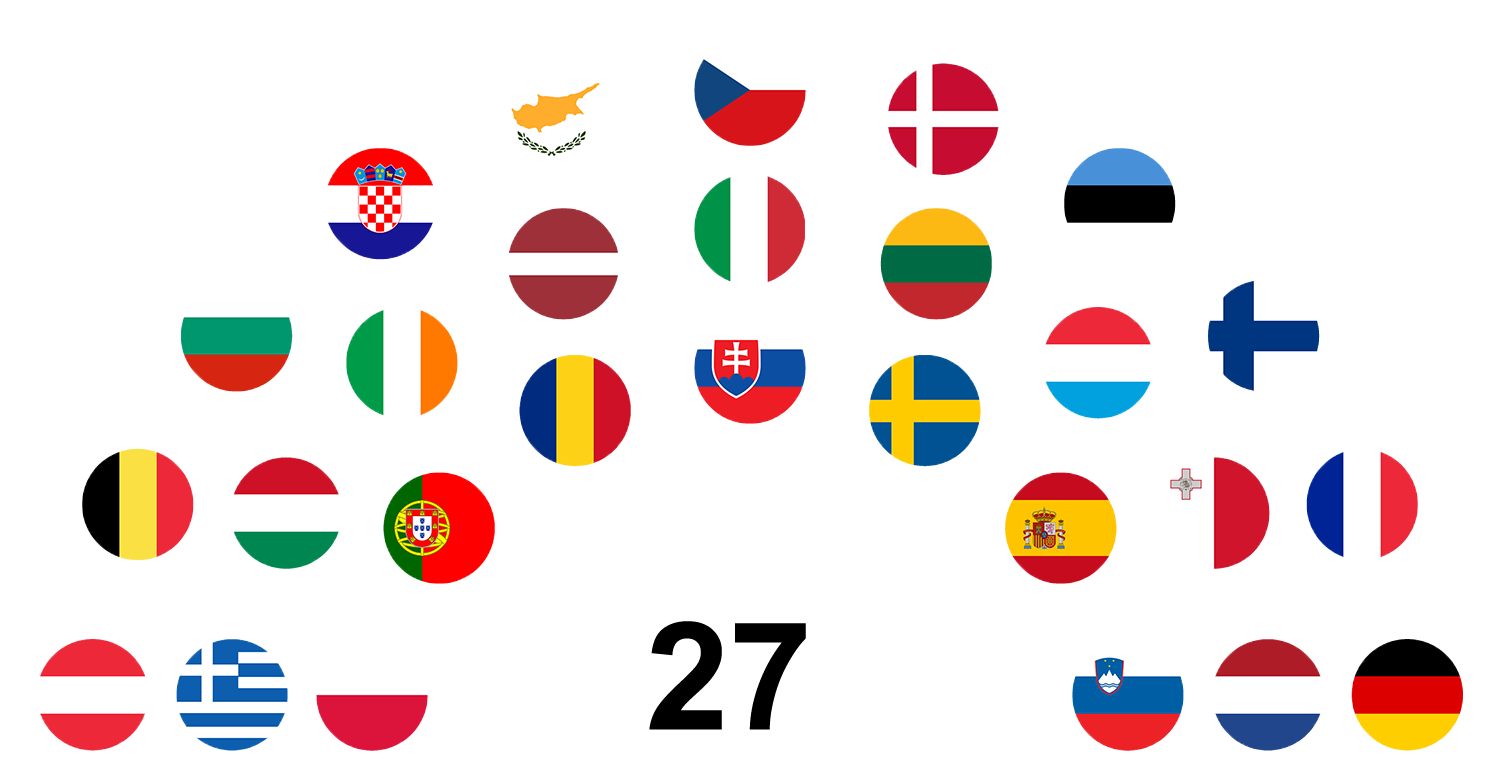
In total, each council configuration has 27 members, and there are 10 configurations9:
- Agriculture and Fisheries;
- Competitiveness (works to enhance competitiveness and boost growth in the EU, covering four main policy areas: internal market, industry, research and innovation, and space10);
- Economic and Financial Affairs;
- Education, Youth, Culture and Sport;
- Employment, Social Policy, Health and Consumer Affairs;
- Environment;
- Foreign Affairs;
- General Affairs (coordinates preparations for European Council meetings and is responsible for a number of cross-cutting policy areas11);
- Justice and Home Affairs;
- Transport, Telecommunications and Energy.
That is, there are ten Council configurations, and there are 270 members across these councils overall (in reality, fewer individual people, as the same minister can participate in different configurations).
The head of the Council of the EU is the presidency, which rotates every six months among the member states — currently held by Belgium12.
The powers of the Council of the EU13 are as follows.
Legislative function. Adopting EU laws jointly with the European Parliament based on proposals from the European Commission (we will describe this system in more detail later).
Coordinating function. The Council of the EU is responsible for coordinating member states’ policies in specific areas, such as:
- Economic and fiscal policies: the Council of the EU coordinates the economic and fiscal policies of member states to strengthen economic governance in the EU, monitors their budgetary policies and strengthens the EU’s fiscal framework, and also deals with legal and practical aspects of the euro, financial markets, and capital movements;
- Education, culture, youth, and sport: the Council of the EU adopts EU policy frameworks and work plans in these areas, setting out the priorities for cooperation between member states and the Commission;
- Employment policy: the Council of the EU draws up annual guidelines and recommendations for member states based on European Council conclusions on the employment situation in the EU.
Development of the common foreign and security policy of the EU. The Council of the EU defines and implements EU foreign and security policy based on guidelines set by the European Council. This also includes EU development and humanitarian aid, defense, and trade. Together with the High Representative of the Union for Foreign Affairs and Security Policy, the Council of the EU ensures the unity, consistency, and effectiveness of the EU’s external action.
Concluding international agreements. The Council of the EU provides the Commission with a mandate to negotiate on behalf of the EU agreements between the EU and non-EU countries or international organizations. At the end of negotiations, the Council of the EU decides on the signing and conclusion of the agreement, based on a proposal by the Commission. The Council of the EU also adopts the final decision to conclude the agreement after the Parliament has given its consent (required in areas subject to co-decision) and it has been ratified by all EU member states. These agreements may cover broad areas such as trade, cooperation, and development, or they may deal with specific subjects such as textiles, fisheries, customs, transport, science and technology, and so on.
Adoption of the EU budget. The Council of the EU adopts the EU budget together with the Parliament. The budget period covers a calendar year. It is usually adopted in December and comes into force on 1 January of the following year.
Voting results in the Council of the EU fall into three types:
1. Simple majority. This is reached if at least 14 Council members vote in favor (currently there are 27 member states in the EU).
The Council of the EU votes by simple majority in the following cases:
- On procedural matters, such as the adoption of its own rules of procedure and the organization of its General Secretariat, or the adoption of rules governing committees provided for in the treaties;
- To request the Commission to undertake studies or submit proposals.
2. Qualified majority14. When the Council of the EU votes on a proposal by the Commission or the High Representative of the Union for Foreign Affairs and Security Policy, the proposal is adopted if it reaches a qualified majority. To pass a decision, 55% of member states representing 65% of the population must vote in favor. A blocking minority must include at least four Council members, otherwise a qualified majority is deemed reached (Article 9C.4).
If the blocking minority threshold of four Council members is not met, a qualified majority is deemed reached. For example, when all member states except three vote in favor, a qualified majority is also deemed reached, even if the 24 member states voting in favor represent less than 65% of the total population. In other words, when fewer than four Council members vote against, the percentage of the population represented by member states voting in favor does not matter for determining a qualified majority.
Qualified majority is the most widely used voting method in the Council of the EU. It is used when the Council of the EU takes decisions during the ordinary legislative procedure, also known as co-decision. Around 80% of all EU legislation is adopted using this procedure.
However, special cases exist. The first is when the Council of the EU votes on a proposal not coming from the Commission or the High Representative; the proposal is adopted if a so-called “reinforced qualified majority” is reached. To achieve a “reinforced qualified majority”, two conditions must be met simultaneously:
- At least 72% of member states vote in favor — in practice, this means at least 20 out of 27;
- The member states supporting the proposal represent at least 65% of the EU population.
When not all members of the Council of the EU participate in a vote, for instance due to an opt-out in certain policy areas, the voting rules depend on the nature of the proposal. When the Council of the EU votes on a proposal from the Commission or the High Representative, a decision is adopted if 55% of participating Council members, representing at least 65% of the population of the participating member states, vote in favor. In this case, a blocking minority must include at least the minimum number of member states representing more than 35% of the population of the participating member states, plus one member, otherwise a qualified majority is deemed reached.
If the Council of the EU does not act on a proposal from the Commission or the High Representative, a decision is adopted if 72% of participating Council members, representing at least 65% of the population of the participating member states, vote in favor.
An abstention in a “qualified majority” vote counts as a vote against. Abstention is not the same as non-participation in a vote. Any member can abstain at any time.
3. Unanimity15. The Council of the EU must vote unanimously on a number of matters that member states consider sensitive. For example:
- Common foreign and security policy (except for certain clearly defined cases requiring a qualified majority, e.g. appointment of a special representative);
- Citizenship (granting new rights to EU citizens);
- EU membership;
- Harmonization of national legislation on indirect taxation;
- EU finances (own resources, multiannual financial framework);
- Certain provisions in the area of justice and home affairs (European Public Prosecutor’s Office, family law, operational police cooperation, and so on);
- Harmonization of national legislation in the area of social security and social protection.
In addition, the Council of the EU must vote unanimously to depart from a Commission proposal when the Commission cannot agree to amendments made to its proposal. This rule does not apply to acts that must be adopted by the Council of the EU on a recommendation from the Commission, such as acts in the area of economic coordination.
In unanimity voting, abstentions do not prevent decisions from being adopted, meaning that if a member abstains, it is not counted as a vote against, as a result of which the decision will be adopted (if one of the states does not abstain but votes against, then the decision is not adopted).
European Parliament (EP)
It is the de facto lower house of the parliament of the European Union. This chamber is elected by the citizens of European Union member states through direct, free, and secret elections (Article 9A.3) for a 5-year term.

The European Parliament may include up to 751 members, including the President (currently there are 70516, after the 2024 elections there will be 72017).
The President of the European Parliament is elected by the European Parliament for a renewable term of 2.5 years, that is, for half the term of office of the parliament18. The President represents the European Parliament in relations with the outside world and in its relations with other EU institutions, oversees the work of parliament and its constituent bodies as well as debates in plenary sessions, and ensures compliance with the Rules of Procedure of parliament. In addition, after parliament adopts the European Union budget, the President of the European Parliament signs it into force, and the President of the European Parliament and the President of the Council of the EU sign all legislative acts adopted under the ordinary legislative procedure.
Representation of citizens shall be degressively proportional (meaning that the larger the population of a member state, the greater the number of MEPs it will have, but each MEP in a larger member state represents proportionally more citizens than in a smaller member state19, so in hypothetical Germany there is 1 MEP per 843 thousand people, whereas in hypothetical Malta there are only 70 thousand), with a minimum threshold of 6 members per member state. No member state shall be allocated more than 96 seats (Article 9A.2).
There is no uniform electoral system for the election of MEPs, meaning each EU member state is free to choose its own system, subject to certain limitations20:
- The system must be a form of proportional representation, using either the party list system or the single transferable vote system (the second option is used in Ireland and Malta, and differs from the party list system in that the voter votes not for a list, but for a set of candidates elected in a multi-member constituency, ranking the candidates in order of preference, which later determines the most preferred candidates based on a counting system21);
- A mandatory minimum threshold of between 2% and 5% for constituencies (including single-constituency member states) with more than 35 seats in member states where the list system is used (other member states may set a threshold independently up to 5% at the national level).
It is worth noting that the clause regarding the threshold will become mandatory for the European Parliament elections in 2029, and as of today local legislation has not been changed by Spain and Germany (which have more than 35 seats), as well as Cyprus22.
A constituency may be divided (usually the constituency is the whole EU member country, but sometimes constituencies are created within countries, for example in Ireland, Italy, Poland, and Belgium (and interestingly, in Belgium there is one constituency that, although de jure list-proportional, is de facto majoritarian (since there is 1 seat in the constituency), representing the territory of the German-speaking Community23)), provided this does not generally affect the proportional nature of the voting system.
EU citizens residing in a member state of which they are not nationals have the right to vote in European Parliament elections in their state of residence under the same conditions as nationals, but each country has its own features; for instance, in Luxembourg and Cyprus, EU citizens must also meet a minimum residence requirement.
Elections take place over four days, from Thursday to Sunday (the exact date and time are set by each member state). Each state also independently determines the conditions for holding elections; for example, they are free to set the minimum voting age for European elections, and in most countries it is 18 years, but in Greece the age is 17 years, and in Austria, Belgium, Germany, and Malta it is 16 years24.
National political parties participate in elections, but after MEPs are elected, most prefer to become part of political groups spanning multiple nations. Most national parties belong to a European political party25. European political parties are parties that unite parties of EU member countries on the basis of a shared ideology. Currently, the following such parties are officially registered in the EU26:
- European People’s Party (Christian democrats and democratic conservatives);
- Party of European Socialists (social democrats);
- Alliance of Liberals and Democrats for Europe Party (liberals);
- European Democratic Party (centrists);
- European Green Party (greens);
- European Free Alliance (separatists and regionalists, protection of national minorities);
- Identity and Democracy Party (right-wing conservatives, whose members often include pro-Russian parties such as Alternative for Germany and the French “National Rally”);
- European Conservatives and Reformists Party (right-wing conservatives, which includes, for example, Polish “Law and Justice”, Brothers of Italy, Spanish “Vox”);
- European Christian Political Movement (Christian democrats and conservatives);
- Party of the European Left (democratic socialists and communists).
At the same time, there are European political parties that are not registered, such as European federalist “Volt Europa” 27 and European Pirate Party28.
These parties are reflected in the political groups in the European Parliament, which represent a parliamentary group of MEPs, with a minimum of 23 MEPs from at least a quarter of EU member countries (7 countries) required to form a group. Members of political groups can be members of different European parties (official and unofficial), as well as national parties not affiliated with European parties.
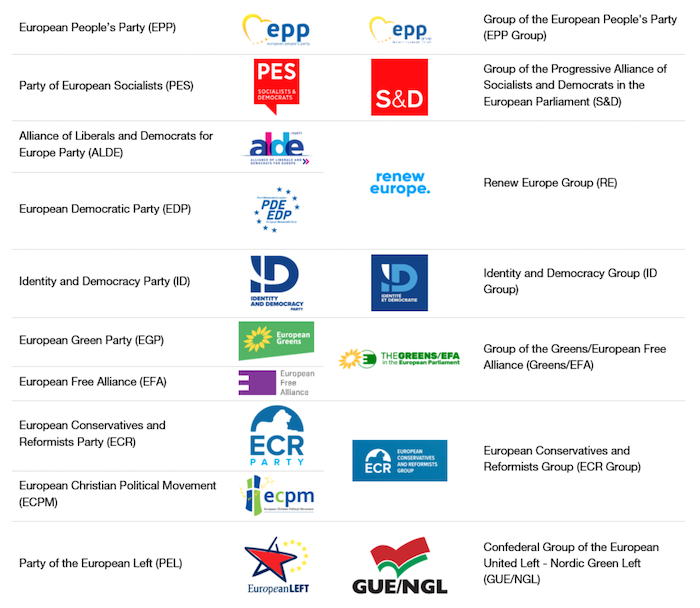
Currently, the following political groups are officially represented in the European Parliament29:
- Group of the European People’s Party (Christian democrats and democratic conservatives);
- Group of the Progressive Alliance of Socialists and Democrats (social democrats);
- Renew Europe Group (liberals);
- Group of the Greens / European Free Alliance (greens, separatists and regionalists, protection of national minorities);
- European Conservatives and Reformists Group (right-wing conservatives, whose members include Polish “Law and Justice”, Brothers of Italy, Spanish “Vox”);
- Identity and Democracy Group (right-wing conservatives, whose members often include pro-Russian parties such as Alternative for Germany and the French “National Rally”);
- The Left group in the European Parliament — GUE/NGL (European United Left / Nordic Green Left, democratic socialists and communists).
The powers of the European Parliament are divided into the following groups30.
Legislative. This includes the functions listed below.
Passing EU laws jointly with the Council of the EU based on European Commission proposals. This distinguishes the EU from the institutional setup of EU member states, where parliament can propose draft laws directly. But indirectly a draft law can be suggested, as a legislative proposal can be submitted to the European Commission, which the following groups have the right to do31:
- European Parliament;
- European Citizens’ Initiative (a draft law can be proposed by gathering 1 million signatures in at least 7 EU countries within a year, with different countries having limits on the maximum number of signatures, e.g. 67,680 in Germany, and 4,230 signatures in Malta32);
- ¼ of EU member states (7 countries);
- European Central Bank;
- European Investment Bank;
- Court of Justice of the EU (on matters concerning the Statute of the Court, the establishment of specialized courts attached to the General Court, and so on)33.
It is worth noting that the Treaty of Lisbon expanded the legislative powers of the European Parliament to more than 40 new areas and made it a co-legislator on equal footing with the Council of the EU (previously the Council of the EU had greater standing). And since these areas are too numerous (around 73), here we will list only some of them34:
- Environment;
- Transport;
- Internal market;
- Jobs and social policy;
- Education;
- Health;
- Consumer protection;
- Agriculture and fisheries;
- Support for poorer regions;
- Security and justice;
- Commercial policy;
- Cooperation with non-EU countries;
- Implementing acts.
Briefly on how laws are passed in the EU35:
- The European Commission submits a proposal to the Council of the EU and the European Parliament;
- The Council of the EU and the European Parliament adopt the draft law either at first or at second reading;
- If, after the second reading, the two institutions do not reach agreement, a Conciliation Committee is convened;
- If the text agreed by the Conciliation Committee is acceptable to both institutions at third reading, the legislative act is adopted.
Decision-making on international agreements.
Decision-making on enlargement.
Examining the European Commission’s work program and requesting it to propose legislation.
Supervisory. This includes the following functions:
- Democratic scrutiny of all EU institutions;
- Electing the President of the European Commission and approving the Commission as a body. The possibility of voting on a motion of censure obliging the Commission to resign;
- Granting discharge, that is, approving how EU budgets were spent;
- Examining citizens’ petitions and setting up inquiries;
- Discussing monetary policy with the European Central Bank;
- Questioning the European Commission and the Council of the EU;
- Election observation.
Budgetary. This includes the following functions:
- Establishing the EU budget jointly with the Council of the EU;
- Approving the long-term EU budget, the “Multiannual Financial Framework”.
In plenary sessions, the European Parliament usually takes decisions by an absolute majority of the votes cast36. A quorum (the minimum number of MEPs required to be present for the vote result to be valid) exists when one third of the component members of parliament are present in the Chamber. If the President of the European Parliament, at the request of at least 38 members, establishes that a quorum is not present, the vote is postponed to the next sitting.
European Council
The European Council is one of the highest governing bodies of the EU, which can conditionally be called the “collective head” of the EU.
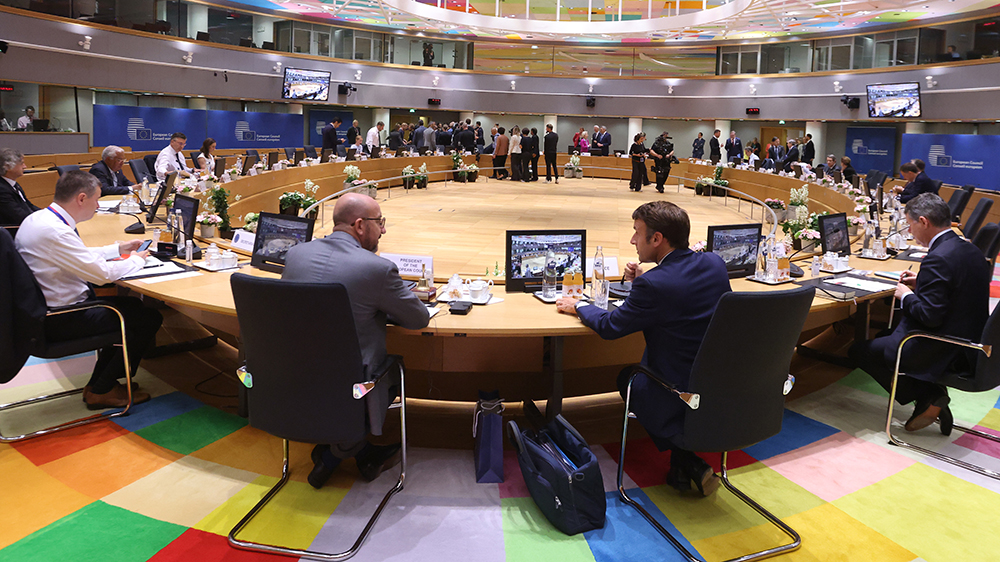
The European Council shall consist of the Heads of State or Government of the Member States, together with its President and the President of the Commission (the latter two have no vote). The High Representative of the Union for Foreign Affairs and Security Policy shall take part in its work, but is not a member of the European Council (Article 9 B.2).
The head of the European Council is the President, elected by a qualified majority vote (using the same qualified majority as in the Council of the EU) for a term of 2.5 years, renewable once. In the event of an impediment or serious misconduct, the European Council may end the President’s term of office in accordance with the same procedure.
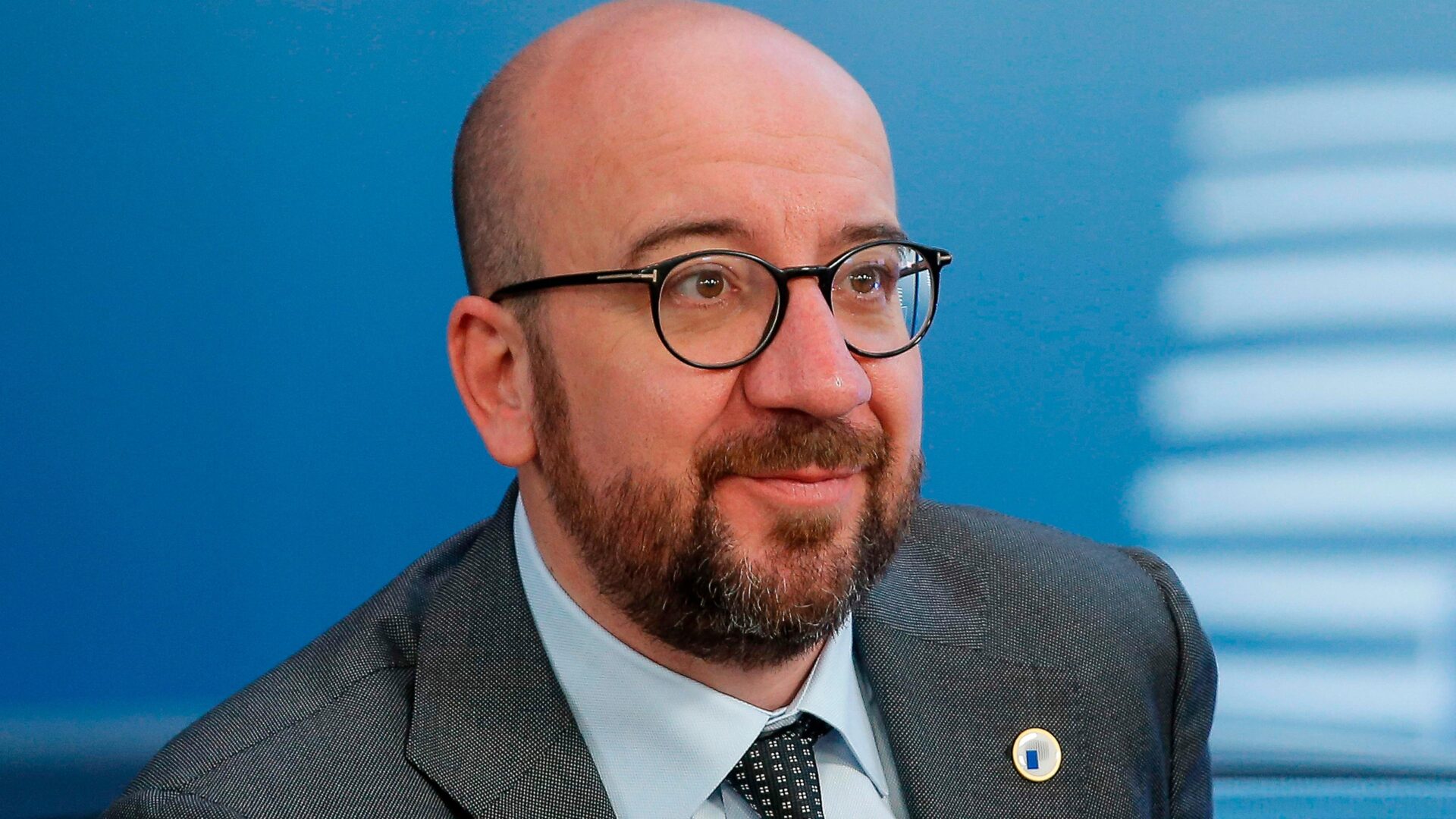
The President of the European Council exercises the following powers:
- Chair it and drive forward its work;
- Ensure the preparation and continuity of the work of the European Council in cooperation with the President of the Commission, and on the basis of the work of the General Affairs Council;
- Endeavour to facilitate cohesion and consensus within the European Council;
- Present a report to the European Parliament after each meeting of the European Council;
- At his level and in that capacity, ensure the external representation of the Union on issues concerning its common foreign and security policy, without prejudice to the powers of the High Representative of the Union for Foreign Affairs and Security Policy.
The President of the European Council shall not hold a national office.
The European Council shall meet twice every six months, convened by its President (these meetings are called European Summits, EU Summits, or Euro Summits). When the agenda so requires, the members of the European Council may decide each to be assisted by a minister and, in the case of the President of the Commission, by a member of the Commission. When the situation so requires, the President shall convene a special meeting of the European Council (Article 9 B.3).
Powers of the European Council3738:
- Deciding on the overall direction and political priorities of the EU, but not passing laws;
- Handling complex or sensitive issues that cannot be resolved at lower levels of intergovernmental cooperation;
- Setting the EU’s common foreign and security policy, taking into account EU strategic interests and defense implications;
- Proposing a candidate for President of the European Commission to the European Parliament;
- Appointing the High Representative of the Union for Foreign Affairs and Security Policy. A qualified majority is required to decide on the proposed candidate. The European Council may also decide to terminate the High Representative’s 5-year term of office, again by a qualified majority;
- Appointing the entire European Commission. The European Parliament votes on the composition of the members of the Commission — the President of the Commission, the High Representative, and other members of the Commission — using the consent method (majority of votes cast);
- Appointing all 6 members of the Executive Board of the European Central Bank (ECB), which includes the President and Vice-President of the ECB, as well as 4 other members;
- On any issue, the European Council may submit a proposal for its resolution to the European Commission, as well as refer it to the Council of the EU for consideration.
There are three ways of voting39.
Simple majority. The European Council acts by simple majority on procedural decisions and for the adoption of its Rules of Procedure.
Qualified majority. The European Council acts by qualified majority for example when establishing the list of Council configurations or proposing a candidate for President of the European Commission to the European Parliament.
Unanimity. Unanimity is used, for example, when the European Council decides on the number of members of the European Commission. When the European Council decides by unanimity, abstentions do not prevent the adoption of decisions.
The European Council usually decides by consensus (that is, no member opposes the adoption). The European Council also usually adopts conclusions in this way. However, in specific cases provided for by the EU treaties (for example, when adopting legal acts), the European Council decides by vote. A vote on a given agenda item may be initiated by the President. It may also take place at the initiative of any other member, provided that a majority of the members vote in favor of it.
Between meetings, the European Council may take decisions on urgent matters by written vote if the President proposes using this procedure and all members agree.
European Commission
It is the EU’s politically independent executive arm. The Commission is steered by a group of 27 Commissioners, known as the “college” (1 Commissioner represents 1 EU member state). Together they take decisions on the Commission’s political and strategic direction40.
The head of the European Commission is the President, nominated by national leaders in the European Council, taking into account the results of the European Parliament elections. To be elected, the potential President needs the support of a majority of the members of the European Parliament41. The European Commission also consists of people such as European Commissioners, who in essence are similar to ministers in a state.
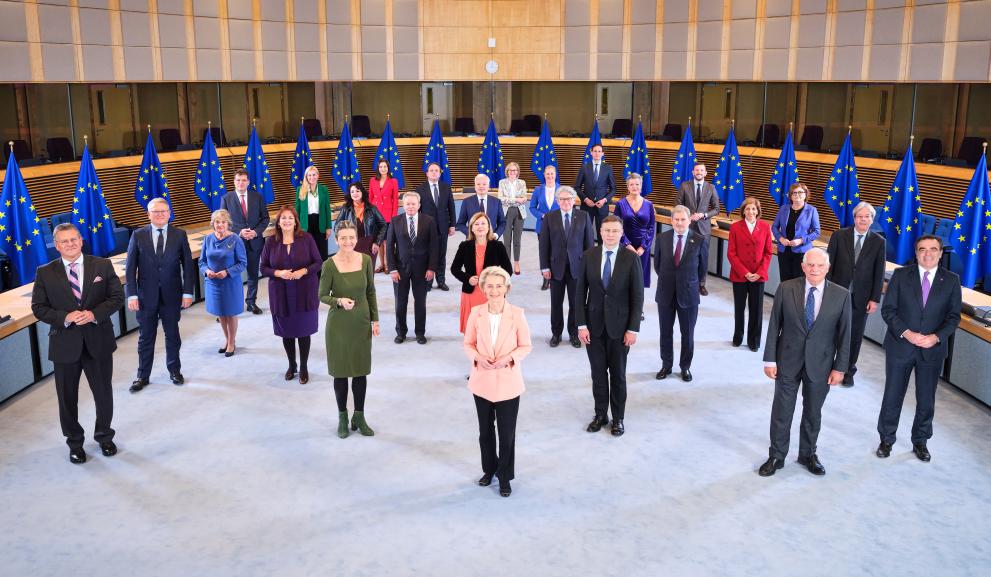
There are also their own equivalents of ministries, called Directorates-General, most of which are headed by a European Commissioner (examples of a body without a European Commissioner are the European Education and Culture Executive Agency42 and the European Health and Digital Executive Agency43), responsible for the overall management of the Directorate-General and accountable (that is, politically responsible) for the relevant policy area; and a Director-General, responsible for managing day-to-day affairs, who reports to the European Commissioner.
Directorates-General are responsible for different policy areas. They develop, implement, and manage EU policy, legislation, and funding programs. In addition, service departments handle specific administrative issues. Executive agencies manage programs set up by the Commission44.
It is also worth mentioning that a number of EU institutions have their own Directorates-General, but this is something completely different: almost all top-level organizational units of the Secretariat of the European Parliament and the General Secretariat of the Council of the European Union are named this way.
Besides the Directorates-General, there are also Vice-Presidents, who act on behalf of the President and coordinate work in their area of responsibility together with several members of the European Commission.
The presidential candidate chooses potential Vice-Presidents and Commissioners based on suggestions from EU countries. The list of nominees must be approved by national leaders in the European Council. Each nominee appears before the European Parliament to explain their vision and answer questions. Parliament then votes on whether to accept the nominees as a team. Finally, they are appointed by the European Council, acting by a qualified majority. The European Commission is elected for 5 years. The European Parliament can also dismiss the European Commission.
The European Commission itself consists of the following individuals45, as well as Directorates-General46.
I. President of the European Commission. Subordinate departments:
- IDEA (“Inspire, Debate, Engage and Accelerate Action”) is an advisory service providing innovative ideas and space for interdisciplinary research and cooperation on the European Commission’s main priorities;
- Recovery and Resilience Task Force;
- Secretariat-General;
- Data Protection Officer;
- Directorate-General for Communication;
- Legal Service.
II. Executive Vice-President of the European Commission for an Economy that Works for People, and European Commissioner for Trade.
- Directorate-General for Trade.
III. Vice-President of the European Commission for Values and Transparency.
IV. Executive Vice-President of the European Commission for the European Green Deal.
V. High Representative of the Union for Foreign Affairs and Security Policy.
- Service for Foreign Policy Instruments.
VI. Vice-President of the European Commission and European Commissioner for Democracy and Demography.
VII. Executive Vice-President of the European Commission “A Europe Fit for the Digital Age” and European Commissioner for Competition.
- Directorate-General for Competition.
VIII. Vice-President of the European Commission and European Commissioner for Promoting our European Way of Life.
IX. European Commissioner for Budget and Administration.
- Directorate-General for Interpretation;
- Directorate-General for Translation;
- Office for Administration and Payment of Individual Entitlements;
- European Anti-Fraud Office;
- European Commission Library;
- European Personnel Selection Office;
- Directorate-General for Human Resources and Security;
- European School of Administration;
- Historical Archives Service;
- Directorate-General for Digital Services;
- Office for Infrastructure and Logistics in Brussels;
- Office for Infrastructure and Logistics in Luxembourg;
- Directorate-General for Budget.
X. European Commissioner for Economy.
- Eurostat;
- Directorate-General for Taxation and Customs Union;
- Directorate-General for Economic and Financial Affairs.
XI. European Commissioner for Cohesion and Reforms.
- Directorate-General for Regional and Urban Policy.
XII. European Commissioner for Equality.
- Directorate-General for Justice and Consumers (this Directorate-General is also subordinate to the European Commissioner for Justice, as will be mentioned below).
XIII. European Commissioner for Transport.
- Directorate-General for Mobility and Transport.
XIV. European Commissioner for Energy.
- Directorate-General for Energy.
XV. European Commissioner for Innovation, Research, Culture, Education and Youth.
- Directorate-General for Education, Youth, Sport and Culture;
- Directorate-General for Structural Reform Support;
- Joint Research Centre;
- Directorate-General for Research and Innovation.
XVI. European Commissioner for Agriculture.
- Directorate-General for Agriculture and Rural Development.
XVII. European Commissioner for Health and Food Safety.
- Directorate-General for Health and Food Safety;
- Health Emergency Preparedness and Response Authority.
XVIII. European Commissioner for Home Affairs.
- Directorate-General for Migration and Home Affairs.
XIX. European Commissioner for Neighbourhood and Enlargement.
- Directorate-General for Neighbourhood and Enlargement Negotiations.
XX. European Commissioner for Environment, Oceans and Fisheries.
- Directorate-General for Environment;
- Directorate-General for Maritime Affairs and Fisheries.
XXI. European Commissioner for Climate Action.
- Directorate-General for Climate Action.
XXII. European Commissioner for Jobs and Social Rights.
- Directorate-General for Employment, Social Affairs and Inclusion.
XXIII. European Commissioner for Internal Market.
- Directorate-General for Internal Market, Industry, Entrepreneurship and SMEs;
- Directorate-General for Communications Networks, Content and Technology;
- Directorate-General for Defence Industry and Space.
XXIV. European Commissioner for Justice.
- Directorate-General for Justice and Consumers;
- Internal Audit Service.
XXV. European Commissioner for Crisis Management.
- Directorate-General for European Civil Protection and Humanitarian Aid Operations.
XXVI. European Commissioner for International Partnerships.
- Directorate-General for International Partnerships.
XXVII. European Commissioner for Financial Services, Financial Stability and Capital Markets Union.
- Directorate-General for Financial Stability, Financial Services and Capital Markets Union.
Powers of the European Commission47 fall into the following groups.
Legislative powers. The Commission is the sole EU institution proposing laws for adoption by the European Parliament and the Council of the EU that:
- Protect the interests of the EU and its citizens on issues that cannot be dealt with effectively at national level;
- Get technical details right by consulting experts and the public before proposing legislation.
Managing EU policies and allocating EU funding.
- The Commission sets EU spending priorities, together with the Council of the EU and the European Parliament;
- Draws up annual budgets for approval by the European Parliament and the Council of the EU;
- Supervises how the money is spent, under control by the Court of Auditors.
Enforcing EU law. Together with the Court of Justice, the Commission ensures that EU law is properly applied in all member countries.
Representing the EU internationally.
- Speaks on behalf of all EU countries in international bodies — in particular in the areas of trade policy and humanitarian aid;
- Negotiates international agreements for the EU.
Institutions, bodies, arrangements, symbols and holidays
Officially, there are seven institutions in the EU, and while we have covered the first four (European Parliament, European Council, Council of the European Union, European Commission), we will briefly describe the remaining three48.
Court of Justice of the European Union. Ensures that EU law is observed and that the Treaties are correctly interpreted and applied: it reviews the legality of the acts of the EU institutions, ensures that EU Member States comply with obligations under the Treaties, and interprets EU law at the request of national courts.
European Central Bank. Is responsible for maintaining price stability in the euro area. It is also responsible for monetary and exchange rate policy in the euro area and supports EU economic policies.
European Court of Auditors. Contributes to improving EU financial management, promoting accountability and transparency, and acts as the independent guardian of the financial interests of EU citizens. It checks that EU funds are correctly accounted for, raised and spent in accordance with the relevant rules and regulations, and achieve value for money.
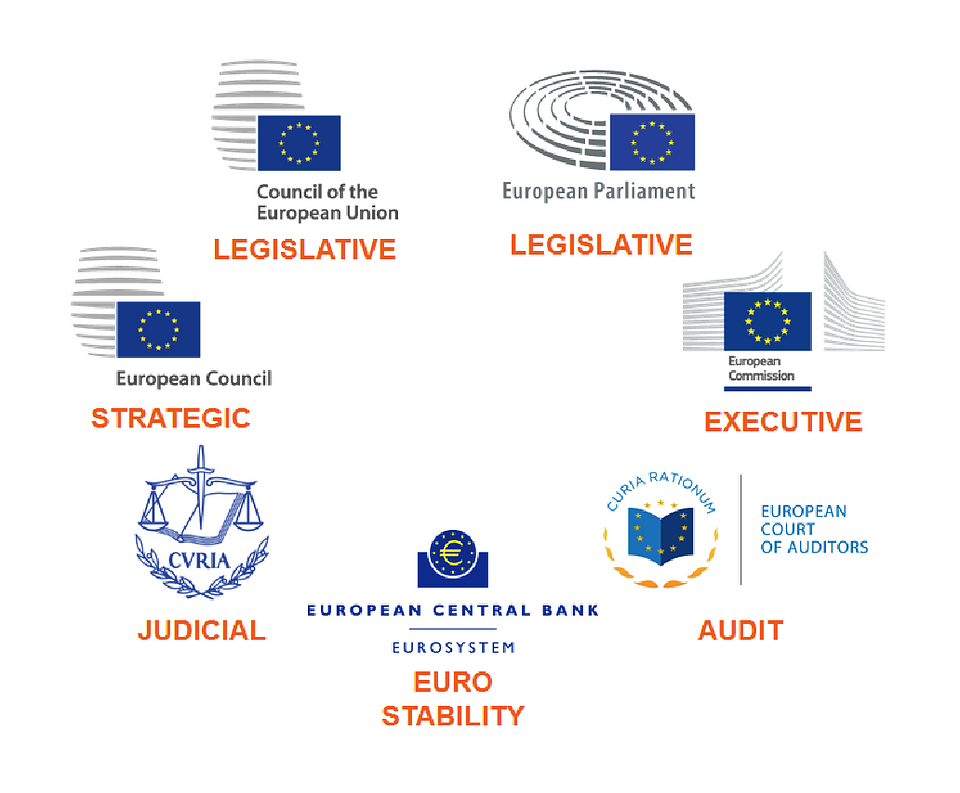
In addition to these, there are also special bodies that play a specialized role in helping the EU fulfill its tasks.
Advising the institutions is handled by the following bodies:
- European Economic and Social Committee (represents employers, workers, and representatives of other social, professional, economic, and cultural organizations);
- European Committee of the Regions (represents regional and local authorities).
Ensuring that institutions adhere to EU rules and procedures is handled by:
- European Ombudsman (holds EU institutions and agencies to account, promotes good administration);
- European Data Protection Supervisor (guarantees that EU institutions and bodies respect people’s right to privacy when processing their personal data);
- European Data Protection Board (is an independent body that ensures the consistent application of data protection rules throughout the EU and promotes cooperation among national data protection authorities in the EU).

Mention should be made of bodies such as the European Investment Bank (is the lending arm of the European Union. It focuses its activity on climate and environment, development, innovation and skills, small and medium-sized businesses, infrastructure, and cohesion) and the European External Action Service (is the foreign policy service supporting the EU on foreign policy matters).
There are also many other bodies, such as interinstitutional services, decentralized agencies, and executive agencies, which perform a wide variety of tasks.
Contrary to their names, the following institutions are not part of the EU:
- European Court of Human Rights (part of the Council of Europe)49;
- European Bank for Reconstruction and Development50;
- Organization for Security and Co-operation in Europe (OSCE)51.
Also, one of the most important parts of the EU are the arrangements aimed at creating a single space within the European Union (non-EU states can also become part of these arrangements), and here are some of them.
Eurozone. One of the most famous features of the EU is its currency, namely the euro, which was established in 1999.
The euro area, namely the Eurozone, comprises most of the EU (and not only: thus, Andorra, Monaco, San Marino and Vatican City have adopted the euro as their national currency under special monetary agreements with the EU and may issue their own euro coins within certain limits, but since they are not EU Member States, they are not part of the euro area), which is regulated by the European Central Bank, while national currencies have for various reasons so far been retained in a number of EU countries, such as Sweden, Poland, Czechia, Romania, Hungary and Bulgaria, as well as Denmark (which opted out of adopting the euro and, under the EU Treaty, Denmark has the right to remain outside the euro area even if all criteria are met52, but may join in the future if it wishes)53.
Schengen area. The Schengen area is one of the main achievements of the European project. It started in 1985 as an intergovernmental project between five EU countries — France, Germany, Belgium, the Netherlands and Luxembourg — and has gradually expanded to become the largest free travel area in the world54. The Schengen area guarantees free movement to more than 400 million EU citizens, along with non-EU nationals living in the EU or visiting the EU as tourists, exchange students or for business purposes (anyone legally present in the EU).
Free movement of persons enables every EU citizen to travel, work and live in an EU country without special formalities. Schengen underpinning this freedom by allowing citizens to move around the Schengen area without being subjected to border checks (at the same time, competent national authorities may carry out police checks at internal borders and in border areas, provided that such checks are not equivalent to border checks, as laid down in the Schengen Borders Code, supplemented by the case law of the Court of Justice)55.

If there is a serious threat to public policy or internal security, a Schengen country may exceptionally reintroduce border control at its internal borders.
If such controls are reintroduced, the Member State concerned must inform the Council of the EU (and thus other Schengen countries), the European Parliament and the European Commission, as well as the public56.
But the Schengen area is not equal to the European Union: it currently encompasses almost all EU countries (23 out of 27), as well as Iceland, Norway, Switzerland and Liechtenstein57.
Bulgaria and Romania became partially part of the Schengen area as of March 31, 2024, resulting in border control being lifted at air and sea borders. Following this first step, a further decision should be taken by the Council of the EU to establish a date for lifting checks at internal land borders.
Internal border controls with Cyprus have not yet been lifted (the evaluation process to join the Schengen area is ongoing). The Schengen Information System (the security and border management information sharing system in Europe, serving as a cooperation tool for border, immigration, police, customs and judicial authorities in the EU and Schengen associated countries58) was put into operation in Cyprus in July 2023, and this process was already verified by a dedicated Schengen evaluation in 202359), while Ireland is not part of the Schengen area, meaning Irish citizens must show a passport when entering other EU Member States, and likewise all EU citizens entering Ireland will need to present a passport or a valid national identity card60.
Informally, the microstates within EU territory — San Marino and Vatican City, located inside Italy61, as well as Monaco62 and Andorra63 — are also treated as belonging to “Schengen”, although they have not signed the agreement, while it should be understood that they are also sovereign states with their own immigration policies: for example, foreign visitors wishing to spend more than 10 days in San Marino need to obtain permission from the government.
The EU single market64. Established on January 1, 1993, it sets up a single territory among the 27 EU countries that ensures the free movement of goods, services, people and capital in the EU. The single market also ensures that European citizens can freely live, work, study and do business in the EU wherever they want.
At the same time, the Single Market includes not only the 27 EU member countries, but also Norway, Iceland and Liechtenstein (through the European Economic Area65, established on January 1, 1994). Switzerland has partial access to the single market (through bilateral agreements).
It is worth noting that the European Economic Area still has limitations compared to the EU Single Market. Thus, the European Economic Area Agreement does not cover the following EU policies66:
- Common agriculture and fisheries policies (although the Agreement contains provisions on various aspects of trade in agricultural and fish products);
- Customs union;
- Common trade policy;
- Common foreign and security policy;
- Justice and home affairs (although the EFTA countries are part of the Schengen area);
- Monetary union.
The European Union also has its own symbols, which reflect the ideas of the Union67:
- A flag showing a circle of twelve gold stars on a blue background;
- An anthem based on the “Ode to Joy” from the Ninth Symphony by Ludwig van Beethoven;
- The motto “United in diversity”.
Many people know about the holiday called Europe Day, which is celebrated on May 9. It is dedicated to peace and unity in Europe. The date marks the anniversary of the historic “Schuman Declaration”, which set out his idea for a new form of political cooperation in Europe, which would make war between Europe’s nations unthinkable. Schuman’s proposal is considered to be the beginning of what is now the European Union68.
EU member states: opportunities and limitations, accession and withdrawal
The European Union is an international organization bringing together 27 states69:
- Austria;
- Belgium;
- Bulgaria;
- Croatia;
- Cyprus;
- Czechia;
- Denmark;
- Estonia;
- Finland;
- France;
- Germany;
- Greece;
- Hungary;
- Ireland;
- Italy;
- Latvia;
- Lithuania;
- Luxembourg;
- Malta;
- Netherlands;
- Poland;
- Portugal;
- Romania;
- Slovakia;
- Slovenia;
- Spain;
- Sweden.
Because of this, a system is set up in which the EU can act only in those areas where its member states have authorized it to do so through the EU Treaties. The Treaties specify who can pass laws and in which areas: the EU, national governments, or both.
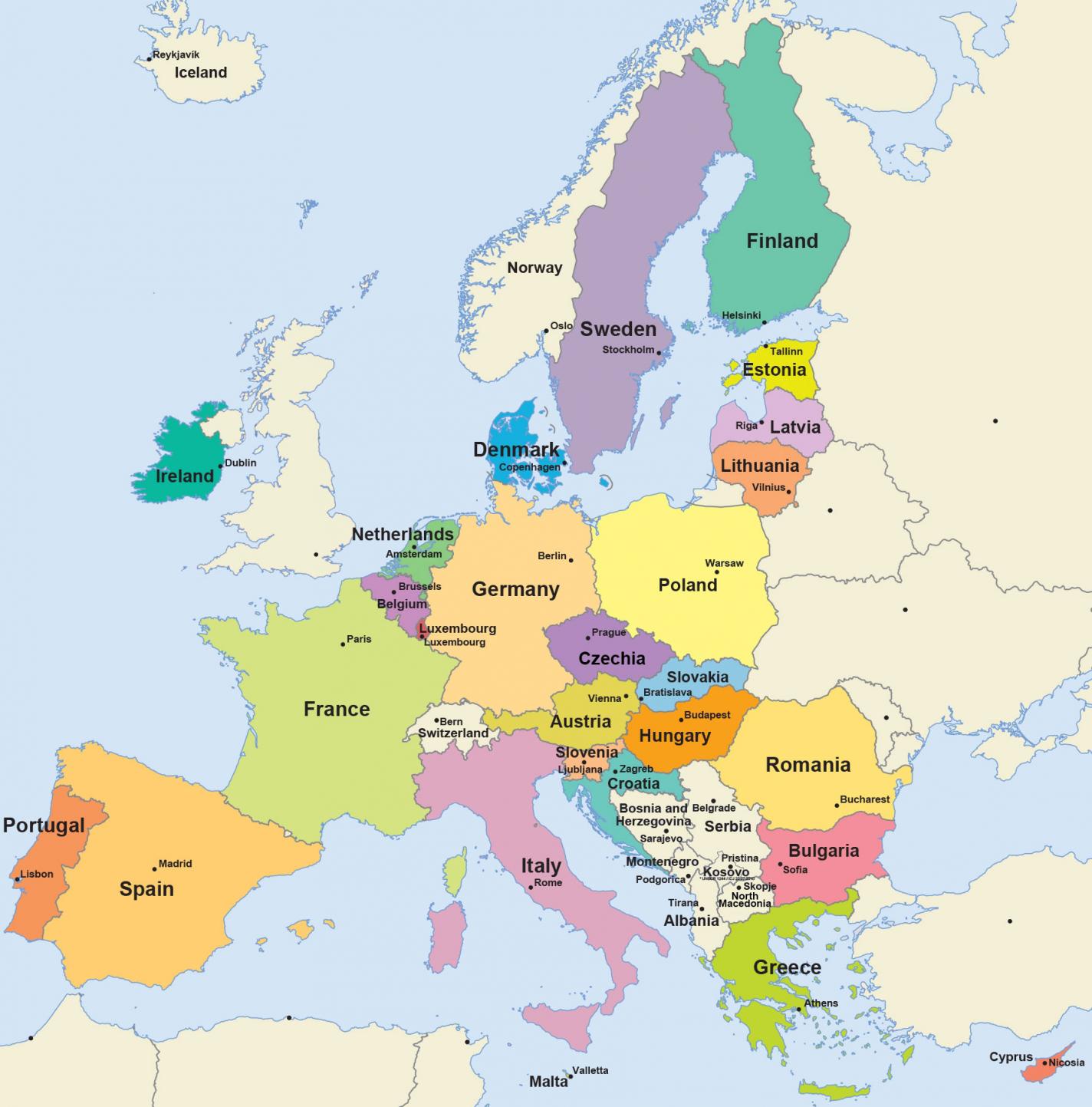
The EU is largely built on 3 principles that determine how and in what areas the EU may act:
- Conferral — the EU has only those competences conferred upon it by the EU Treaties, which have been ratified by all member states;
- Proportionality — EU action cannot exceed what is necessary to achieve the objectives of the Treaties;
- Subsidiarity — in areas where either the EU or national governments can act, the EU may intervene only if it can act more effectively.
The EU’s competence is quite varied, and we will begin with those aspects where the European Union has exclusive competence, namely in the following areas70:
- Customs union;
- The establishing of the competition rules necessary for the functioning of the internal market;
- Monetary policy for the Member States whose currency is the euro;
- The conservation of marine biological resources under the common fisheries policy;
- Common commercial policy;
- The Union shall also have exclusive competence for the conclusion of an international agreement when its conclusion is provided for in a legislative act of the Union or is necessary to enable the Union to exercise its internal competence, or in so far as its conclusion may affect common rules or alter their scope.
Shared competence of the Union and the member states constitutes a system where in certain areas both the EU and member states can pass laws. However, member states can do so only if the EU has not yet proposed laws or has decided not to do so. Shared competence applies in the following main areas71:
- Internal market;
- Social policy, for the aspects defined in this Treaty;
- Economic, social and territorial cohesion;
- Agriculture and fisheries, excluding the conservation of marine biological resources;
- Environment;
- Consumer protection;
- Transport;
- Trans-European networks;
- Energy;
- Area of freedom, security and justice;
- Common safety concerns in public health matters, for the aspects defined in this Treaty;
- In the areas of research, technological development and space, the Union shall have competence to carry out activities, in particular to define and implement programmes; however, the exercise of that competence shall not result in Member States being prevented from exercising theirs;
- In the areas of development cooperation and humanitarian aid, the Union shall have competence to carry out activities and conduct a common policy; তবে, that competence shall not result in Member States being prevented from exercising theirs.
The EU competence also includes taking action to support, coordinate or supplement member states’ actions, which in the Treaties are called supporting competences72. In this sphere, the EU has no power to pass laws and cannot interfere with member states’ ability to carry out these actions. At the European level, these cover the following areas73:
- Protection and improvement of human health;
- Industry;
- Culture;
- Tourism;
- Education, vocational training, youth and sport;
- Civil protection;
- Administrative cooperation.
The EU has special competences (if conferred upon it by member states) to coordinate member states’ policies or implement policies supplementary to their common policies in the following areas74:
- The Member States shall coordinate their economic and employment policies within arrangements as determined by this Treaty, which the Union shall have competence to provide;
- The Union shall have competence, in accordance with the provisions of the Treaty on European Union, to define and implement a common foreign and security policy, including the progressive framing of a common defence policy.
According to Article 12 of the Treaty on European Union, national Parliaments of the EU member states contribute actively to the good functioning of the Union in the following ways75:
- Through being informed by the institutions of the Union and having draft legislative acts of the Union forwarded to them in accordance with the Protocol on the role of national Parliaments in the European Union;
- By seeing to it that the principle of subsidiarity is respected in accordance with the procedures provided for in the Protocol on the application of the principles of subsidiarity and proportionality;
- By taking part, within the framework of the area of freedom, security and justice, in the evaluation mechanisms for the implementation of the Union policies in that area, in accordance with Article 70 of the Treaty on the Functioning of the European Union, and through being involved in the political monitoring of Europol and the evaluation of Eurojust’s activities in accordance with Articles 88 and 85 of that Treaty;
- By taking part in the revision procedures of the Treaties, in accordance with Article 48 of this Treaty;
- By being notified of applications for accession to the Union, in accordance with Article 49 of this Treaty;
- By taking part in the interparliamentary cooperation between national Parliaments and with the European Parliament, in accordance with the Protocol on the role of national Parliaments in the European Union.
National parliaments of EU member states have an early warning system, which provides that if a country (in this system, a country’s votes are determined by its parliament — unicameral parliaments have 2 votes, while in bicameral parliaments each chamber has 1 vote) points out a breach of general principles of subsidiarity by a legislative proposal — the so-called “yellow card” — then such proposal must, in their view, be reviewed, although this does not mean it will not be adopted (the European Commission must review the proposal and “may decide to maintain, amend or withdraw the draft, giving reasons for its decision”76).
If there is a sufficiently large number of votes, it is called an “orange card”, meaning that if the European Commission proceeds with the proposal, a majority of votes in the European Parliament or 55% of member states’ votes in the Council of the European Union will likely block it77.
If an EU member state fails to comply with EU law, the European Commission can send it a “letter of formal notice”, allowing the member state to submit its observations. Three categories of non-compliance can be highlighted78:
- Legislative or administrative decisions or practices;
- Positive action (taking measures contrary to EU law or failing to repeal existing ones);
- Negative action (delays in implementing EU law or failing to inform the European Commission about implementation).
If the European Commission then considers that EU rules are still being breached, it sends a reasoned opinion to the member state. This reasoned opinion sets a deadline by which the member state must comply with EU law. If the EU member state fails to comply within the specified deadline, the European Commission may refer the case to the Court of Justice of the European Union (under Article 258 of the Treaty on the Functioning of the European Union (TFEU))79.
The Court may impose a financial penalty on a member state that fails to comply with a court judgment following a second court procedure (Article 260(2) of the Treaty on the Functioning of the European Union). However, if an EU member state has failed to implement a directive, the Court may impose financial sanctions when issuing its first judgment under Article 258 of the Treaty on the Functioning of the European Union (Article 260(3) of the Treaty on the Functioning of the European Union).
Any natural or legal person may also lodge a complaint with the European Commission if a measure or administrative practice in an EU member state violates EU rules. However, only the European Commission can initiate the procedure under Articles 258 and 260 of the Treaty on the Functioning of the European Union.
To become an EU member country, a state must satisfy a number of criteria, and here are some of them80:
- Being located in Europe;
- Respecting and promoting the values set out in Article 2 of the Treaty on European Union (TEU), namely: respect for human dignity, freedom, democracy, equality and the rule of law; respect for human rights, including the rights of persons belonging to minorities; respect for a pluralistic society and non-discrimination;
- Stability of institutions guaranteeing democracy, the rule of law, human rights and respect for and protection of minorities;
- A functioning market economy and the capacity to cope with competition and market forces within the EU;
- The ability to take on the obligations of membership, including the capacity to effectively implement the rules, standards and policies that make up the body of EU law (“acquis”), as well as adherence to the aims of political, economic and monetary union.
Accession is not automatic, as it depends on the proper preparation of the applicant country concerned and on the EU’s capacity to integrate the new member. Thus, there is a pre-accession period of varying length during which the candidate country adapts its institutions, standards, and infrastructure to be able to fulfill its obligations as a member state. This process, also known as the accession process, consists of three main steps81.
1. Candidacy. A country wishing to join the EU must submit an application for membership to the Council of the EU. The Council of the EU then asks the European Commission to verify the applicant country’s ability to meet the membership criteria. Based on the European Commission’s recommendation, the Council of the EU decides whether to grant the country candidate status and open formal negotiations on its accession to the Union. All EU member states must agree to this decision.
Currently, Albania, Bosnia and Herzegovina, Georgia, Moldova, Montenegro, North Macedonia, Serbia, Türkiye, and Ukraine hold candidate status. There is also the concept of a “potential candidate”, meaning a state that has submitted an application to join the EU but has not yet received candidate status, and currently Kosovo holds this status.
2. Membership negotiations. During accession negotiations, the candidate country prepares to implement EU laws and standards, also known as the acquis. Throughout the negotiations, the European Commission monitors the candidate’s progress in these reforms and informs the Council of the EU and the European Parliament through regular reports and communications.
3. Accession. When the negotiations are concluded, the European Commission gives its opinion on whether the candidate is ready to become a member state. If the European Commission concludes that the candidate is ready, an accession treaty is prepared. This document details the terms and conditions of the country’s EU membership. The accession treaty must be approved by the European Commission, the European Council, and the European Parliament before it is signed and ratified by all EU member states and the candidate country. The candidate country officially joins the EU on the date specified in the accession treaty.
EU partners in the Western Balkans follow a unique enlargement process called the Stabilization and Association Process (SAP)82. Currently, the partners in this process are Albania, Bosnia and Herzegovina, Kosovo, Montenegro, North Macedonia, and Serbia.
The aim of the SAP is to stabilize these partners politically and economically so that they are ultimately ready to join the EU. The EU plans to achieve this through:
- Providing financial assistance;
- Ensuring easy access to EU markets;
- Fostering cooperation among countries in the region.
The European Commission recently adopted a new Growth Plan for the Western Balkans. The objective of this plan is to bring the Western Balkan partners closer to EU accession through economic reforms and investments, as well as to bring some of the benefits of EU membership to the citizens of the region.
There is also a mechanism for withdrawing from the EU: any member state which decides to withdraw from the EU must notify the European Council of its intention. The EU shall negotiate and conclude an agreement with that state, setting out the arrangements for its withdrawal, taking account of the framework for its future relationship with the Union. The agreement shall be concluded on behalf of the EU by the Council, acting by a qualified majority, after obtaining the consent of the European Parliament83.

The Treaties shall cease to apply to the state in question from the date of entry into force of the withdrawal agreement or, failing that, two years after the notification referred to in paragraph 2, unless the European Council, in agreement with the Member State concerned, unanimously decides to extend this period. If a country that has left the EU asks to rejoin, it must follow the same procedure as any other country applying for the first time.
Is there an exclusion mechanism from the EU? No, there is no mechanism to exclude a country from the EU, but there is a “suspension clause” (Article 7 of the Treaty on European Union)84. Article 7 of the Treaty on European Union allows for the possibility of suspending EU membership rights (such as voting rights in the Council of the EU) if a country seriously and persistently breaches the principles on which the EU is founded, as defined in Article 2 of the Treaty on European Union (respect for human dignity, freedom, democracy, equality, the rule of law and respect for fundamental rights, including the rights of persons belonging to minorities). However, the membership obligations of that country remain binding.
The mechanism starts with a proposal to identify a clear risk of a serious breach of EU values, submitted either by the European Commission, the European Parliament, or one third of the member states. It is then approved by a two-thirds majority in the Parliament. The accused country must then respond before the Council of the EU, which may then issue recommendations and vote by a four-fifths majority to determine the existence of a breach.
In case of a serious and persistent breach (that is, the country does not listen to the instructions of the Council of the EU), the European Commission or one third of the EU member states, supported by a two-thirds majority in the European Parliament, calls on the country to respond again, but this time before the European Council. After that, the European Council must act unanimously to proceed to the final decision. Once the European Council unanimously determines that a breach is still occurring, the Council of the EU votes by qualified majority to suspend the rights of the accused country, including voting rights in the Council of the EU, until all obligations are met.
Article 354 of the Treaty on the Functioning of the European Union sets out the voting procedures to be used by the main EU institutions when a member state is subject to Article 7: thus, the country concerned does not take part in the vote and is not included in the calculation for the vote.
The Council of the EU, acting by a qualified majority, may subsequently decide to vary or revoke measures taken in response to changes in the situation which led to their being imposed.
Special territories of EU member states
Usually, when talking and writing about the European Union, people mean the union of European states, however, many EU countries have territories that, for historical, geographical, or political reasons, enjoy a special status within or outside the European Union and the European Free Trade Association. Such territories take several forms.
The first form is the Outermost Region of the Community (OMR)85. These territories are part of certain EU member states that are located in areas of the globe distant from Europe.
There are nine outermost regions in total and they can be divided into three groups:
- Part of France: French Guiana, Guadeloupe, Martinique, Mayotte, Reunion Island, and Saint-Martin;
- Part of Spain: the Canary Islands;
- Part of Portugal: the Azores, Madeira.
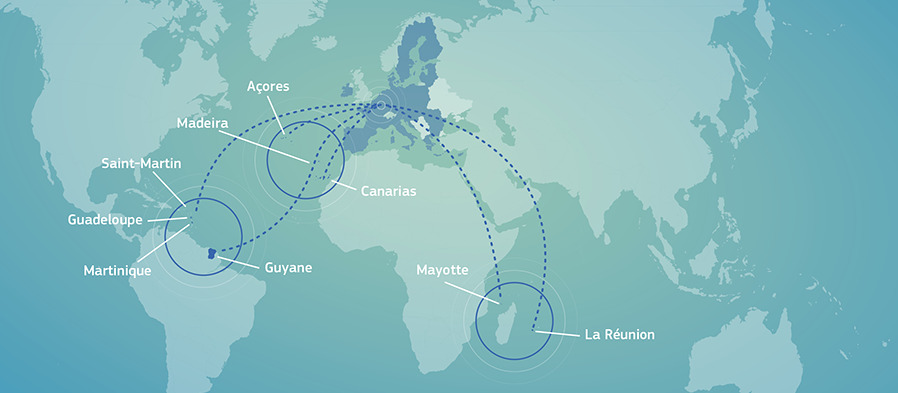
Despite the thousands of kilometers separating them from the European continent, these regions are an integral part of the EU.
Thus, EU law and all rights and duties linked to EU membership apply to the outermost regions. In accordance with Article 349 of the Treaty on the Functioning of the European Union (TFEU), specific measures and provisions in EU law help these regions address the main challenges they face due to their remoteness, insularity, small size, difficult topography and climate, and economic dependence on a limited number of products.
The outermost regions have unique potential and distinctive assets that can benefit the EU as a whole. They provide a European presence in strategic areas of the world and have exceptional characteristics that make them excellent laboratories for research and innovation, for example in biodiversity and renewable energy.
The special status granted to the outermost regions under Article 349 of the Treaty on the Functioning of the European Union has led, since 2004, to the development of European strategies aimed at tackling the challenges these regions face and helping them harness their assets. The implementation of these strategies relies on a close partnership between the European Commission, the outermost regions, and their respective states (France, Portugal, and Spain).
The second form is the Overseas Countries and Territories (OCTs)86. They are not sovereign countries, but depend to varying degrees on the three member states with which they maintain special ties, namely Denmark, France, and the Netherlands.
As of February 1, 2020, these are the following territories:
- Linked to Denmark: Greenland;
- Linked to the Netherlands: Aruba, Bonaire, Curacao, Saba, Sint Eustatius, Sint Maarten;
- Linked to France: French Polynesia, French Southern and Antarctic Lands, New Caledonia, Saint Barthelemy, Saint Pierre and Miquelon, Wallis and Futuna Islands.
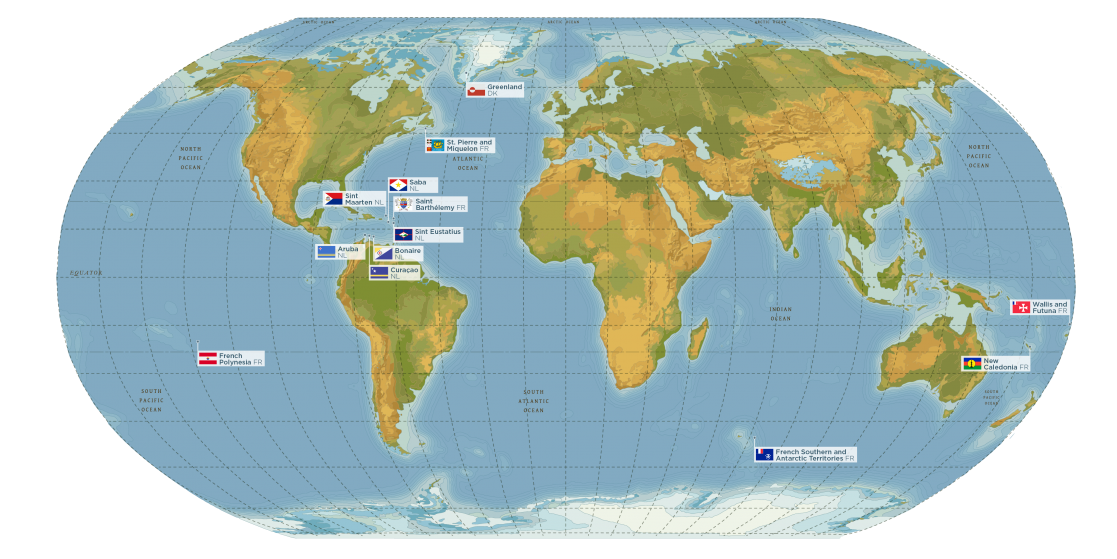
They enjoy wide autonomy, covering areas such as economic matters, the labor market, public health, internal affairs, and customs, while defense and foreign relations usually remain the responsibility of the member states. Relations between them and the EU date back to the signing of the Treaty of Rome in 1957. They are neither part of EU territory nor part of the EU single market. Through the Overseas Countries and Territories Association, they benefit from a special political, cooperative, and commercial partnership with the EU (duty-free and quota-free access to the EU market).
They are of great political importance to the EU as a whole: although small in size and population, they play a vital role as strategic outposts of the Union in their geographical areas.
The third form is Special territories. Other territories not listed above are part of EU member states, but for various reasons do not have a special status, and their relationship with the EU is ad hoc, as is the case, for example, with the Faroe Islands87. Not all of them belong to the EU or participate in the single market.
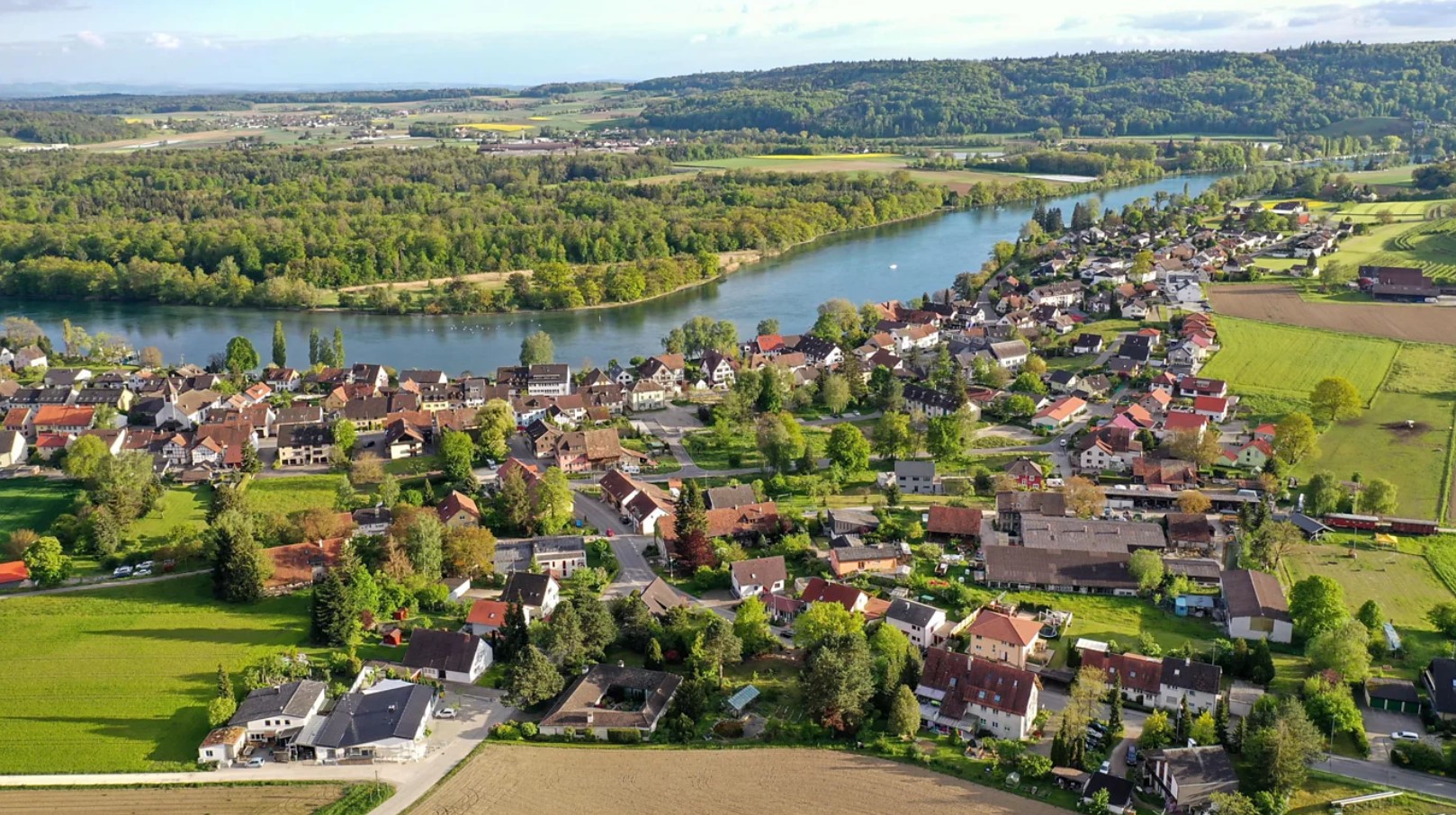
Currently, they are represented by the following territories88:
- Finland: Aland Islands;
- Germany: Heligoland and Busingen territory;
- Italy: Livigno, Campione d’Italia and the Italian waters of Lake Lugano;
- Denmark: Faroe Islands;
- Greece: Mount Athos;
- Spain: Ceuta and Melilla;
- Cyprus: Sovereign Base Areas of the UK in Akrotiri and Dhekelia.
Conclusion
The European Union is a unique association that, through its institutional and legal features, forms a single space ensuring the integration of member states into something greater than just a union of European countries. Despite all the challenges, the EU serves as an example of how humanity should develop, and we wish that in the future a democratic Russia, even if not immediately, will join the European family. Continental associations such as the EU represent the future of humanity, provided that history moves along a humanistic and democratic path.
- Facts and figures on life in the European Union // European Union (https://european-union.europa.eu/index_en). [Electronic resource]. URL: https://european-union.europa.eu/principles-countries-history/key-facts-and-figures/life-eu_en (Accessed: 04.05.2024).
- Languages // European Union (https://european-union.europa.eu/index_en). [Electronic resource]. URL: https://european-union.europa.eu/principles-countries-history/languages_en (Accessed: 04.05.2024).
- Founding agreements // European Union (https://european-union.europa.eu/index_en). [Electronic resource]. URL: https://european-union.europa.eu/principles-countries-history/principles-and-values/founding-agreements_en?prefLang=ru (Accessed: 04.05.2024).
- Draft treaty establishing a constitution for Europe (not ratified) // European Parliament (https://www.europarl.europa.eu/portal/en). [Electronic resource]. URL: https://www.europarl.europa.eu/about-parliament/en/in-the-past/the-parliament-and-the-treaties/draft-treaty-establishing-a-constitution-for-europe (Accessed: 04.05.2024).
- Aims and values // European Union (https://european-union.europa.eu/index_en). [Electronic resource]. URL: https://european-union.europa.eu/principles-countries-history/principles-and-values/aims-and-values_en?prefLang=ru (Accessed: 04.05.2024).
- Consolidated versions of the Treaty on European Union and the Treaty on the Functioning of the European Union (2016/C 202/01) // EUR-Lex (https://eur-lex.europa.eu/homepage.html). [Electronic resource]. URL: https://eur-lex.europa.eu/legal-content/EN/TXT/HTML/?uri=CELEX:12016ME/TXT&from=EN (Accessed: 04.05.2024).
- Treaty of Lisbon amending the Treaty on European Union and the Treaty establishing the European Community // EUR-Lex (https://eur-lex.europa.eu/homepage.html). [Electronic resource]. URL: https://eur-lex.europa.eu/legal-content/EN/TXT/?uri=celex%3A12007L%2FTXT (Accessed: 04.05.2024).
- Daria Sergeeva. What the European Union is and how it works // RBC (https://www.rbc.ru/). December 2, 2022. [Electronic resource]. URL: https://trends.rbc.ru/trends/social/62b2cb379a79470e542ae137 (Accessed: 04.05.2024).
- Council configurations // Council of the EU and the European Council (https://www.consilium.europa.eu/en/). [Electronic resource]. URL: https://www.consilium.europa.eu/en/council-eu/configurations/ (Accessed: 04.05.2024).
- Competitiveness Council configuration (COMPET) // Council of the EU and the European Council (https://www.consilium.europa.eu/en/). April 22, 2024. [Electronic resource]. URL: https://www.consilium.europa.eu/en/council-eu/configurations/compet/ (Accessed: 04.05.2024).
- General Affairs Council configuration (GAC) // Council of the EU and the European Council (https://www.consilium.europa.eu/en/). March 23, 2024. [Electronic resource]. URL: https://www.consilium.europa.eu/en/council-eu/configurations/gac/ (Accessed: 04.05.2024).
- What is the Council? // Council of the EU and the European Council (https://www.consilium.europa.eu/en/). February 8, 2024. [Electronic resource]. URL: https://www.consilium.europa.eu/en/council-eu/what-is-the-council/ (Accessed: 04.05.2024).
- What is the Council? // Council of the EU and the European Council (https://www.consilium.europa.eu/en/). February 8, 2024. [Electronic resource]. URL: https://www.consilium.europa.eu/en/council-eu/what-is-the-council/ (Accessed: 04.05.2024).
- Qualified majority // Council of the EU and the European Council (https://www.consilium.europa.eu/en/). January 11, 2024. [Electronic resource]. URL: https://www.consilium.europa.eu/en/council-eu/voting-system/qualified-majority/ (Accessed: 04.05.2024).
- Unanimity // Council of the EU and the European Council (https://www.consilium.europa.eu/en/). February 8, 2024. [Electronic resource]. URL: https://www.consilium.europa.eu/en/council-eu/voting-system/unanimity/ (Accessed: 04.05.2024).
- The Members of the European Parliament // European Parliament (https://www.europarl.europa.eu/portal/en). [Electronic resource]. URL: https://www.europarl.europa.eu/about-parliament/en/organisation-and-rules/organisation/members (Accessed: 04.05.2024).
- European Council Decision (EU) 2023/2061 of 22 September 2023 establishing the composition of the European Parliament // EUR-Lex (https://eur-lex.europa.eu/homepage.html). [Electronic resource]. URL: https://eur-lex.europa.eu/eli/dec/2023/2061/oj (Accessed: 04.05.2024).
- The President of the European Parliament // European Parliament (https://www.europarl.europa.eu/portal/en). [Electronic resource]. URL: https://www.europarl.europa.eu/about-parliament/en/organisation-and-rules/organisation/the-president (Accessed: 04.05.2024).
- The European Parliament // EUR-Lex (https://eur-lex.europa.eu/homepage.html). February 23, 2024. [Electronic resource]. URL: https://eur-lex.europa.eu/EN/legal-content/summary/the-european-parliament.html (Accessed: 04.05.2024).
- The European Parliament: electoral procedures // European Parliament (https://www.europarl.europa.eu/portal/en). October 2023. [Electronic resource]. URL: https://www.europarl.europa.eu/factsheets/en/sheet/21/the-european-parliament-electoral-procedures (Accessed: 04.05.2024).
- Michael Levy. single transferable vote // Encyclopædia Britannica, Inc. (https://www.britannica.com/). [Electronic resource]. URL: https://www.britannica.com/topic/single-transferable-vote (Accessed: 04.05.2024).
- Johanna Metz. Zwei-Prozent-Hürde für Europawahlen beschlossen // DASPARLAMENT (https://www.das-parlament.de/startseite). June 19, 2023. [Electronic resource]. URL: https://www.das-parlament.de/aussen/europa/zwei-prozent-huerde-fuer-europawahlen-beschlossen (Accessed: 04.05.2024).
- How to vote in Belgium // European Parliament (https://www.europarl.europa.eu/portal/en). March 26, 2024. [Electronic resource]. URL: https://elections.europa.eu/en/how-to-vote/be/ (Accessed: 04.05.2024).
- Voting age for European elections // European Parliament (https://www.europarl.europa.eu/portal/en). August 28, 2023. [Electronic resource]. URL: https://www.europarl.europa.eu/thinktank/en/document/EPRS_ATA(2023)749767 (Accessed: 04.05.2024).
- How European elections work // European Parliament (https://www.europarl.europa.eu/portal/en). [Electronic resource]. URL: https://elections.europa.eu/en/how-elections-work/ (Accessed: 04.05.2024).
- Registered Parties // Authority for European Political Parties and European Political Foundations (https://www.appf.europa.eu/appf/en/home/the-authority). [Electronic resource]. URL: https://www.appf.europa.eu/appf/en/parties-and-foundations/registered-parties (Accessed: 04.05.2024).
- About us // Volt Europa(https://www.volteuropa.org/). [Electronic resource]. URL: https://www.volteuropa.org/about (Accessed: 04.05.2024).
- Wgo we are // European Pirate Party (https://european-pirateparty.eu/sample-page/). [Electronic resource]. URL: https://european-pirateparty.eu/sample-page/ (Accessed: 04.05.2024).
- The Political groups of the European Parliament // European Parliament (https://www.europarl.europa.eu/portal/en). [Electronic resource]. URL: https://www.europarl.europa.eu/about-parliament/en/organisation-and-rules/organisation/political-groups (Accessed: 04.05.2024).
- European Parliament // European Union(https://european-union.europa.eu/index_en). [Electronic resource]. URL: https://european-union.europa.eu/institutions-law-budget/institutions-and-bodies/search-all-eu-institutions-and-bodies/european-parliament_en (Accessed: 04.05.2024).
- Ordinary legislative procedure // European Parliament (https://www.europarl.europa.eu/portal/en). [Electronic resource]. URL: https://www.europarl.europa.eu/infographic/legislative-procedure/index_en.html#proposal-not-adopted (Accessed: 04.05.2024).
- 4. Minimum numbers of signatories for initiatives registered since 01/02/2020 // European Union (https://european-union.europa.eu/index_en). [Electronic resource]. URL: https://citizens-initiative.europa.eu/how-it-works/regulatory-framework-european-citizens-initiative/thresholds_en (Accessed: 04.05.2024).
- The ordinary legislative procedure // Council of the EU and the European Council (https://www.consilium.europa.eu/en/). January 19, 2024. [Electronic resource]. URL: https://www.consilium.europa.eu/en/council-eu/decision-making/ordinary-legislative-procedure/ (Accessed: 04.05.2024).
- EP after the Lisbon treaty: Bigger role in shaping Europe // European Parliament (https://www.europarl.europa.eu/portal/en). [Electronic resource]. URL: https://www.europarl.europa.eu/about-parliament/en/powers-and-procedures/the-lisbon-treaty (Accessed: 04.05.2024).
- The ordinary legislative procedure // Council of the EU and the European Council (https://www.consilium.europa.eu/en/). March 24, 2024. [Electronic resource]. URL: https://www.consilium.europa.eu/en/council-eu/decision-making/ordinary-legislative-procedure/ (Accessed: 04.05.2024).
- How plenary works // European Parliament (https://www.europarl.europa.eu/portal/en). [Electronic resource]. URL: https://www.europarl.europa.eu/about-parliament/en/organisation-and-rules/how-plenary-works (Accessed: 04.05.2024).
- European Council // European Union (https://european-union.europa.eu/index_en). [Electronic resource]. URL: https://european-union.europa.eu/institutions-law-budget/institutions-and-bodies/search-all-eu-institutions-and-bodies/european-council_en (Accessed: 04.05.2024).
- The role of the European Council in nominations and appointments // Council of the EU and the European Council (https://www.consilium.europa.eu/en/). February 8, 2024. [Electronic resource]. URL: https://www.consilium.europa.eu/en/european-council/role-nominations-appointment/ (Accessed: 04.05.2024).
- How the European Council works // Council of the EU and the European Council (https://www.consilium.europa.eu/en/). March 21, 2024. [Electronic resource]. URL: https://www.consilium.europa.eu/en/european-council/how-the-european-council-works/ (Accessed: 04.05.2024).
- How the Commission is organized // European Commission (https://commission.europa.eu/index_en). [Electronic resource]. URL: https://commission.europa.eu/about-european-commission/organisational-structure/how-commission-organised_en (Accessed: 04.05.2024).
- European Commission // European Union (https://european-union.europa.eu/index_en). [Electronic resource]. URL: https://european-union.europa.eu/institutions-law-budget/institutions-and-bodies/search-all-eu-institutions-and-bodies/european-commission_en?prefLang=ru (Accessed: 04.05.2024).
- European Education and Culture Executive Agency // European Commission (https://commission.europa.eu/index_en). [Electronic resource]. URL: https://commission.europa.eu/about-european-commission/departments-and-executive-agencies/european-education-and-culture-executive-agency_en?prefLang=ru (Accessed: 04.05.2024).
- European Health and Digital Executive Agency // European Commission (https://commission.europa.eu/index_en). [Electronic resource]. URL: https://commission.europa.eu/about-european-commission/departments-and-executive-agencies/european-health-and-digital-executive-agency_en?prefLang=ru (Accessed: 04.05.2024).
- How the Commission is organised // European Commission (https://commission.europa.eu/index_en). [Electronic resource]. URL: https://commission.europa.eu/about-european-commission/organisational-structure/how-commission-organised_en?prefLang=ru (Accessed: 04.05.2024).
- The Commissioners // European Commission (https://commission.europa.eu/index_en). [Electronic resource]. URL: https://commissioners.ec.europa.eu/index_en (Accessed: 04.05.2024).
- Departments and executive agencies // European Commission (https://commission.europa.eu/index_en). [Electronic resource]. URL: https://commission.europa.eu/about-european-commission/departments-and-executive-agencies_en?prefLang=ru (Accessed: 04.05.2024).
- European Commission // European Union (https://european-union.europa.eu/index_en). [Electronic resource]. URL: https://european-union.europa.eu/institutions-law-budget/institutions-and-bodies/search-all-eu-institutions-and-bodies/european-commission_en?prefLang=ru (Accessed: 04.05.2024).
- Types of institutions and bodies // European Union (https://european-union.europa.eu/index_en). [Electronic resource]. URL: https://european-union.europa.eu/institutions-law-budget/institutions-and-bodies/types-institutions-and-bodies_en (Accessed: 04.05.2024).
- Structure // Council of Europe (https://www.coe.int/en/web/portal/home). [Electronic resource]. URL: https://www.coe.int/en/web/about-us/structure (Accessed: 04.05.2024).
- About us // European Bank for Reconstruction and Development (https://www.ebrd.com/home.html). [Electronic resource]. URL: https://www.ebrd.com/about-us.html (Accessed: 04.05.2024).
- Who we are // Organization for Security and Co-operation in Europe (https://www.osce.org/). [Electronic resource]. URL: https://www.osce.org/who-we-are (Accessed: 04.05.2024).
- Denmark and the euro // European Commission (https://commission.europa.eu/index_en). [Electronic resource]. URL: https://economy-finance.ec.europa.eu/euro/eu-countries-and-euro/denmark-and-euro_en (Accessed: 04.05.2024).
- What is the euro area? // European Commission (https://commission.europa.eu/index_en). [Electronic resource]. URL: https://economy-finance.ec.europa.eu/euro/what-euro-area_en (Accessed: 04.05.2024).
- The Schengen area explained Eeva Pavy. The principle of subsidiarity // Council of the EU and the European Council (https://www.consilium.europa.eu/en/). [Electronic resource]. April 3, 2024. URL: https://www.consilium.europa.eu/en/policies/schengen-area/ (Accessed: 04.05.2024).
- Schengen Area // European Commission (https://commission.europa.eu/index_en) [Electronic resource]. April 26, 2024. URL: https://home-affairs.ec.europa.eu/policies/schengen-borders-and-visa/schengen-area_en (Accessed: 04.05.2024).
- Ibid.
- The Schengen area explained Eeva Pavy. The principle of subsidiarity // Council of the EU and the European Council (https://www.consilium.europa.eu/en/). [Electronic resource]. April 3, 2024. URL: https://www.consilium.europa.eu/en/policies/schengen-area/ (Accessed: 04.05.2024).
- Schengen Information System // European Commission (https://commission.europa.eu/index_en) [Electronic resource]. URL: https://home-affairs.ec.europa.eu/policies/schengen-borders-and-visa/schengen-information-system_en (Accessed: 04.05.2024).
- Schengen Area // European Commission (https://commission.europa.eu/index_en) [Electronic resource]. April 26, 2024. URL: https://home-affairs.ec.europa.eu/policies/schengen-borders-and-visa/schengen-area_en (Accessed: 04.05.2024).
- Mobility in the EU: Frequently Asked Questions // European Commission (https://commission.europa.eu/index_en) [Electronic resource]. URL: https://ireland.representation.ec.europa.eu/live-work-study-eu/mobility-eu-frequently-asked-questions_en (Accessed: 04.05.2024).
- ETIAS System to travel to Italy, San Marino and Vatican City // ETIAS Italy (https://www.etiasitaly.com/) [Electronic resource]. URL: https://www.etiasitaly.com/news/travel-to-italy-san-marino-and-vatican-city (Accessed: 04.05.2024).
- Monaco & The Schengen Area: ETIAS Rules // ETIAS.COM (https://etias.com/) [Electronic resource]. URL: https://etias.com/etias-countries/monaco-etias (Accessed: 04.05.2024).
- Andorra ETIAS – European visa waiver for Andorra // ETIAS.COM (https://etias.com/) [Electronic resource]. URL: https://etias.com/etias-countries/andorra-etias#:~:text=Andorra%20is%20not%20a%20member,from%20a%20visa%2Dexempt%20country. (Accessed: 04.05.2024).
- Infographic – 30th anniversary of the EU single market // Council of the EU and the European Council (https://www.consilium.europa.eu/en/). [Electronic resource]. URL: https://www.consilium.europa.eu/en/infographics/30-years-of-the-eu-single-market/ (Accessed: 04.05.2024).
- The EEA Agreement // EFTA (https://www.efta.int/). [Electronic resource]. URL: https://www.efta.int/Legal-Text/EEA-Agreement-1327 (Accessed: 04.05.2024).
- EEA Agreement // EFTA (https://www.efta.int/). [Electronic resource]. URL: https://www.efta.int/eea/eea-agreement (Accessed: 04.05.2024).
- Rule 238: The symbols of the Union // European Parliament (https://www.europarl.europa.eu/portal/en). [Electronic resource]. URL: https://www.europarl.europa.eu/doceo/document/RULES-9-2023-11-01-RULE-238_EN.html (Accessed: 04.05.2024).
- Europe Day // European Union (https://european-union.europa.eu/index_en). [Electronic resource]. URL: https://european-union.europa.eu/principles-countries-history/symbols/europe-day_en (Accessed: 04.05.2024).
- Country profiles // European Union (https://european-union.europa.eu/index_en). [Electronic resource]. URL: https://european-union.europa.eu/principles-countries-history/country-profiles_en?prefLang=ru (Accessed: 04.05.2024).
- Consolidated version of the Treaty on the Functioning of the European Union. Part one – principles. Title I – categories and arears of union competence. Article 3 // EUR-Lex (https://eur-lex.europa.eu/homepage.html). [Electronic resource]. URL: https://eur-lex.europa.eu/eli/treaty/tfeu_2016/art_3/oj (Accessed: 04.05.2024).
- Consolidated version of the Treaty on the Functioning of the European Union – Part one: Principles – Title I: Categories and arears of union competence – Article 4 // EUR-Lex (https://eur-lex.europa.eu/homepage.html). [Electronic resource]. URL: https://eur-lex.europa.eu/legal-content/EN/TXT/HTML/?uri=CELEX:12008E004&from=EN (Accessed: 04.05.2024).
- Areas of EU action // European Commission (https://commission.europa.eu/index_en). [Electronic resource]. URL: https://commission.europa.eu/about-european-commission/what-european-commission-does/law/areas-eu-action_en (Accessed: 04.05.2024).
- Consolidated version of the Treaty on the Functioning of the European Union – Part one: Principles – Title I: Categories and arears of union competence – Article 6 // EUR-Lex (https://eur-lex.europa.eu/homepage.html). [Electronic resource]. URL: https://eur-lex.europa.eu/LexUriServ/LexUriServ.do?uri=CELEX%3A12008E006%3AEN%3AHTML (Accessed: 04.05.2024).
- Consolidated version of the Treaty on the Functioning of the European Union – Part one: Principles – Title I: Categories and arears of union competence – Article 6 // EUR-Lex (https://eur-lex.europa.eu/homepage.html). [Electronic resource]. URL: https://eur-lex.europa.eu/legal-content/EN/TXT/HTML/?uri=CELEX%3A12008E002 (Accessed: 04.05.2024).
- Role of national Parliaments // EUR-Lex (https://eur-lex.europa.eu/homepage.html). [Electronic resource]. URL: https://www.lrs.lt/sip/portal.show?p_r=35670&p_k=2 (Accessed: 04.05.2024).
- Chapter 4: The Reasoned Opinion procedure // UK Parliament (https://www.parliament.uk/). [Electronic resource]. 2014. URL: https://publications.parliament.uk/pa/ld201314/ldselect/ldeucom/151/15107.htm (Accessed: 04.05.2024).
- Eeva Pavy. The principle of subsidiarity // European Parliament (https://www.europarl.europa.eu/portal/en). [Electronic resource]. March 2023. URL: https://www.europarl.europa.eu/factsheets/en/sheet/7/the-principle-of-subsidiarity (Accessed: 04.05.2024).
- Infringement of EU law // EUR-Lex (https://eur-lex.europa.eu/homepage.html). [Electronic resource]. URL: https://eur-lex.europa.eu/legal-content/EN/TXT/?uri=LEGISSUM:l14550 (Accessed: 04.05.2024).
- Enforcement of EU law // EUR-Lex (https://eur-lex.europa.eu/homepage.html). [Electronic resource]. URL: https://eur-lex.europa.eu/EN/legal-content/glossary/enforcement-of-eu-law.html (Accessed: 04.05.2024).
- Accession criteria (Copenhagen criteria) // EUR-Lex (https://eur-lex.europa.eu/homepage.html). [Electronic resource]. URL: https://eur-lex.europa.eu/EN/legal-content/glossary/accession-criteria-copenhagen-criteria.html (Accessed: 04.05.2024).
- EU enlargement // European Union (https://european-union.europa.eu/index_en). [Electronic resource]. URL: https://european-union.europa.eu/principles-countries-history/eu-enlargement_en (Accessed: 04.05.2024).
- Ibid.
- Consolidated version of the treaty on European Union. Title VI. Final provisions. Article 50 // EUR-Lex (https://eur-lex.europa.eu/homepage.html). [Electronic resource]. URL: https://eur-lex.europa.eu/legal-content/EN/TXT/HTML/?uri=CELEX%3A12012M050 (Accessed: 04.05.2024).
- Consolidated version of the Treaty on European Union. Title I – Common provisions. Article 7 (ex Article 7 TEU) // EUR-Lex (https://eur-lex.europa.eu/homepage.html). [Electronic resource]. URL: https://eur-lex.europa.eu/legal-content/EN/TXT/?uri=celex%3A12016M007 (Accessed: 04.05.2024).
- The EU and its outermost regions // European Commission (https://commission.europa.eu/index_en). [Electronic resource]. URL: https://ec.europa.eu/regional_policy/policy/themes/outermost-regions_en (Accessed: 04.05.2024).
- Overseas Countries and Territories // European Commission (https://commission.europa.eu/index_en). [Electronic resource]. URL: https://international-partnerships.ec.europa.eu/countries/overseas-countries-and-territories_en (Accessed: 04.05.2024).
- ACT concerning the conditions of accession of the Kingdom of Norway, the Republic of Austria, the Republic of Finland and the Kingdom of Sweden and the adjustments to the Treaties on which the European Union is founded, Protocol No 2 – on the Åland islands // EUR-Lex (https://eur-lex.europa.eu/homepage.html). [Electronic resource]. URL: https://eur-lex.europa.eu/legal-content/EN/TXT/?uri=CELEX%3A11994N%2FPRO%2F02 (Accessed: 04.05.2024).
- Territorial status of EU countries and certain territories // European Commission (https://commission.europa.eu/index_en). [Electronic resource]. URL: https://taxation-customs.ec.europa.eu/territorial-status-eu-countries-and-certain-territories_en (Accessed: 04.05.2024).