A political structure project for a social democratic republic
A well-designed political system is one of the most important components for building a successful society. In this article, we will outline the basic principles of a structure that, in our view, could become one of the most advanced in the world. The proposed political system will allow Russia and its citizens to aspire to the standard of living of the world's most developed states.
Usually, the political demand of social democrats concerning the system of government is a democratic or parliamentary republic (although they are also capable of operating within the framework of a monarchy). It is curious that even the Bolshevik newspaper “Iskra” (the Bolsheviks were formed as a radical wing of social democracy and later split into a communist movement) advocated in 1906 for the “overthrow of the monarchy and its replacement by a free democratic republic”1. Admittedly, in Marxism, a democratic republic is viewed in the context of the “dictatorship of the proletariat”, which is considered a higher form of democracy — according to the classics of Marxism, “the republic… is the ready-made political form for the future rule of the proletariat”2. “Engels repeats here in a particularly striking form the fundamental idea which runs like a red thread through the whole of Marx’s works, namely, that the democratic republic is the nearest approach to the dictatorship of the proletariat”3. However, the theory of the dictatorship of the proletariat was discredited by historical experience and as a result of objective criticism (we wrote about this in more detail here), and future political development introduced corrections to the demands of social democrats. In this regard, Thomas Meyer noted: “In the socialist movement, the belief long persisted that political democracy does not meet the immediate interests of socialism… The Hitler dictatorship in Germany and Stalinism in the Soviet Union demonstrated clearly: without democracy there can be neither respect for human dignity nor genuine representation of the interests of the working people. Without democracy there is no socialism worthy of the name”4. Today, they demand parliamentary democracy, the development of democratic institutions, and an increase in the level of social democracy.
The social democratic system of government must realize as effectively as possible one of the important progressive values – democracy. Accordingly, we must work more toward the decentralization of official authority here than toward centralization. At the same time, we must avoid the danger of building a non-viable structure; therefore, we define the decentralization of political power not as the disintegration of political space into multiple subjects, leading to chaos and disorder, but as a competent redistribution of political power in accordance with the ideas of federalism, which fruitfully develops the state and society. Vincent Ostrom drew attention to the fact that “if we view a federal society as a society based on covenant and capable of producing a wide variety of associations and combinations, we can see how various social units, formally independent yet striving to take one another into account, in the process of mutual adaptation, produce a variety of different models of order”5. Therefore, for the most part, the political system should be based on existing mechanisms. In the article on the political structure of Russia, its weak points were identified, and in our project, we will not only correct these weaknesses but also implement, in general, progressive components from successful societies that we evaluated, for example, in articles on the structure of Switzerland, Germany, and the USA. This project is not final – it is open to discussion and critical debate for the purpose of its improvement, but it already incorporates many political principles that can be taken as a basis for developing and implementing a social democratic concept of the system of government bodies.
One of the tasks is to make the structure simple and intuitive so that it is easier for citizens to understand it and participate in elections. Also, to avoid confusion, let us note that in our system, Councils are elected, while Committees are appointed (and are most often bodies of executive power). It is important to note that this system of government must be implemented in conjunction with the lustration of the nomenclature, a package of measures to fight corruption, de-conservatization, the assurance of the rotation of power, and the assurance of a high degree of press freedom.
Contents
- Territorial division
- Central Council
- Political Assembly
- Executive Committee of the Republic
- Krai Councils
- Executive Committees of the Krais
- Okrugs
- Urban and Rural Councils
- Urban and Rural Executive Committees
- District Councils
- District Executive Committees
- Independent Institutions
- Referendums
- Conducting Elections
- Professional Councils
- Conclusion
Territorial division
Large states — such as Russia, the USA, Canada, Germany, and so on — are usually federations, that is, states where relatively autonomous state entities exist as constituent parts6. The task of a federation is to increase the efficiency of public administration and allow regions to make decisions justified relative to local conditions. In our system, the country is divided into regions (let’s say states or krais), regions are divided into districts (okrugs), districts — into settlements, and they are divided into neighborhoods (raions). Thus, there are 5 levels of division in our project in total.
In the national policy project, we noted that territorial division should be reviewed. First, it should exclude the ethno-territorial principle of division, and second — it should correspond to the principles of economic zoning. At the same time, some economic regions are very large, and this may complicate their management. For this reason, the final project of territorial division, taking into account the national policy of social democrats, will have to be drawn up by a specially created scientific commission; however, for a hypothetical example, a map created by the authors of the “Res Publica | Cartography” public page will suffice.
The authors of the public page note that in large, densely populated federal cities — cities of federal significance such as Moscow and Saint Petersburg — many people work from their respective oblasts, yet due to the independence of the administrations of these subjects, the development of the infrastructure connecting them suffers because of difficulties in coordination and bureaucracy between regions, and that “the isolation of national subjects leads to a gradual increase in the concentration of representatives of the local nationality and the displacement of representatives of other nationalities, which in the future could lead to separatist sentiments”7. They acknowledge that merging such regions with others inhabited by different peoples will not be painless, but it will allow for more effectively solving the problem of interethnic hostility. As a result of the work on drawing the map, 32 krais were formed, with names that, if possible, reflect the geographical characteristics of the regions or historical names of the oblasts. This model of division into 32 krais is what we will take as a basis for the example project of the social democratic political system of Russia.
Main official documents of the political structure of the Russian Republic:
- Constitution of the Republic;
- Constitution of the Krai;
- Charter of the Okrug;
- Urban/rural Charter;
- Charter of the Raion.
Central Council
The parliament, that is, the primary federal legislative body, of social democratic Russia is the Central Council. It consists of two chambers (the reasons why a bicameral parliament is preferable to a unicameral one were described by us here) — the Civic Council and the Regional Council.
The Civic Council — the lower chamber of the Central Council — is elected via a proportional system with open lists (we discussed electoral systems in detail here) for a term of 4 years. The maximum term of a deputy in the Civic Council is 8 years. To become a deputy, one must be at least 18 years of age and have lived in the Russian Republic for 5 years.
How many deputies should be in the lower chamber? In principle, there is no generally accepted formula by which their number can be calculated, and each country determines its own number. But we can hypothetically calculate how many deputies it should have. For this, we will use the formula of physicist Rein Taagepera, professor emeritus at the University of California, Irvine, and the University of Tartu (Estonia), and laureate of the Johan Skytte Prize in Political Science8. Its meaning lies in the fact that it mathematically determines the optimal size of a parliament as equal to the cube root of the country’s population9:
According to Taagepera, the formula allows for resolving the following contradiction. On the one hand, the more deputies there are, the better they express the will of the citizens. Collusion with them and among them becomes more difficult — if one needs to bribe any deputies, one would need to come to an agreement with a large number of them, and the probability increases that one of them will “report” the scammer. On the other hand, the more deputies there are, the harder it is for them to reach an agreement among themselves, the longer the lawmaking process becomes, and the higher the state expenses for their maintenance may be. The formula itself correlates with similar formulas10, and in many countries, the number of deputies is close to the formula, but we will note a number of disadvantages:
- It is based on an abstract model that does not take into account a number of important factors. The number of deputies is influenced not only by the population size, but also by its diversity, the distribution of lawmaking activity between different levels of government, and the number of administrative units;
- First and foremost, the formula concerns the majoritarian component of an electoral system (contacts with constituents of districts).
Reducing the number of deputies without a visible reason for it (for example, a financial crisis) is often a political desire to gain support among the population. For instance, this was done at one time by Leonid Kuchma, who facilitated a referendum on reducing the number of deputies of the Verkhovna Rada in Ukraine from 450 to 300 (though this ultimately did not change the number of deputies, and such an idea was only returned to recently). In Europe, a similar example is the referendum in Italy, during which citizens supported reducing the number of deputies in both houses of parliament — the Senate (upper house, in which there will be 200 people instead of 315) and the Chamber of Deputies (lower house, in which there will be 400 people instead of 630)11.
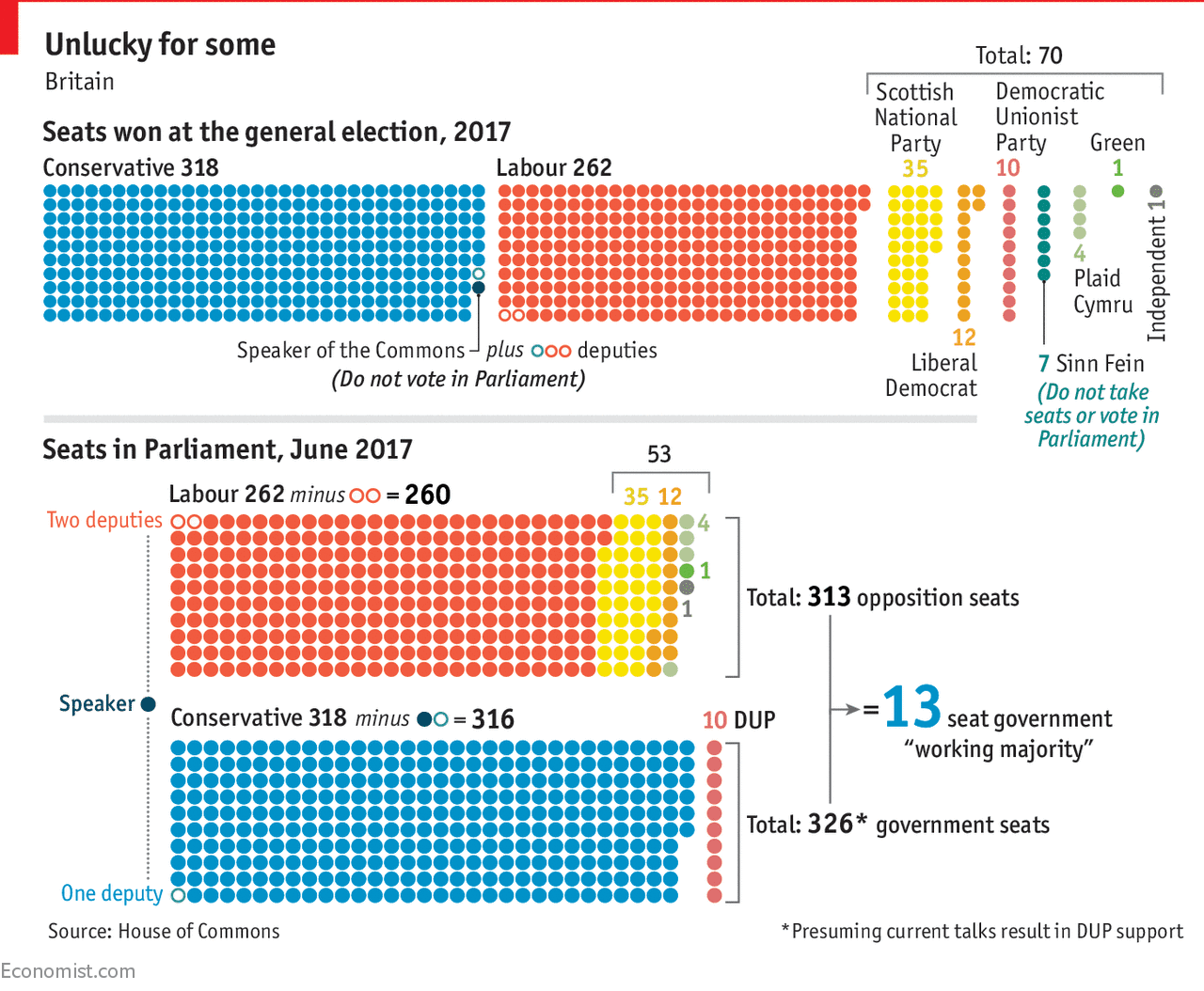
There is also a risk that it will be easier for the authorities to control a small parliament, since representatives from some parties will not be able to get there due to low ratings. And without carrying out other, more fundamental, reforms of the legislative body, any improvement in the quality of the parliament’s work is unlikely.
Now let us calculate how many deputies should be in the Civic Council of the Russian Republic in accordance with Taagepera’s formula. We take the population of Russia as of January 1, 2021 (146,171,015 people12) and calculate the cube root — it comes out to 526 and a bit, and if we round it, we ultimately get 527 deputies. This is a perfectly adequate figure for a country like Russia.
The Regional Council — the upper chamber of the Central Council — is elected via a majoritarian system of absolute majority, according to the “one region — ten deputies” system for a term of 4 years. It consists of 320 people. The maximum term of a deputy in the Regional Council is 8 years. To become a deputy of the Regional Council, one must be at least 18 years of age and have lived in the Russian Republic for 5 years.
Accordingly, once every 4 years, general elections to the Civic and Regional Councils are held in the country. In both chambers, representation by political parties, including regional ones, as well as coalition blocs, is permitted. Each region chooses its own procedure for electing its representative, with the stipulation that these procedures must meet general requirements for democratic processes, which is controlled by the Central Council.
Below, we list the powers of the Central Council.
Legislative function. The republican authority reserves for its exclusive legislative competence the following spheres:
- Matters concerning the citizenship of the Republic;
- Freedom of movement, passport control, immigration and emigration, and the issuance of documents;
- Currency, monetary circulation and minting of coins, systems of weights and measures, as well as the setting of standard time;
- Customs and trade unity of the territory, treaties on trade and navigation, freedom of movement of goods, the turnover of goods and payments with foreign countries, including customs and border protection;
- Air transport, federal motorways, as well as railway transport that is wholly or predominantly owned by the Republic (railways of the Republic), the construction, maintenance, and operation of the rail tracks of these roads, as well as the collection of fees for the use of these tracks;
- Postal and telecommunications services;
- The legal status of persons in the service of the Republic and republican corporations under public law;
- Legal protection of industrial property, copyright, and publishing rights.
In addition, this includes the following competencies:
- Cooperation between the Republic and the Krais in the field of criminal police, in the protection of the foundations of the free democratic order, the existence and security of the Republic or a Krai (protection of the Constitution), and in the protection of the territory of the Republic against attempts, through the use of force or preparatory actions directed toward such use, to jeopardize the external interests of the country, as well as the establishment of a republican criminal police office and the fight against international crime;
- Production and use of nuclear energy for peaceful purposes, construction and operation of installations intended for these purposes; protection against dangers arising from the release of nuclear energy or as a result of ionizing radiation, and the disposal of radioactive materials;
- Approval of the budget draft and adoption of the government report on its execution;
- Election of the tribunes of the Political Assembly;
- Formation of the composition of the Executive Committee of the Republic;
- Exercise of supreme supervision over the Political Assembly and other bodies;
- Care for the maintenance of relations between the Republic and the Krais, the guarantee of the charters/constitutions of the Krais, and approval of treaties between Krais themselves and with foreign countries, if the Political Assembly or a Krai raises objections;
- Granting of pardons;
- Declaration of a state of emergency;
- Issuance of decrees and orders to counter violations of public order or internal or external security that have occurred or are immediately threatened. The effect of such decrees must be limited in time. In urgent cases, the Central Council may use troops in coordination with the Political Assembly;
- Approval of the financial plan and the budget draft of the Republic, and control over its execution.
The Central Council exercises legislative power. Its members submit bills for consideration.
Regarding its powers, the Central Council is a bicameral parliament with equal powers, which, in fact, should promote the development of interaction between the chambers. The chambers interact as follows:
- Deputies of one of the two chambers develop a legislative initiative regarding a particular issue;
- The initiative is refined by a commission of experts, which participates in its development;
- The bill, revised based on the results of the previous stage, is sent to the Political Assembly, which then presents the law in the form of a Message to the Central Council (in this message, the Political Assembly may provide its advice). In this process, the Political Assembly does not have veto power over the law;
- The draft is sent to both houses of parliament, where it is studied and a verdict is rendered. If everyone is satisfied, the law is published. If not, a conciliation commission is convened to attempt to find a common solution. If such a solution cannot be found, the law is not adopted;
- Within 100 days after the publication of the law, a referendum may be organized. To conduct it, it is necessary to collect 995,000 signatures. If the number of signatures is not collected within this time, the law automatically enters into force;
- If a referendum takes place, then for the law to be repealed, 50% of voters + 1 vote must vote in favor of it. In this case, the law will not enter into force, but if this rule is not met, the law automatically enters into force.
Political Assembly
The Political Assembly is the collective head of state (a similar experience exists with the Federal Council in Switzerland). It consists of 9 people. They are elected by parliament, but no more than 4 people from any single party may serve in the Political Assembly. A similar system was created in Switzerland to maintain peace and tranquility in a country that is quite diverse in its national and political structure — this is one of the most important instruments through which the political system learns consensus. It is elected every 4 years — following the elections to the Central Council. The maximum term of a deputy in the Political Assembly is 4 years.
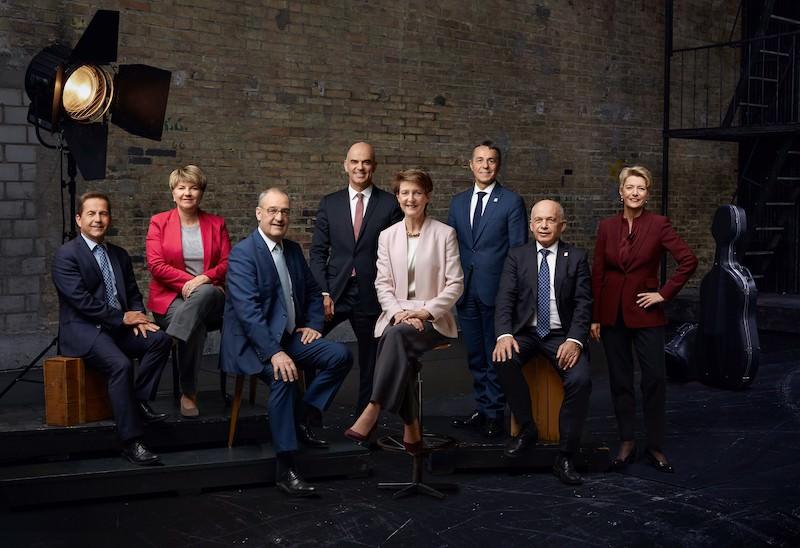
The formal head of this body is the Speaker of the Political Assembly, who will be elected by the Political Assembly from among its members for a term of 1 year; furthermore, after the term ends, the person who held this position cannot immediately run for a second term. In the Russian system, the Political Assembly and the Speaker will replace the position of the country’s president.
Powers of the Political Assembly:
- Ensuring the country’s defense capability, including the protection of the civilian population, as well as the command of the army;
- International function: management of foreign affairs and foreign policy, supervision of the maintenance of relations with foreign countries. It approves international legal treaties. It accredits and receives ambassadors;
- Represents the country in international relations;
- Determines the goals and means of its policy. It informs the public about its activities in a timely and full manner;
- Management of the state media system (in the article on media freedom, we mentioned that their number should be reduced to a minimum);
- Appoints the Supreme Commander-in-Chief of the Armed Forces;
- Right of initiative. The Political Assembly submits drafts of its acts to the Central Council.
For the most part, the powers of the Political Assembly are limited to a representative function, as well as the management of international and military affairs. The Political Assembly does not possess the right of veto regarding laws and is accountable to the Central Council, which can dismiss it.
Executive Committee of the Republic
The main body of executive power in the state is the Executive Committee of the Republic. It is formed by the entire Central Council. In total, there are 15 committees in the Executive Committee of the Republic:
- Committee on Foreign Affairs;
- Committee on Internal Affairs;
- Committee on Defense, Civil Protection, and Emergency Affairs;
- Committee on Labor and Social Affairs;
- Committee on Education, Enlightenment, and Scientific Research;
- Committee on Food and Agriculture;
- Committee on Social Security Affairs;
- Committee on Finance;
- Committee on Health;
- Committee on Justice and Consumer Protection;
- Committee on the Environment, Nature Conservation, Construction, and Nuclear Safety;
- Committee on Transport and Infrastructure;
- Committee on Economy and Energy;
- Committee on Youth, Sports, and Tourism;
- Committee on Industry and Technology.
Note that the governing body of a committee consists not of one person (a minister), but of three people (chairpersons).
Its powers:
- Manages the general republican budget. It develops the financial plan, draws up the budget draft, and presents the government report on its execution. It takes care of the proper management of the budgetary economy. It provides the Political Assembly and the Central Council with a plan and a subsequent report on the execution of the budget, distributes it among the Krais, and monitors its execution;
- Draws up recommendations for the Executive Committees of the Krais and a report on their implementation;
- Provides the Central Council with annual reports on the results of its activities, including on issues raised by the Central Council;
- Ensures the implementation of a unified financial, credit, and monetary policy in the state;
- Exercises management of state property;
- Exercises other powers vested in it by the Constitution of the Republic and republican laws.
After its formation, the members of the Executive Committee elect for its leadership the “head” of the government — the Presidium of the Executive Committee of the Republic, consisting of 15 members (one from each committee). The head of the Presidium is the Chairperson of the Presidium of the Executive Committee of the Republic, who is an official of the government and does not have special powers.
The Executive Committee of the Republic, in addition to the Presidium and the committees, also consists of special bureaus and committees:
- Control Bureau;
- Bureau of Republican Indicative Planning;
- Bureau of Republican Security (one of the bodies collectively replacing the FSB);
- “Gosplan” Corporation and other state corporations.
The Executive Committee is accountable to the Central Council and, like the Political Assembly, can be dismissed.
Furthermore, we note that at a certain stage, it is possible to replace ministries with professional councils — for even greater democratization, which we will discuss in more detail later.
Krai Councils
A Krai Council is a parliament, that is, the legislative body of a Krai. Social democrats believe that one of the most important political tasks is the proper distribution and balance of powers between federal and regional legislative bodies. The extent to which regions will be independent from the center (i.e., federal authorities), the extent to which the system will be decentralized, the extent to which this will help protect the interests of the regions and shield them from suppression and exploitation by the center, and the extent to which it will help express the interests of regionalists depend on this.
A Krai Council is elected for 4 years via a mixed system. The maximum term of office for a deputy of a Krai Council is 8 years. We also note that at a certain level of democratic development, a transition to a militia-based formation of Krai Councils is possible, but at the moment, the level of political education of Russian citizens does not make this step guaranteed to be successful.
Now let us proceed to the powers of the Krai Councils. Concurrent powers (that is, powers that are exercised by the Krai Councils themselves, but the Republican authorities have the right to veto them):
- Civil law, criminal law and the execution of sentences, judicial organization, judicial procedure, legal profession, notaries, and legal advice;
- Acts of civil status;
- Law of association and assembly;
- The right of foreigners to stay and reside permanently;
- Legislation on weapons and explosives;
- Affairs of refugees and displaced persons;
- Public social security;
- War damage and its compensation;
- Provision for war invalids, relatives of the deceased, and care for former prisoners of war;
- Graves of fallen soldiers, graves of other victims of war and victims of tyranny;
- Economic law (mining, industry, energy industry, crafts, cottage industry, trade, banking and stock exchange, private insurance);
- Labor law, including enterprise regulations, occupational safety and employment mediation, as well as social insurance, including unemployment insurance;
- Regulation of educational subsidies and support for scientific research;
- Transfer of land, natural resources, and means of production to public ownership or other forms of public economy;
- Prevention of economic power abuse;
- Promotion of production in agriculture and forestry; ensuring food supply, import and export of agricultural and forestry products, fishing in the open sea and coastal waters, coastal protection;
- Transactions regarding land plots, land law (without the right to participate in land development) and agricultural leasing, housing matters, settlements, and houses under personal ownership rights;
- Measures against general, dangerous, and contagious diseases of humans and animals, admission to medical and other health professions, access to medical practice, circulation of drugs, medicinal and narcotic substances, and poisons;
- Economic management of hospitals and regulation of tariffs for the assistance they provide;
- Protection of food supply and the food industry, essential goods, fodder, seed and planting material for agriculture and forestry, protection of plants against diseases and pests, as well as animal protection;
- Shipping in the open sea and coastal waters, as well as maritime navigational aids, inland waterway navigation, meteorological services, sea canals, and inland waterways of general use;
- Road traffic, motor transport, construction and maintenance of highways, as well as the collection and distribution of fees for the use of public roads by vehicles;
- Railways that are not railways of the Republic, excluding funiculars;
- Waste disposal, air pollution control, and noise control;
- Artificial insemination of humans, research and artificial modification of heredity, as well as regulation of organ and tissue transplantation;
- Payment and provision for the activities of Krai bodies.
Exclusive powers (here the regions make decisions independently):
- Determination of the political system of the Krai, provided that democratic principles are observed;
- Establishment and awarding of honorary titles and prizes of the Krai;
- Resolution of internal security matters, school and higher education, culture, and municipal management;
- Financial, currency, and monetary-credit regulation in parts not assigned to the jurisdiction of the Republic;
- Budget, taxes, duties, and fees, extra-budgetary funds of the Krai;
- International and foreign economic relations of the Krai;
- Exercise of powers not delegated to the republican government by the constitution.
Executive Committees of the Krais
The Krai Executive Committee is the executive body of the region. It also serves as the collective head of the Krai. It is formed by the Krai Council every 4 years. The powers of the Krai Executive Committee are similar to those of the Executive Committee of the Republic, with limitations related to the separation of powers. Among the powers and tasks of the Krai Executive Committee are:
- Financial support for Krai culture;
- Financial support for school exchanges;
- Construction and maintenance of public libraries;
- Revitalization of the economy;
- Promotion of tourism;
- Management of state colleges;
- Exercise of other powers vested in it by the Krai Constitution, as well as in accordance with republican legislation.
The Krai Executive Committee is accountable to the Krai Council, which has the right to dismiss it.
Okrugs
This is a new unit of territorial division, occupying a position between the Krai and settlements. The main tasks of an Okrug will be as follows:
- Construction and maintenance of roads;
- Construction plans that cover more than one local government district;
- Care for national parks;
- Construction and maintenance of hospitals and state secondary schools;
- Collection and disposal of household waste;
- Vehicle registration;
- Placement of foreign refugees.
The governing body of an Okrug is the Okrug Council. This is a representative body. It will be elected by the population via a mixed system for a term of 4 years. The powers of the body:
- Formation of the Okrug Committee;
- Adoption, amendment, and repeal of the Okrug Charter;
- Discussion and adoption of the budget charter and investment program;
- Establishment of state fees and private legal fees that pertain to a significant part of the Okrug’s population;
- Taking on new tasks for which there are no legal obligations.
The Okrug Committee is the executive body of the Okrug, as well as the collective head of the Okrug. It is formed by the Okrug Council, is accountable to it, and can be dismissed by it. Its powers:
- Execution of laws, regulatory acts, and instructions of the supervisory body issued in the context of laws;
- Preparation and implementation of the Okrug Council’s decisions;
- Resolution of matters assigned to it by the Okrug Council as a whole or on a case-by-case basis;
- Management of state institutions, economic enterprises of the Okrug, and other Okrug assets;
- Distribution of Okrug levies among obligated entities in accordance with laws and decisions of the Okrug Council, as well as ensuring their recovery and the collection of Okrug revenues;
- Preparation of the budget and investment program, monitoring of funds, and accounting;
- Representation of the Okrug, exchange of correspondence, and execution of Okrug affairs.
Urban and Rural Councils
These are local self-government bodies of settlements. They are elected every 2 years via a mixed system. The maximum term of office for a deputy of an urban or rural Council is 6 years. Their powers:
- Formation of urban/rural Executive Committees;
- Adoption of the Charter, making changes and additions to it;
- Approval of the settlement’s budget and the report on its execution;
- Establishment, amendment, and repeal of local taxes and fees, as well as the establishment of exemptions for local taxes and fees;
- Adoption of development plans and programs for the municipal entity, approval of reports on their execution;
- Control over the execution by local self-government bodies and officials of local self-government of powers to resolve issues of local importance;
- Creation of an Audit Chamber within the urban or rural Council and adoption of the Regulation on the organization of its activities;
- Scheduling of local elections and referendums;
- Establishment of the procedure for providing urban/rural guarantees and the procedure for carrying out local loans (borrowing);
- Adoption of regulatory legal acts on other financial and budgetary matters in accordance with legislation;
- Ownership, use, and disposal of property located in urban/rural ownership, including land;
- Exercise of other powers vested in them by the Urban/rural Charter, as well as in accordance with republican and Krai legislation.
Urban and Rural Executive Committees
These are the executive authorities of settlements, as well as the collective “head” of a city or village. They are formed by urban and rural Councils, are accountable to them, and can be dissolved by these Councils. The powers of the Executive Committee of a settlement include:
- Exercising organizational and administrative powers regarding matters of local importance in accordance with the laws;
- Drafting the urban/rural budget and the medium-term financial plan, ensuring their execution and the preparation of budget reporting;
- Establishing the procedure for developing the action plan and the draft for the implementation of the strategy for socio-economic development of the settlement, the procedure for developing a forecast of socio-economic development of the settlement, and the forms and procedure for developing a medium-term financial plan; ensuring the development of this project, its execution, and the preparation of an implementation report;
- Developing and approving the forecast of socio-economic development of the settlement;
- Establishing the procedure for making decisions on the development of urban/rural programs and the procedure for forming urban/rural assignments;
- Developing and implementing the financial and investment policy of the settlement, and carrying out measures to support and develop entrepreneurship;
- Developing the procedure for the ownership, use, and disposal of property held in urban/rural ownership;
- Exercising other powers for resolving matters of local importance in accordance with republican and Krai legislation.
Additional scope of activity:
- Housing, schools, parks, recreational areas, libraries, landscaping, stadiums, airports, bridges, public transport;
- Construction of pedestrian zones and bicycle paths;
- Police, fire department, ambulance service, sewage treatment plants, waste collection and recycling, environmental protection, operation of municipal utilities and urban services;
- Control over land use, planning, zoning, protection of historical monuments, regulation of property subdivision processes;
- Vehicle registration, issuance of driver’s licenses, traffic management, issuance of licenses for the sale of alcoholic beverages and for professional activities, regulation of cable television networks;
- Social services, including education, healthcare, assistance to the poor, the unemployed, youth, elderly citizens, and charitable activities of local communities and denominations;
- Planning, economic development, judicial and rule-making activities in the listed spheres.
District Councils
These are local self-government bodies of urban districts. They are elected every 2 years via a mixed system. The maximum term of office for a deputy of a District Council is 6 years. They are formed on a militia basis, meaning that the majority of their members have a primary profession and simultaneously, on a part-time basis, fulfill the duties of a member of the District Council. Powers:
- Formation of the District Executive Committee;
- Formation, approval, and execution of the budget of the intra-city district, and control over the execution of said budget;
- Establishment, amendment, and repeal of local taxes and fees;
- Ownership, use, and disposal of property held in the ownership of the district;
- Approval of rules for the improvement of the territory of the intra-city district, exercising control over their compliance, and organizing the improvement of the territory of the intra-city district in accordance with the specified rules.
District Executive Committees
This is the administration of urban districts and the collective head of the city. They are formed by District Councils, are accountable to them, and can be dismissed. Powers:
- Ensuring primary fire safety measures within the boundaries of the intra-city district;
- Creating conditions to provide residents of the intra-city district with communication services, catering, trade, and consumer services;
- Creating conditions for organizing leisure and providing residents of the intra-city district with the services of cultural organizations;
- Ensuring conditions for the development of physical culture, school sports, and mass sports in the territory of the intra-city district;
- Creating conditions for the mass recreation of residents of the intra-city district and organizing the improvement of mass recreation areas for the population;
- Formation and maintenance of the archive of the intra-city district;
- Creating conditions for expanding the market for agricultural products, raw materials, and food; promoting the development of small and medium-sized entrepreneurship, charitable activities, and volunteering;
- Organizing and implementing activities for working with children and youth;
- Providing support to citizens and their associations participating in the protection of public order, creating conditions for the activities of people’s squads.
Independent Institutions
Our system also assumes the presence of several independent bodies that are not subordinate to other authorities. Firstly, this is the independent judiciary (we wrote about it in more detail in the article on the rule of law). Two other bodies are the Anti-Corruption Committee of the Republic and the Democratic Committee of the Republic.
In the article on the fight against corruption, we already wrote about the autonomous anti-corruption committee and what it should do. Its activities will be financed from the republican budget, however, it will not be subordinate to the authorities and will be formed independently of them — its leadership will be elected democratically from among the committee’s employees.
The Democratic Committee of the Republic is responsible for combating violations of democracy and human rights; it appoints and dismisses the Commissioner for Human Rights. It has the right to wiretap the most important officials of the state. Since human rights issues are too extensive, the Democratic Committee will include several departments that will also be elected at the Krai level. Such departments include:
- Department for the Protection of Personal Rights;
- Department for the Protection of Political Rights;
- Department for the Protection of Natural Socio-Economic Rights;
- Department for the Protection of Children’s Rights;
- Department for the Protection of Gender Equality;
- Department for the Protection of Legality and the Rule of Law;
- Department for Combating the Incitement of National Discord.
A list of the most important of these rights will be formulated separately. The Democratic Committee is also independent of the authorities, and its leadership is elected democratically from among the committee’s employees.
Referendums
The institution of referendums is represented by the following types:
- An optional referendum allows citizens to demand that a law approved by the Central Council be submitted to a nationwide vote. To conduct it, it is necessary to collect 995,000 signatures within 100 days from the moment the law is published;
- A civic initiative allows citizens to put forward proposals for amendments to the Constitution or to expand its scope. The power of a civic initiative lies in the fact that citizens can propose a specific topic for discussion by the relevant authorities or call for its reconsideration. In order for an initiative to be submitted to a nationwide vote, 1,990,000 signatures must be collected within 18 months. In response to a civic initiative, the authorities may offer their own project in the hope that citizens will prefer it;
- A mandatory referendum. Holding a referendum is mandatory in the event that parliament introduces any changes to the Constitution. This means that the opinion of citizens on this issue must be taken into account on a mandatory basis.
Also, the institution of the referendum will be formed according to a model similar to the federal one at other levels, from Krais to districts.
Conducting Elections
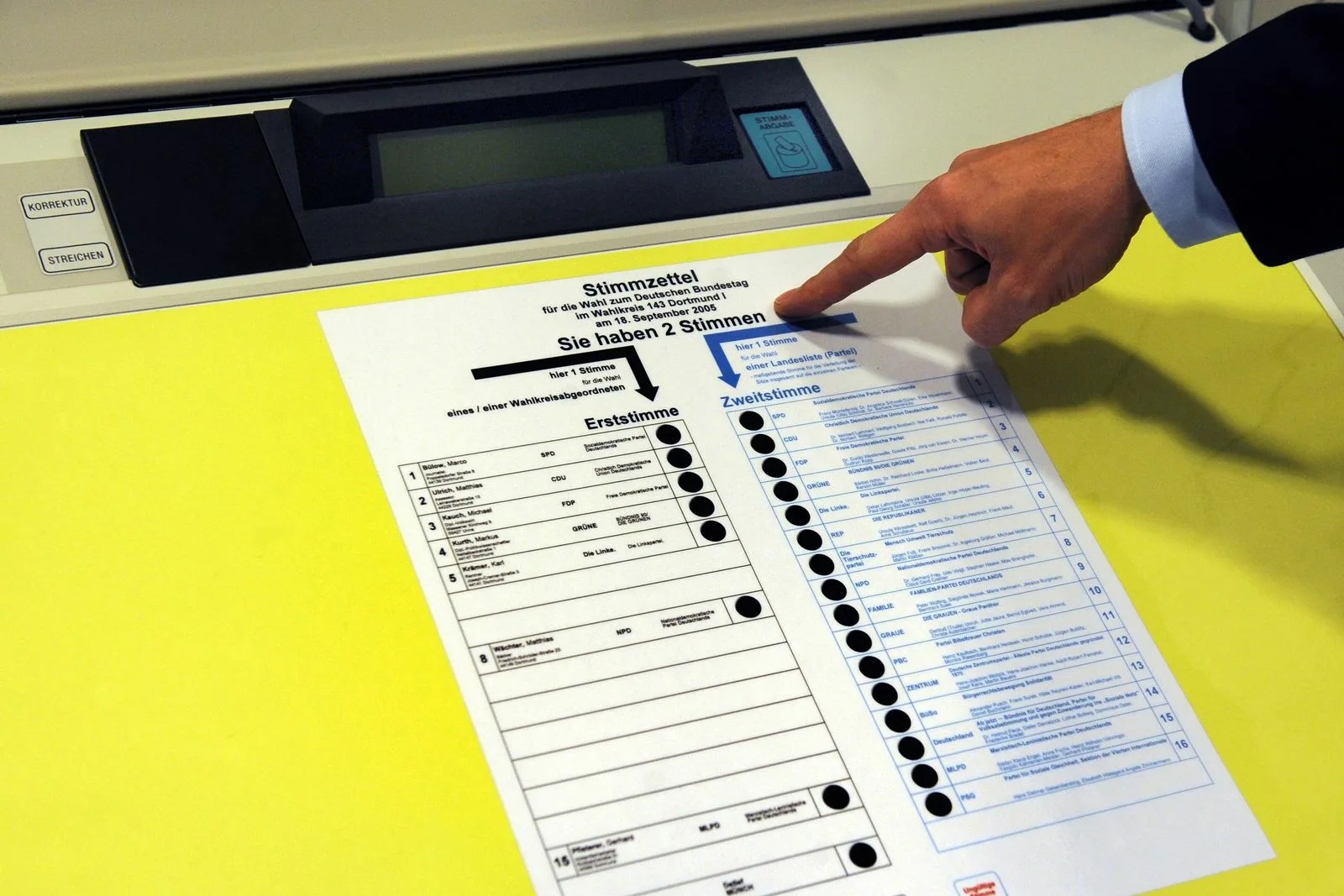
Elections to the Central Council are nationwide. Elections to Krai, Okrug, urban, rural, and district councils are held among the residents of the respective territories.
Elections to district, urban, and rural Councils are held every 2 years.
Elections to the Central Council (Civic Council and Regional Council), Krai Councils, and Okrug Councils are held every 4 years.
Professional Councils
The aforementioned system will help raise the level of democracy to that of the world’s leading countries in this component, but once a social democratic state (in our case, the Russian Republic) becomes one of the world leaders in terms of standard of living, experiments to improve this system may also be possible. One of the hypotheses that should be tested is the system of Professional Councils. It consists of replacing ministries formed by parliament with Professional Councils, which are elected by the workers of the corresponding sphere. And they are elected at the regional (Krai) level, not at the Republic level.
Each professional council is elected every 2 years by workers employed in a professional sphere related to the council’s activities and registered in the Krai territory, with each member serving a maximum of 3 terms. In simple terms, their powers are similar to those of ministries, only in relation to the Krai. The Executive Committee of a Krai of the Republic has the authority to recall members of Professional Councils (no more than a quarter), replacing them with its own candidate, forming and publishing the reason for the recall. A Professional Council has the right to veto 3 candidates of the Executive Committee in a row. Republican Congresses of Professional Councils convene members of professional councils from all Krais of the Republic in a specific sphere (for example, the Republican Congress of Professional Councils of Education) and ensure the development of directions and the implementation of a unified state policy. A Republican Congress of Professional Councils is held twice a year.
What is the innovation of the Professional Councils system? Replacing ministries with Professional Councils is the response of progressive social democrats to challenges requiring new solutions from them. Critics put forward the counter-argument, “you will replace professional ministers with non-professional people”. However, it is untenable for the following reasons:
- Precisely, for example, a Minister of Education who has never worked as a teacher or lecturer, but came to this position from politics (or was appointed through connections in general), is a non-professional. Often, they are first and foremost a professional politician, not an education worker. Truly effective popular rule is the leadership of education workers by a respected colleague elected by them, who knows and understands their problems and has their own practical view on solving them. When they are led by a so-called “political commissar”, this is not the highest level of realizing popular rule;
- Many countries — for example, Russia — are led by “professional ministers”. However, in Russia, there is a lag behind developed countries and a high level of corruption. Russian education is not needed by anyone even in Russia, let alone abroad. It turns out that the primary role is played not by the professionalism of the ministers, but by the democratic nature of their appointment;
- No one is prevented from obtaining a management education or completing relevant courses before being elected to Professional Councils. On the contrary, this will serve as an additional plus when being elected.
But Professional Councils do not just withstand criticism; they also have their own unique advantages — they are additional protection against the establishment of a dictatorship, as their leadership is not appointed by the government, and therefore does not depend on it and is capable of reacting negatively to the implementation of anti-popular policies, capable of mobilizing the masses to oppose this policy. The system of Professional Councils in practice can be much more democratic than the appointment of ministers and the distribution of portfolios.
Conclusion
This is only a preliminary project for the future structure of power in a developed, free, social democratic Russia. The names of government bodies and their approximate powers may be slightly changed (in particulars). The most important thing remains the foundation, based on the principles of popular rule, decentralization, and the creation of a large-scale system of checks and balances. The above-described system is the political demand of progressive social democrats and is capable of ensuring a high level of democracy with subsequent expansion. Initially, the Central Council, urban and rural Councils, as well as district Councils will be formed by a broad democratic coalition.
In this system, we have solved a significant part of the problems we described in the article on the political structure of Russia. We have made parliament fully elective, abolished the posts of president and heads of regions (replacing them with collegiate bodies with a different distribution of powers) and federal districts, revised the principles of regional division, and created an entity intermediate between a region and a municipality. At the same time, in the future, we will also propose significant reform of the country’s party system, which will further increase the effectiveness of government bodies.
- V.I. Lenin. Collected Works. Fifth edition. Volume 11. July–October 1905. – 589 p. – Moscow: State Publishing House of Political Literature, 1960. – p. 136.
- K. Marx and F. Engels. Collected Works. Second edition. Volume 39. – 713 p. – Moscow: Publishing House of Political Literature, 1966. – p. 184.
- V.I. Lenin. Collected Works. Fifth edition. Volume 33. The State and Revolution. – 433 p. – Moscow: State Publishing House of Political Literature, 1969. – pp. 70-71.
- T. Meyer. Democratic Socialism – Social Democracy. Introduction. – Moscow, 1993. – pp. 85-86.
- V. Ostrom. The Meaning of American Federalism. – Moscow, 1993. – p. 254.
- Federation // Great Russian Encyclopedia. Volume 33. Moscow, 2017, p. 226. [Electronic resource]. URL: https://bigenc.ru/law/text/4707346 (Accessed: 01.06.2021).
- Res Publica | Cartography. [Electronic resource]. URL: https://vk.com/wall-36731390_54868 (Accessed: 01.06.2021).
- Awards – Karl Deutsch Award // IPSA (https://www.ipsa.org/). [Electronic resource]. URL: https://www.ipsa.org/page/awards-karl-deutsch-award (Accessed: 01.06.2021).
- Rostyslav Averchuk. 300 deputies: a grounded change or a populist trick?? // Vox Ukraine (https://voxukraine.org/). January 26, 2021 [Electronic resource]. URL: https://voxukraine.org/ru/300-deputatov-obosnovannoe-izmenenie-ili-populistskij-tryuk/#_ftnref6 (Accessed: 01.06.2021).
- Emmanuelle Auriol, Robert J. Gary-Bobo. The More the Merrier? Choosing the optimal number of representatives in modern democracies // VoxEU & CEPR (VoxEU.org). [Electronic resource]. URL: https://voxeu.org/article/optimal-number-representatives-democracy (Accessed: 01.06.2021).
- Evgeny Pudovkin. Italians decided to reduce parliament by a third // RBK (https://ekb.rbc.ru/). Sep 22, 2020, 19:59. [Electronic resource]. URL: https://www.rbc.ru/politics/22/09/2020/5f64b4029a794704e5f3a250 (Accessed: 01.06.2021).
- Information on the number of voters registered in the Russian Federation and outside the territory of the Russian Federation, referendum participants of the Russian Federation as of January 1, 2021 // Central Election Commission of the Russian Federation (http://www.cikrf.ru/). [Electronic resource]. URL: http://www.cikrf.ru/izbiratel/quantity/20210101.php (Accessed: 01.06.2021).