
Scientific method and social democracy
If a political movement relies on a pseudoscientific method for developing ways to realize its values, it thereby sets limits to its own growth. This is because, in such a case, it becomes only a matter of time before the principles of this movement begin to contradict actual science and reality, if not themselves, which will immediately become known to an educated public and lead to the discredit of the movement's activities. On the other hand, failing to use any method at all means having no adequate understanding of how to achieve one's goals.
We have already considered earlier that a political movement or ideology must rely, first of all, on a system of values, and explained precisely why (this was done here). But a system of values indicates only goals. How can we achieve their realization? To find out, we need a method that we will use when conducting our research. There are practically no alternatives to the scientific method here.
Contents
What is science
According to the Great Russian Encyclopedia, science is a special type of cognitive activity aimed at developing objective, systematically organized, and substantiated knowledge about the world1. Moreover, while in the case of everyday knowledge the truth of knowledge is tested directly in available practice, due to the fact that science constantly goes beyond the boundaries of this practice, it can only partially rely on its forms and requires a special practice through which the truth of its knowledge is verified. Such a practice becomes a scientific experiment. Part of the knowledge is directly verified in an experiment, while the rest is linked together by logical connections that ensure the transfer of truth from one statement to another. As a result, the systematic organization of knowledge inherent in science, its validity, and proof emerge. The institution of citations as a mandatory condition for formatting a scientific monograph and article is intended not only to record the authorship of certain ideas and scientific texts, but also provides a clear separation of what is already known in science and new results.
Britannica generally agrees with this: science, by their definition, is “any system of knowledge that is concerned with the physical world and its phenomena and that entails unbiased observations and systematic experimentation”2. The encyclopedia also notes that science is divided into different branches depending on the subject of study. That is, each of the sciences — mathematics, economics, history, biology, and so on — has its own subject.
How to distinguish science from pseudoscience? This is called the demarcation problem. Deputy Director of the Polytechnic Museum, Candidate of Philosophical Sciences Ivan Bogantsev, tells how the Austrian philosopher Karl Popper proposed using the principle of falsifiability of a hypothesis3. Even before Popper, it was clear that if a scientist tries to prove, for example, that “all swans are white”, no finite number of observations of white swans will confirm (verify) this hypothesis. The very first instance of a black swan will refute it. Popper noted that scientists, as a rule, have a very good idea of a “black swan”, whereas charlatans can never formulate an experiment or observation that could force them to give up their own hypothesis. It was this that became the cornerstone of his philosophy, and it was this question that Popper liked to ask his sworn opponents — the Marxists: “What would have to happen for you to give up your own hypothesis?” Having never received a coherent answer, Popper declared Marxism a pseudoscience. Among the signs that indicate the pseudoscientific nature of a theory, Bogantsev includes the absence of new, testable hypotheses, vagueness of terms and formulations, blind denial of a broad scientific context, and the inability of a scientist to describe an experiment or observation capable of refuting his theory.
New hypotheses are indeed important, because if science does not develop, if its propositions are not revised and attempts to revise them are not welcomed — then it is not science, but a dogmatic teaching. Resistance by some people to attempts at revision arises, probably, because, as Harry Truman rightly observed, “an expert is someone who doesn’t want to learn anything new, because then he wouldn’t be an expert”4.
What are the criteria of scientific character? Doctor of Philosophical Sciences Nikolai Gubanov identifies the following criteria:
Evidence, or rationality — the logical validity of each proposition by other, already proven, propositions. In the case of non-science, the truth of knowledge is either not proven at all (for example, in art), or only some arguments are provided as justification (in everyday knowledge, religion, pseudoscience). And only in science is the logical law of sufficient reason strictly observed. Such a reason is understood as a set of admittedly true propositions from which the substantiated proposition logically follows. For example, from the propositions “all metals are electrically conductive” and “copper is a metal”, it follows that copper is electrically conductive. This criterion excludes the argument of faith from science, that is, the statement: “This is true because I believe in it”.
Consistency — there must be no mutually exclusive judgments in scientific knowledge. The criterion serves as a consequence of the logical law of contradiction: two statements that negate each other cannot be true at the same time. In non-scientific knowledge, contradictions do occur: for example, in religion it is recognized that everything is predetermined by God and at the same time man is free; the creator and ruler of the world (God) is omnipotent, omniscient, absolutely good, but evil exists in the world.
Empirical (experimental, practical) verifiability — establishing the truth or falsity of theoretical propositions by correlating them with practical results obtained in an experiment or observation of the natural course of events. The criterion includes two components — confirmation (verification) and refutation (falsification). The first component is oriented toward finding the true, the second — toward cutting off the false in scientific knowledge. The coincidence of the consequences predicted by the hypothesis with the facts (reliable practical results) serves as a criterion of its truth, their discrepancy — as a criterion of falsity. A single act of confirmation or refutation does not solve the problem of the truth of any knowledge. Only due to a long, multi-act process of verification and falsification does knowledge epistemologically approach the object and it becomes possible to make a conclusion about its truth. Empirical confirmability is the leading criterion of truth. The criterion of truth is narrower than the criterion of scientific character.
Reliability of empirical material — the results of experiments and observations that were used in developing problems and creating theories must possess the status of scientific facts, meaning they must be statistically stable in repetition during observation or reproduction in an experiment. In scientific publications, it is customary to describe the sources and methodology for obtaining empirical material, according to which any scientist can repeat the observation or experiment and verify the reliability of the facts. In the social sciences and humanities, in the case of studying solitary events, the analogue of a multitude of observations or experiments is the use of a multitude of independent sources or witnesses.
Public significance (intersubjectivity) — at first, newly discovered propositions, including laws, are usually recognized by few persons, but after their proof, which includes empirical confirmation, they are accepted by the entire scientific community or the majority of its members.
Systematicity (integrity, coherence) — all elements of scientific knowledge are interconnected and depend on each other. The logical criterion of truth is based on the property of systematicity of knowledge: if hypothetical knowledge according to the laws of logic corresponds to already accepted (reliable) knowledge, then it is also true. The logical criterion of truth is derived from the practical one: in proving the truth of hypothetical knowledge, propositions are used that have already received practical confirmation5.
At the same time, it is emphasized that these criteria are relative rather than absolute: sciences contain fragments that do not meet certain criteria. In particular, temporary contradictions may occur in science, but they stimulate its development and are resolved over time. For example, the contradiction “the atom is indivisible — the atom is divisible” stimulated the emergence of nuclear physics and was resolved in the proposition “the atom is indivisible in chemical reactions and divisible in nuclear reactions”. To decide whether a given knowledge is scientific or non-scientific, it is necessary to use the entire complex of the criteria listed above. But due to the relativity of these criteria, misconceptions always coexist with true propositions in science, which, however, are constantly filtered out.
What is the scientific method
According to the encyclopedic dictionary of philosophy, it is a system of categories, values, regulatory principles, methods of substantiation, models, and so on, by which the scientific community is guided in its activity6. Britannica states that it is the method used in constructing and testing a scientific hypothesis7. Here is how it works:
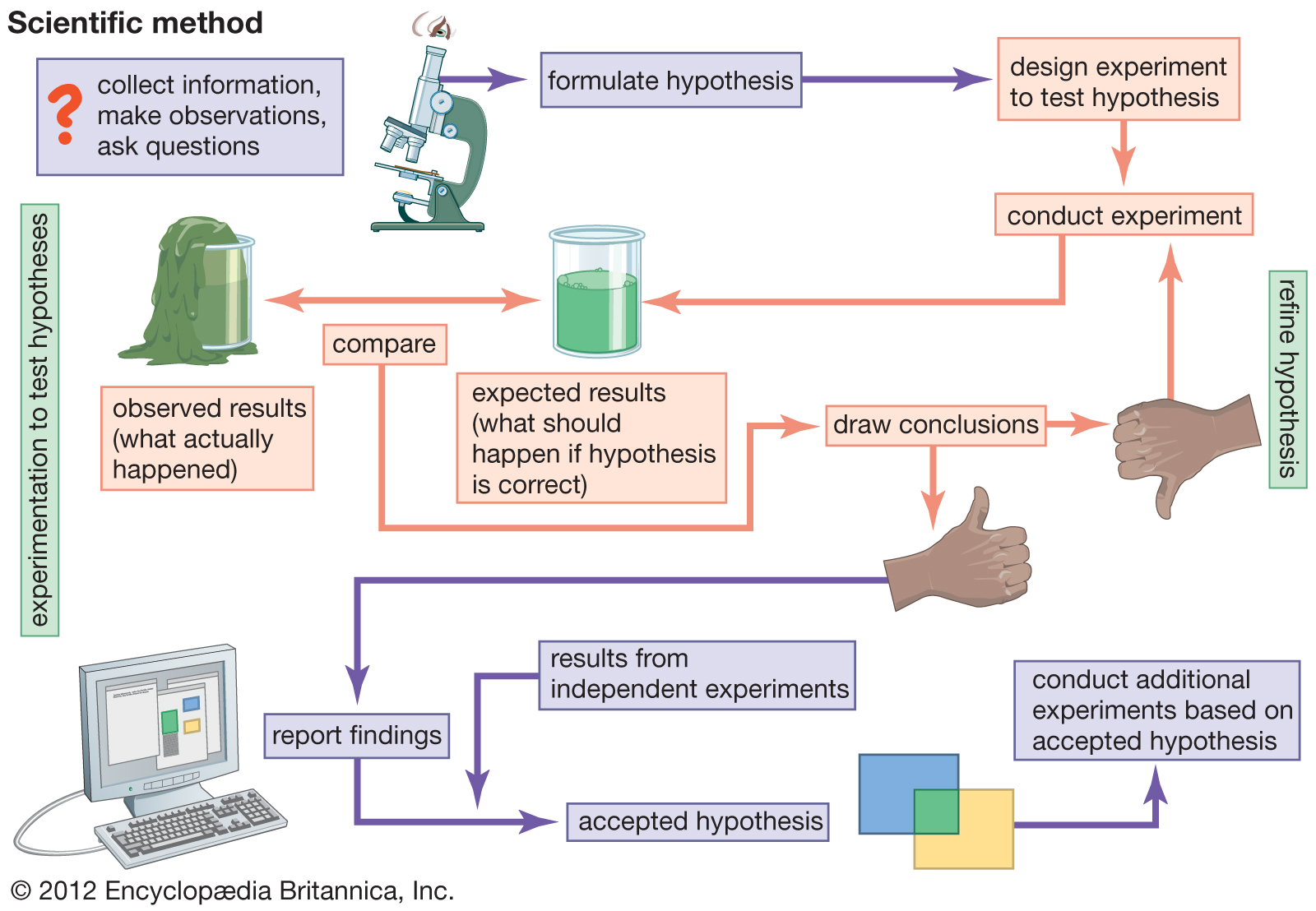
In a typical application of the scientific method, a researcher develops a hypothesis, tests it through various means, and then modifies the hypothesis on the basis of the results of the tests and experiments. The modified hypothesis is then retested, further modified, and tested again until it becomes consistent with observed phenomena and testing results.
The Merriam-Webster dictionary also confirms the importance of gathering information and testing it experimentally for the scientific method. The latter represents principles and procedures for the systematic pursuit of knowledge involving the recognition and formulation of a problem, the collection of data through observation and experiment, and the formulation and testing of hypotheses8. Researchers note that the scientific method aims to discover what the facts really are, and its use must be guided by the facts so discovered9.
If a physics textbook says that light in a vacuum does not propagate instantaneously, but at a very specific speed equal to three hundred thousand kilometers per second (and this speed is always constant — it does not depend on the speed of the light source), then this statement is based on the results of a vast number of experiments. Experiments to determine the speed of light have been carried out repeatedly, by many scientists in different places and at different times, and moreover using different methods. However, the conclusion was always the exact same. This (and only this!) allows us to consider the statement about the finiteness and constancy of the speed of light a reliable scientific fact, rather than someone’s idle assumption.
<…>
There can always be a person who claims that through insight (enlightenment, intuition, etc.) he suddenly realized some previously unknown law in nature. But scientists will not enter this law into reference books until it is confirmed by repeated experiments. There is no excessive suspicion here. Would we risk flying on an airplane whose engine was built on the basis of a formula that someone saw in a dream and that was never verified by anyone?10
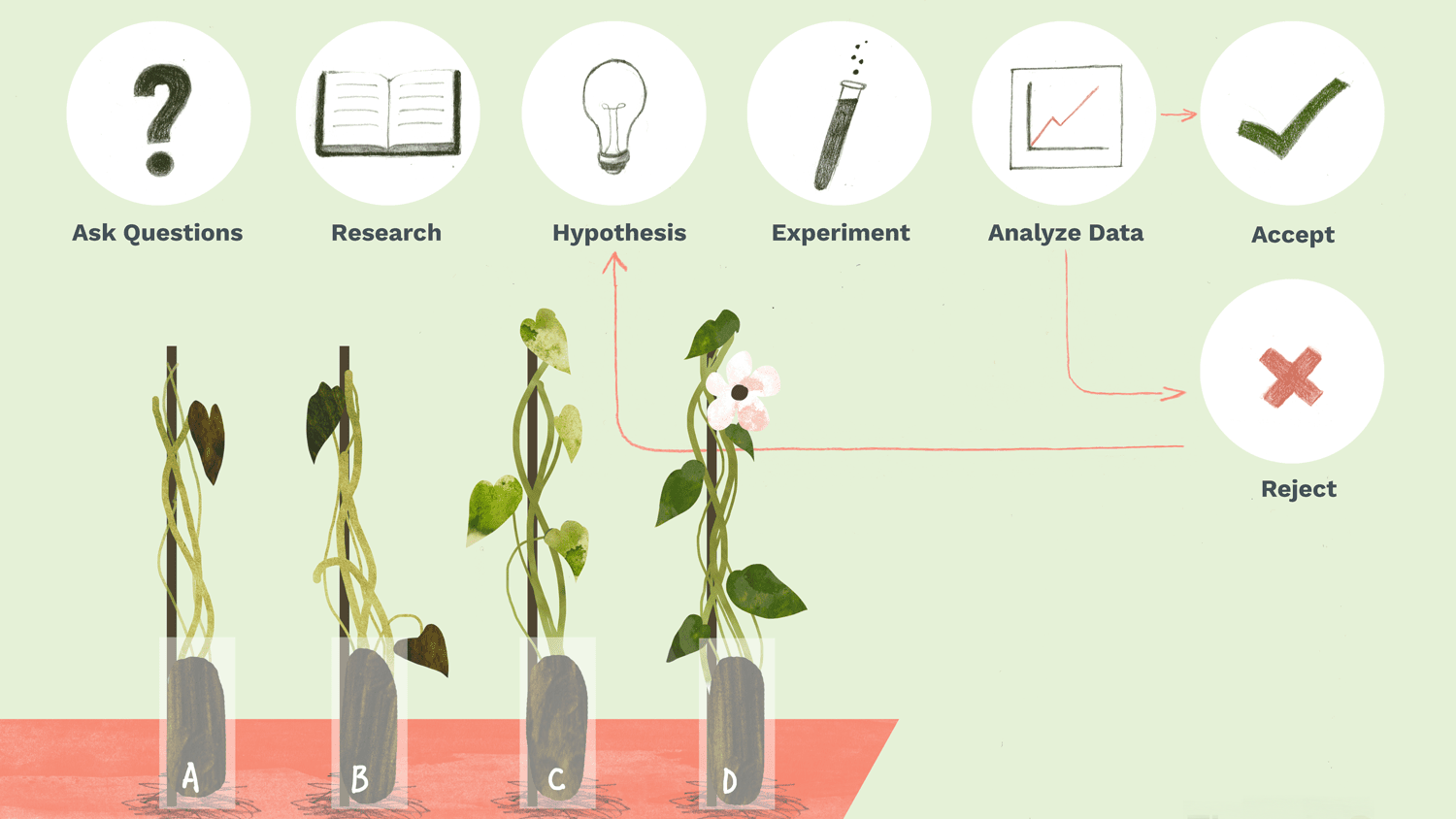
This is why Popper advanced his criterion — if it is impossible to set up an experiment that will provide an answer as to whether a hypothesis is correct or not, then such a hypothesis represents, in most cases, not science, but demagoguery.
Why the scientific method is needed
As noted by Candidate of Physical and Mathematical Sciences Sergey Yazev, methods alternative to the scientific one extremely rarely lead to the truth11. Most importantly, they do not allow us to verify whether what we found is the truth (that is, whether it corresponds to reality). There is no other way to solve arithmetic problems except to study arithmetic rules. Of course, one can choose not to learn them, but then the correct answer will not be obtained. And social democrats need precisely the correct answer. In order to find the right solutions that allow us to achieve the realization of our goals, we need the scientific method. It is the only effective way to strengthen the love of truth. It develops intellectual courage in the face of difficulties and allows us to overcome illusions that provide only temporary pleasure but, ultimately, cause harm. It resolves disagreements by appealing to a common interest, without resorting to external force. The scientific approach, even if it looks like an inaccessible mountain, is open to all. Therefore, if a sectarian or fanatical faith based on personal choice or personal temper divides people, the scientific method, on the contrary, unites them around something noble and devoid of any pettiness12.
Examples of using the scientific method
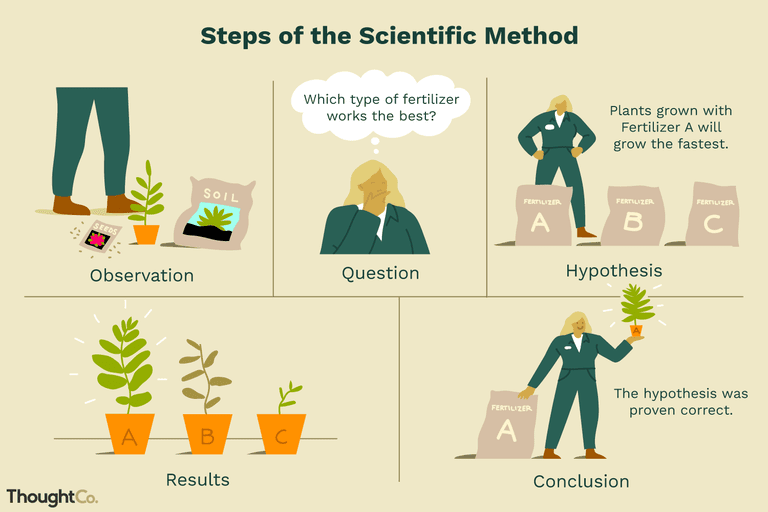
In general, we can say that the scientific method operates as follows. First, a problem is defined. For example, our task is to choose the most durable type of wood (suppose we want to make a durable wooden table or simply want to acquire knowledge). First, we conduct data collection. We compile a list of all existing types of trees (or the maximum possible list). Then we compile the widest possible list of ways to conduct an experiment (for example, to test the wood for durability) and choose the most effective among them. In the next stage, we conduct the experiment — we apply these methods to the wood samples and determine the most durable sample. The task is completed.
The scientific method also implies that we can use knowledge obtained by other scientific researchers and reference it. For example, we can formulate our hypothesis based on experiments or studies by other scientists.
Another example of applying the method. In the 1910s, the most common type of car body was the touring, which most often implied a body with a rectangular hood and separate wings and headlights. In 1921, aircraft engineer Edmund Rumpler created his car, in which he embodied the latest achievements in aerodynamics at that time13. That is, Rumpler formulated a hypothesis that a streamlined body shape would allow a car to achieve a higher speed with the same engine power, built a specimen, and confirmed this experimentally. Later, the German racing cars of Auto Union and Daimler-Benz, which won most car races in the 1930s, used Rumpler’s developments. Subsequently, car bodies were tested in a wind tunnel to design bodies with streamlined shapes. Today, no one doubts that aerodynamics is an important part of automotive engineering.

The scientific method in politics
The scientific method is also applicable in politics to obtain knowledge. Suppose we need to answer the question: is democracy effective. We decide to use the scientific method to provide an answer. First, we define the meaning of the term — we answer what democracy is; we define what fits under this term and what does not. Then we define the goal: effective for what (for this purpose, we have a list of values on our website, meaning our goals are already defined)? Next, we compile the largest possible list of countries where there was democracy (or which were democratic relative to their time) and where it was absent, and, relying on statistics and as many authoritative sources as possible (we also have a short article on sources), we evaluate how successfully the goal we defined as the criterion of efficiency was implemented there. Here, our task is to calculate the average value. In the end, we give the answer — democracy is rather effective for these goals or rather ineffective.
In some cases, studies yield both positive and negative answers, and then we cannot characterize the subject of research as unequivocally positive or unequivocally negative. Science relies only on objective data (that is, unbiased data that corresponds to reality), so in many cases, it cannot and should not give definitive answers. In the case of a certain object of study, we can say that it is highly likely to be effective or highly likely to be ineffective.
Unfortunately, it is practically impossible to conduct a pure experiment in politics because too many factors influence it. But if, say, in 30–40 examples out of 100 in democratic countries a high standard of living was achieved, and in authoritarian ones — in 3–4 examples out of 100, these are already significant indicators to have grounds for identifying a pattern. In some cases, practical examples and references to the works of authoritative researchers become the main tools for applying the scientific method.
But let us assume that we do not use the scientific method. How will we answer the same question — is democracy effective? Many people will believe the information they heard somewhere earlier. Suppose an expert on a state channel said that democracy is a path to mass gay violence in the streets. And then the person of heterosexual orientation who heard this, operating only with this data, answers: democracy is ineffective! Or, suppose a person studied the history of the USA and, based solely on it, answers: democracy is effective! As a result, when this person is presented with examples to the contrary, he sometimes takes his words back, sometimes gets angry, accuses the interlocutor of selling out to enemies, and uses other demagogic tricks. Or else blindly takes an exception for a rule and agrees with it. And it turns out that a person who uses the scientific method almost never looks foolish, while a person who uses non-scientific methods of cognition looks foolish in most cases.
Often there is a temptation to draw conclusions based on frequently encountered individual cases. For instance, if a person constantly hears news in the media about criminals from the Caucasus, he may conclude on this basis that all Caucasians should be isolated from the rest of the country. Since this is not scientific thinking, it may turn out to be an incorrect assessment (we have already examined the right-wing falsification about the link between rising crime and the number of migrants) — the statistical percentage of criminals from the Caucasus may be very small, and then such a solution will not lead to a resolution of the problem, but will only cause an escalation of inter-ethnic conflicts in society. The scientific approach is to study statistics, and if a problem is actually found, to formulate hypotheses about the causes of this problem, testing them on the basis of data collection or experimentally.
The importance of terms
As we have already mentioned above, some researchers consider the vagueness of terms and definitions to be one of the signs of pseudoscience. Why is the scientific method unthinkable without clear definitions of terms? The point is that if we do not define the meanings of terms, all subsequent work — formulating hypotheses, setting up experiments — will be meaningless due to different interpretations. Fixing definitions helps to avoid a situation where the person making a claim changes the meaning of his statement after experimental verification to avoid admitting he was wrong, thereby misleading everyone around him instead of obtaining knowledge.
Suppose someone claims that if we get rid of the state, it will lead to an increase in the standard of living, but an experiment showed that getting rid of the state leads to the exact opposite effect — in this case, the person making the claim can state that by the state he meant something else, or that he meant getting rid of it not quickly but gradually, or that he meant leaving only the most necessary institutions of the state while getting rid of the rest. In this case, the experiment to get rid of the state will turn out to be pointless — the wrongness of the claimant is not proven, and effort and resources are wasted. Therefore, in the scientific method, clear definitions of terms are absolutely necessary.
Summary
The scientific method includes the following toolkit:
- Setting goals;
- Collection and systematization of data, facts, and knowledge;
- Formulation of definitions of terms;
- Development and formulation of hypotheses;
- Designing an experiment and understanding which experimental result will refute the hypothesis;
- Conducting experiments or collecting and processing the results of already conducted experiments;
- Conclusion on the compliance of the data or hypothesis with the goals.
Part of this toolkit can be used not only for formulating hypotheses and obtaining new knowledge, but also for verifying some generally accepted knowledge through the scientific method. For example, a document developed at the Harvard Business School describes the curiosity that is the driving force of good research as follows:
By continuously observing, studying, and thinking, you stumble upon a fact and think: “I don’t understand this. There is some inconsistency between the theory and what I observe in reality. This fact doesn’t fit into the theory. I think it is important. Someone made a mistake — either I or the theorists. I want to find out”14.
Summing up, it must be stated that it is the scientific method that is today the primary method of cognition for progressive social democrats. Sometimes the term “evidence-based policy” is also used, which, by and large, represents the implementation of the scientific method in the field of politics. Today, it is precisely the scientific method, rather than the Marxist one, that should guide the formulation of a social democratic program and plan of action.
- V.S. Stepin. Science // Great Russian Encyclopedia. Electronic version (bigenc.ru). [Electronic resource]. URL: https://bigenc.ru/philosophy/text/2251677 (accessed: 26.11.2020).
- Science // Britannica (www.britannica.com). [Electronic resource]. URL: https://www.britannica.com/science/science (accessed: 26.11.2020).
- Ivan Bogantsev. How to distinguish science from pseudoscience? // Meduza (meduza.io). October 16, 2016, 9:00. [Electronic resource]. URL: https://meduza.io/cards/kak-otlichit-nauku-ot-lzhenauki (accessed: 26.11.2020).
- Ha-Joon Chang. Economics: The User’s Guide / Ha-Joon Chang; trans. from English by E. Ivchenko; [scientific ed. E. Kondukova]. – 322 p. – M.: Mann, Ivanov and Ferber, 2015. – p. 295.
- N.I. Gubanov. Is Philosophy a Science? // Philosophy and Society. 2008. No. 1. – pp. 196-203.
- Philosophy: Encyclopedic Dictionary / Edited by A.A. Ivin. – 1072 p. – M.: Gardariki, 2004
- Scientific method // Britannica (www.britannica.com). [Electronic resource]. URL: https://www.britannica.com/science/scientific-method (accessed: 26.11.2020).
- Scientific method // Merriam-Webster (www.merriam-webster.com). [Electronic resource]. URL: https://www.merriam-webster.com/dictionary/scientific%20method (accessed: 26.11.2020).
- M. Cohen, E. Nagel. An Introduction to Logic and Scientific Method / Morris Cohen; Ernest Nagel; trans. from English by P.S. Kusliy. – 655 p. – Chelyabinsk: 2010. – p. 529.
- Sergey Yazev. What is the scientific method? // Elements of Big Science (elementy.ru). [Electronic resource]. URL: https://elementy.ru/nauchno-populyarnaya_biblioteka/430627/Chto_takoe_nauchnyy_metod (accessed: 26.11.2020).
- Ibid.
- M. Cohen, E. Nagel. An Introduction to Logic and Scientific Method / Morris Cohen; Ernest Nagel; trans. from English by P.S. Kusliy. – 655 p. – Chelyabinsk: 2010. – p. 544.
- Encyclopedia of Automobiles. Firms. Models. Constructions. – 576 p. – M.: ZAO “Knizhno-zhurnalnoye izdatelstvo “Za rulem”, 2001. – p. 384.
- E.S. Reinert. How Rich Countries Got Rich… and Why Poor Countries Stay Poor / trans. from English by N. Avtonomova; ed. by V. Avtonomov; National Research University “Higher School of Economics”. 4th ed. – 384 p. – M.: Publishing House of the Higher School of Economics, 2016. – p. 35.