Cultural policy and de-conservatization
Most modern political movements do not offer a clear list of principles regarding cultural policy. Progressive social democrats, however, have a clear vision of the principles upon which the culture of a social democratic country should be built. Thanks to this, in the case of Russia, we know what should be removed from cultural policy. It is primarily this Russian case that we examine in this article.
The issue of so-called “decommunization” is very acute in Russia; it is believed that it will resolve some of the country’s problems by improving its value and cultural foundations. The communist period proved to be a failure, yet the problem is broader — the imperial regime suffered the same collapse, and today’s regime also fails to demonstrate stability or success. Decommunization was carried out under Joseph Stalin as well (mass extermination of communists, renaming of sites, destruction of monuments, removal of communists from photographs1, and so on), as well as in subsequent periods, but it did not, in itself, yield significant positive results.
The cultural problem lies not only, and not so much, in the communist ideology, which had already been largely dismantled during the Stalinist period, but in a broader spectrum of conservative values and theses that dragged Russia to the bottom both before the creation of the USSR, during its existence, and after its collapse — hierarchy, paternalism, the cult of the “strong hand”, the desire to return to the past, patriotism, racism, conspiratorial thinking, and so on. To put an end to this, an extensive de-conservatization is needed, which will include not only decommunization but also the dismantling of the glorification of other failed periods of Russia’s past.
It is also needed for the reconciliation of society — for example, in 2021 in Russia, red protectionists in the person of Zakhar Prilepin, Dmitry Puchkov, Alexander Prokhanov, and others put forward a proposal to restore the monument to Felix Dzerzhinsky on Lubyanka Square2, to which Orthodox protectionists in the person of the ROC called for the installation of a monument to their protégé — the “holy blessed prince” Alexander Nevsky3, and some Orthodox portals called to “make a choice between God and the devil”4. All this only ignited another conflict in Russian society, splitting it even further, according to Moscow Mayor Sergey Sobyanin5. Neither the tsarist, nor the communist, nor the post-communist period in Russian history are successful. For this objective reason, each of them has many detractors, and we will do the right thing if we do not glorify the politics of each of these periods, but instead focus on the future. We have already written that overcoming the past in many countries did not interfere with social development in any way. And Russia, like many other countries that are not successful and prosperous due to their policies, now needs to overcome its failed past to have a successful future. What is required for this?
Let us note immediately that de-conservatization is a process that cannot be complete without a set of transformations, which include, for example, democratization of the country, nomenklatura lustration, religious policy, and national policy (so their implementation will begin no later than the start of de-conservatization). The entire Progressive Course is precisely a complex of actions that will not be as effective in an incomplete form.
Contents
- Replacement of symbols
- Depoliticization of toponyms
- Holidays
- Monuments
- The Mausoleum
- Museums
- Opening of archives
- Scientific history
- Education reform
- Judicial proceedings
- Reorganization of intelligence services
- Dissolution of pro-Kremlin parties and media
- Release of political prisoners
- Replacing the conscript army with a professional one
- Protection of LGBTQ+ rights
- Gender equality
- Relationship standards
- Popularization of the English language
- Creation of progressive Think Tanks
- Conclusion
Replacement of symbols
Most likely, after the dismantling of the power of the nomenklatura, the country will change its official full name, national symbols, and anthem. In early December 2000, the government made a decision on state symbols — the “tricolor” flag, the coat of arms — a double-headed eagle, and they adopted Alexander Alexandrov’s music as the basis for the Russian anthem, that is, the music of the Soviet anthem6. It is unlikely that a democratic Russia will allow itself to keep symbols that were created by the nomenklatura and are associated with it.
The question of what exactly the symbols of the new Russia (Russian Republic/Russian Federal Republic) will be is open. However, it is obvious that they should glorify not patriotism, religion, and statehood, but, first and foremost, universal values — such as freedom, respect for the law, equality, and democracy. The anthem should condition the Russian citizen to obey the established laws, and those who pass them must be fairly elected by the citizens. It is important that the new symbols do not have partisan content. That is, despite the fact that the symbols of the social democratic movement are three arrows or a rose, they should not be fixed in the national symbols, as the democratic system assumes that parties will change, and for another party, such symbolism would reasonably seem inappropriate.

In addition, in the article on fighting corruption, we also noted the necessity of moving the country’s capital from Moscow to another city. This is also one of the conditions for de-conservatization.
Depoliticization of toponyms
There are still many politicized toponyms in Russia. For example, as of 2020, there were still 27 streets named after Stalin in the country7, and some cities (Kaliningrad, Kirov) bear the surnames of those involved in the Stalinist regime. That same year, the number of streets in the country whose names were associated with Vladimir Lenin stood at 8,246 (more than any other individual), and with Sergey Kirov — 3,7418. There is a huge number of Soviet toponyms, but we also understand that those who want to replace them with the names of princes, tsarist generals, and so on, are making the same mistake, thereby giving Stalinists the right to representation in cultural markers that they themselves wish to deprive them of. Toponyms and other cultural markers should be depoliticized and depersonalized — this way we will have the opportunity to avoid the constant renaming of streets with every change of government or political course (and we will not confuse our citizens, nor will we waste budget funds and energy on these renamings). Toponyms should not glorify a particular political force or course, but be aimed at scientific development. For example, names like “Geographical Discoveries Square” or “Rocket Dynamics Prospect” could encourage citizens to study the period of the discovery of new continents in human history or aircraft. Practical benefits can be derived from this in other ways — for instance, names like “South Street” could help people navigate the city more easily. All this does not mean that streets will have to be renamed en masse — the most important toponyms, like “Nevsky Prospect”, will be preserved during de-conservatization. But in general, politicized toponyms should be replaced with neutral ones.
If de-conservatization is not carried out, a struggle between imperialists and communists that divides society will continue over every name. But Russia does not need a struggle between losing movements; it needs progress and prosperity.
Another option is renaming political toponyms in honor of a wide range of democratic figures, from democratic socialists to right-wing liberals (some examples of such figures are given in our calendar). This could become a consensus among democratic movements, but such an option is possible only if they are strong and massive enough to resist authoritarian ones.
Holidays
In today’s Russia, holidays are aimed at forming a cult of war and weapons — like, for example, Victory Day with its military marches and parades of military equipment. This contributes to the strengthening of conservative values. Among the tasks of de-conservatization is, for instance, replacing such a typically militaristic holiday as Defender of the Fatherland Day (February 23) with International Men’s Day (November 19). It is possible to replace the somewhat unclear Russia Day and National Unity Day with other holidays. May 9 is a holiday that has been a non-working day since 19659; in the period from 1948 to 1964, it was not officially celebrated10. This holiday was used by Leonid Brezhnev and Vladimir Putin to boost patriotism — we wrote a separate article on the dangers of patriotism. Therefore, May 9 should be replaced with some unifying holiday — for example, one such as Europe Day (which is celebrated on May 5 and May 9).
Monuments
In 2020, the percentage of personal monuments to Vladimir Lenin in the state register of cultural heritage objects was 44.1% (for comparison, monuments to Alexander Pushkin accounted for about 2%)11. This is a truly colossal figure. In many cities, monuments to this politician stand on central squares. Attempts to dismantle the monuments meet with fierce resistance from the CPRF12. This is one of the reasons why there are so many so-called “sovoks” in Russia. For this reason, a powerful shake-up and a break with the past are needed — so that citizens do not look for support in it and do not propagate conservatism, but look to the future.
There is also a huge number of militaristic monuments, tanks, and so on on the country’s streets. This must be minimized.
The dismantling of monuments should be approached with caution. Some of them carry an ideological charge — for example, the statue “The Motherland Calls” cannot be classified as fully consistent with progressive values, however, it also represents great historical and cultural value, and for this reason, its dismantling does not seem expedient. Monuments do not necessarily have to be destroyed or sent for melting — for example, they can be moved to a special park, as was implemented in the Muzeon Arts Park, where many of Moscow’s dismantled monuments were relocated13. Thus, the city acquires a new landmark and minimizes the ideological role of the monuments.
Equally relevant is the dismantling of monuments to autocracy and Orthodoxy. For example, in the 2010s, the Moscow Kremlin began to be heavily furnished with various monuments, such as the monument to Prince Vladimir14 or to Patriarch Hermogenes15. These monuments carry just as much of an ideological charge, and not a particularly valuable one at that, as do the monuments to Lenin. Neither the communist regime with its Marxism nor the tsarist regime with its Orthodoxy brought such benefits to the citizens of Russia that it would be appropriate to immortalize them.
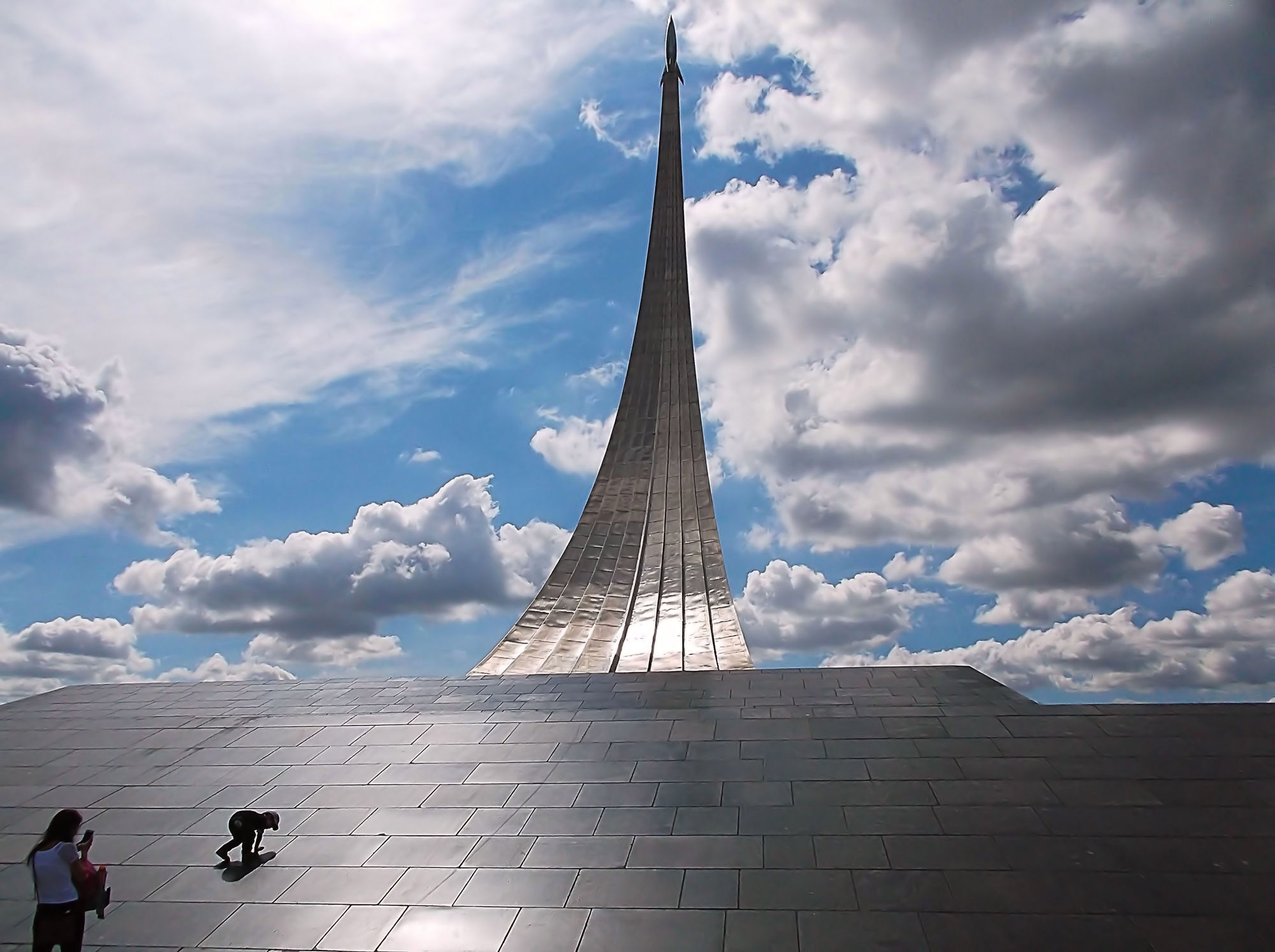
Examples of monuments that align with progressive values do exist in Russia. These include, for instance, the “Conquerors of Space” monument, opened in the Ostankino District of Moscow in 1964. The monument “Children Are the Victims of Adult Vices” in Moscow also carries high artistic and progressive value. Monuments such as the Statue of Liberty in New York, the Memorial to the Murdered Jews of Europe in Berlin, or the Atomium in Brussels rank among the best examples of progressive monumental art. It is precisely such monuments that a social democratic government should create.
The Mausoleum
One of the most sensitive topics for discussion in Russia is the fate of Vladimir Lenin’s mausoleum on Red Square and the leader’s body. Discussions about reburying the leader of the Communist Party constantly surface in society; according to VTsIOM polls in 2017, 38% of Russians believed that having Lenin’s body in the heart of the country is wrong and unnatural, and 63% were in favor of burying him16. At the same time, one of the leaders of the Bolshevik party, Leon Trotsky, called the mausoleum “unworthy and offensive to the revolutionary consciousness”17, and Lenin’s wife, Nadezhda Krupskaya, wrote to Varvara Armand in 1924: “When the project to bury V.I. in the Kremlin arose, I was terribly indignant — he should have been buried with his comrades; let them lie together under the Red Wall”18. Kliment Voroshilov expressed the following opinion on this: “The peasants will understand it in their own way: they say, ‘They destroyed our gods, sent Central Committee workers to smash relics, but created their own relics'”19.
I have a great request to you: do not let your grief for Ilyich turn into external veneration of his personality. Do not organize monuments to him, palaces in his name, pompous celebrations in his memory, etc. – he attached so little importance to all this during his life, and was so burdened by all of it. Remember – there is still so much poverty and disorder in our country20.

In general, the presence of Lenin’s body in the mausoleum constitutes an almost religious cult, which contradicts the Marxist theory that the Chairman of the Council of People’s Commissars himself considered himself a supporter of. Coupled with the words of his wife, this is a significant argument to transfer the body from the mausoleum to a historical museum (either in the form of an urn with ashes or in an embalmed state — depending on what is more economically viable) — that way, it will lose its sacredness. The mausoleum itself should be left in its current location within the architectural complex.
Museums
Today, a huge number of politicized museums remain in the country. The collections of those dedicated to political figures could be merged with the collections of larger historical museums. Those museums that have the lowest attendance and are of no interest to people (primarily those that shape a militaristic and nationalist consciousness) should also be closed, and their collections moved to larger museums that are suitable in profile. The country’s museum system should primarily not fulfill an ideological function, but learn to synthesize entertainment and education, making the museum not a boring place, but one that even young people want to visit. Since museums like the Museum of the Great Patriotic War in Moscow represent high cultural value and their closure is impossible (perhaps only renaming it to the Museum of the Second World War and “cleansing” the exhibition of imperial omissions), a social democratic government would be obligated to create counterweights to such museums — for example, large scientific and technical museums.
Opening of archives
Today, many Russian archives remain closed to a wide range of citizens. For example, the FSB states that there are documents in their archives whose contents will never be declassified, and if necessary, the archives will be destroyed21. The Ministry of Defense archive is closed. Personal collections in any archives are closed. Researchers may be denied access under the pretext of preserving personal privacy or due to ongoing secret storage periods (50-75 years, for example).
As a result of this, citizens are deprived of a full and adequate view of the country’s history, without embellishments. Being forced to have a view that is not entirely adequate, they draw conclusions about historical experience and political forces based on it. From a social democratic perspective, the maximum possible portion of the archives should be declassified and opened, and the data from them published. No matter how terrible the truth hidden behind them may be, it will be better for the entire society to learn it sooner rather than later. For some archives that may pose a danger to people’s lives (for example, relatives of the repressed may want to take revenge on the relatives of those who carried out the repressions and who have no relation to the crimes committed), it is permissible to create limited access — that is, only for historians with a scientific degree under their personal responsibility.
Scientific history
Based on open archives, it will be possible to create a scientific history of the country and the world that would allow for an objective assessment of historical experience and maximize its benefits. Currently, the history of Russia is highly mythologized — for example, history textbooks usually present Alexander Nevsky as a fighter against the crusade into Rus, yet historians have not been able to find any papal bull testifying to calls for an invasion of the northwestern Russian principalities22, and the scale of the “Battle on the Ice” has been significantly exaggerated23. “Logika Progressa” (Logic of Progress) even contains entire sections with a Stalinist legendarium and a conservative legendarium. This mythologization does not allow a person to acquire useful experience and strips history of its meaning. State schools should use a single textbook developed by the Russian Academy of Sciences (RAS), and the content of this textbook should be the subject of public discussion and revised as necessary. Then citizens will be able to draw the correct conclusions from history, apply them in practice, and thus increase the efficiency of the country’s economic and political system.
In the Soviet era, a huge number of books were created that disseminated disinformation and were products of the KGB’s Fifth Directorate (for example, books such as “CIA against the USSR”). They continued to be created even after the collapse of the Soviet Union. The goal of these books was to spread the theses of statism and manipulate people’s consciousness in the interests of the statists. It is necessary to get rid of these books. A campaign should be conducted with an initiative to exchange all Soviet and Russian books of a non-scientific nature for new ones. Such a campaign must be accompanied by appropriate information support. Such literature should also be replaced in libraries and bookstores. It is necessary to establish a commission to investigate the falsifications of history and disinformation campaigns conducted by authoritarian regimes in Russia, as well as to ensure broad publicity for the results of these investigations.
Education reform
Russian education today is not considered one of the worst, but it cannot be called exemplary either. In 2020, according to Rostrud, only 27% of respondents reported that their current job fully corresponds to their field of education24. A study by the Rabota.ru service and the Rambler portal in the same year reported a figure of 36%25. The NCEE did not include Russia in the list of 10 countries to emulate in education26. According to the Universitas 21 study, Russia’s higher education ranks 35th in the world in quality27, lagging behind South Africa and Hungary. As we mentioned in the article on the propaganda machine, Russian education is geared towards forming conservative values.
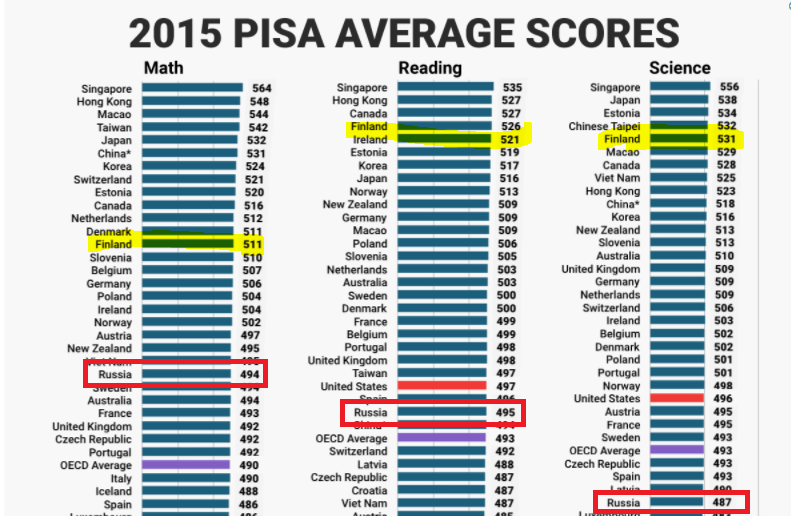
The list of subjects taught, educational standards, and the teaching system should be revised — we will examine the main aspects of education reform in the future. The education system should provide knowledge on how to find a job, how the country’s political system works and how to participate in it, about the country’s laws, and how to protect one’s rights.
The English-speaking community is heavily influenced by dictionaries like Merriam-Webster and encyclopedias like Britannica. They allow society to find consensus in definitions and facilitate scientific work, as researchers have something to refer to. A researcher knows that they do not need to spend time finding a definition of a term, as the largest dictionary already contains definitions that are recognized by the scientific community as generally accepted. This saves the researcher’s time and allows them to concentrate on discovering new information. For this reason, a social democratic state must provide support for an authoritative and major dictionary and an all-Russian encyclopedia (a similar project already exists — this is the Great Russian Encyclopedia).
Judicial proceedings
Based on disclosed archival materials, judicial proceedings should be conducted against historical figures, organizations, and regimes that grossly violated human rights in Russia. We can already be certain that Joseph Stalin and the regime he created will be among them. This man should be officially equated with mass murderers and maniacs (we have already written, for example, about his mass extermination of his own communist party comrades and that it was he who played a key role in organizing these killings). In the event that the nomenklatura does not agree to a Voluntary Lustration Agreement (which we described in the article on the nomenklatura lustration program), the FSB and those key individuals in power structures who made decisions involving human rights violations should also be subject to trial. If such an agreement is concluded, these people and organizations deserve forgiveness for the initiative they showed, which would prove their lack of malice. The Stalinist regime itself should be put on trial, like the Nazi regime at the Nuremberg Trials, and should be officially condemned and recognized as criminal.
Reorganization of intelligence services
One of the most powerful organizations not only in the entire post-Soviet space but in the world is the FSB. We will provide justifications for the dangers of this situation later in separate materials. There are also grounds to believe that the FSB is one of the key disseminators of conservative ideologies. For example, Ion Mihai Pacepa wrote about its predecessor (the KGB) that “the first major disinformation task for the Securitate in the new World War III was to help Moscow ignite anti-Semitism in Western Europe by distributing thousands of copies of the old Russian forgery, ‘The Protocols of the Elders of Zion,’ in that part of the world”28. A large amount of disinformation from Russian media is still being exposed today29. De-conservatization implies the reorganization of intelligence services, lustration of those whose involvement in crimes is proven, the opening of archives, and the complete replacement of this department with several new ones with reduced powers and functions (for example, in the USA, the CIA and FBI are not one organization, which ensures greater democracy and creates mutual control).
Dissolution of pro-Kremlin parties and media
The parliamentary parties of modern Russia have completely discredited themselves: in fact, they are not political parties but clubs of careerists using political institutions for profit. Parties such as “United Russia”, the LDPR, the CPRF, and “A Just Russia” should be dissolved, and their leadership should be temporarily deprived of political rights (voting, participating in political activities, working or writing in mass media). Thus, we will not affect rank-and-file members, among whom there are many decent people, but we will neutralize those who pose a danger and create conditions for the formation of new, healthy political forces. We have already written that social democrats will facilitate the process of creating new political parties, and after the dissolution of the old ones, they will be immediately established. Most likely, they will be created on the basis of the member parties of the broad opposition coalition.
Similar action should be taken regarding the regime’s propagandists. The management of propagandistic nomenklatura media should be dismissed and temporarily deprived of political rights. If a Voluntary Lustration Agreement is not concluded, the most malicious of the propagandists and pro-Kremlin politicians must face a tribunal.
Release of political prisoners
In 2020, there were 308 political prisoners in Russia30. The rise of social democrats to power means not only a review of the cases of those “prisoners of conscience” whose only fault lies in their political position but also a review of the results of earlier cases. This does not mean that social democrats will release radical extremists or those who used violence. Each case will be considered individually. At the time of writing, political prisoners include, for example, Alexei Navalny31 and Nikolai Platoshkin32 — one of the goals of de-conservatization is to free people like them. Those who, for example, are involved in the murder of political prisoner Sergei Magnitsky must face punishment.
Replacing the conscript army with a professional one
The modern Russian army is part of the propaganda machine; it exhibits elements of violence, coercion, and the promotion of conservative values. Most people do not want to go there, yet they are forced to do so against their will. As a result of serving in certain types of troops, many are deprived of the opportunity to travel abroad. The senseless and merciless service in the Russian army was satirized in the film “DMB”.
From a social democratic perspective, since citizens pay taxes, they should have the opportunity to avoid the unwanted loss of a year of life in the army. They should not be forced into being brainwashed by militaristic propaganda. Therefore, the transition of the army to a professional basis is an important constituent part of de-conservatization.
Protection of LGBTQ+ rights
We wrote a separate article on the topic of why homophobia is harmful, hinders the development of society, and prevents an increase in its welfare. Social democrats will reduce the level of homophobia, ensure equal rights for LGBTQ+ people with representatives of traditional sexual orientation, and protect these rights. A list of necessary measures also requires a separate article; however, it can already be asserted that people should be granted the right to enter into same-sex marriages, the right to adoption by such couples, LGBTQ+ people should be included in Article 282 as a social group, and the law on “homosexual propaganda” must be repealed (those who believe that this law is not absurd thereby admit that they could change their orientation as a result of exposure to propaganda).
Gender equality
Social democrats will also be obliged to ensure equality between sexes and genders. For example, in modern Russia, both men and women are discriminated against on the basis of gender. Men, unlike women, are required to undergo military service and are not exempt from the death penalty33 or life imprisonment34, and so on. Women, meanwhile, suffer more from a lack of protection against domestic violence35, they are denied service in the army under a contract on the basis of their gender36, and so on.
The task of social democrats is to gradually remove discrimination in restrictions and pursue a policy that ensures real equality and equal opportunities for all sexes and genders. Social democrats will be supported in this by progressive masculists and feminists, whose demands will guide the actions of social democrats in the field of de-conservatization.
Relationship standards
Modernity creates a new problem in the field of human relationships — for example, relationships between the sexes. The lack of standards and regulation leads to misunderstandings in relationships between the sexes, false hopes, and the emergence of toxic situations. In new conditions, it is not always clear, for example, who should pay for whom in a restaurant and under what conditions, in what situation it is appropriate for a man to support a woman, and so on. Conservatives, as a rule, try to impose a patriarchal model where a woman is financially dependent on a man, which most often leads to the oppression of women by men — through beatings, infidelity, coercion, and so on (and divorce is often fraught with difficulties for the woman in her future life arrangements). An optional but regulatory code of relationships, where such situations are examined and various models are proposed that would suit the majority of citizens, can help in eliminating these problems and avoiding the commercialization of relationships.
In addition, many parents are unaware of what behavior can traumatize a child’s psyche or give them complexes. In Russia, it is not uncommon to see mothers screaming at their child, reprimanding them for any display of individuality. Often, parents have scandals in front of the child. None of this contributes to their development as a healthy individual. From our point of view, it could be useful to develop universal recommended standards regulating the relationship between parents and their child. Such recommendations could be drawn up by a scientific commission composed of authoritative specialists in psychology and pedagogy.
Popularization of the English language
We have already noted that a large part of humanity’s knowledge is concentrated in literature written in English. For example, many important facts that exist in English do not exist in Russian, and this complicates the familiarization of the general public with them. As of the beginning of 2021, there is not even a full translation of Viktor Kravchenko’s book “I Chose Freedom” in Russian, and Sergei Guriev and Daniel Treisman’s work “A Theory of Informational Autocracy” does not exist in Russian37. If even the works of some Russian-speaking authors exist only in English, one can imagine what volumes of information written by other researchers Russian-speaking readers are deprived of. Scientists and researchers around the world publish their data in English, and we will significantly raise the level of education and access to knowledge among our citizens (and, as a consequence, the level of well-being) if their knowledge of the English language is at a high level. For this reason, our program on the national question implies a gradual transition to the English language in the future, which was written about in more detail in the relevant material, the link to which was provided above.
Until this transition is completed, the social democratic government will accelerate the translation of foreign sources into Russian and maximize mass access to information.
Creation of progressive Think Tanks
Just as conservatives create their own Think Tanks (an institution, corporation, or group organized to study a specific subject — such as a political issue or scientific problem — and provide information, ideas, and recommendations38), social democrats should create and support their own. Progressive Think Tanks will wage an ideological struggle against conservative ones, conduct fact-checking of various types of information, expose attempts at deception and manipulation of citizens, reveal and deconstruct those who make these attempts, fight against conspiracy theories, and promote scientific thinking. At least one such Think Tank already exists (you are reading it at this moment).
Conclusion
The entire complex of the above-mentioned measures represents de-conservatization. These measures are intended to bring society closer to the highest level of realization of progressive values and to significantly increase well-being, the standard of living, and freedoms. Not all de-conservatization measures can be implemented instantly — some of them will be implemented gradually. They will obviously meet with fierce resistance from fundamentalists, supporters of “spiritual bonds”, and other conservatives, so social democrats should act together with their allies and contribute to their strengthening.
- Igor Gulin. History in deletions // Kommersant (www.kommersant.ru). April 13, 2012. [Electronic resource]. URL: https://www.kommersant.ru/doc/1908499 (Date of access: 09.05.2021).
- Online voting for the monument on Lubyanka Square completed – 55% of participants voted for Alexander Nevsky // TASS (tass.ru). February 26, 2021, 20:53. [Electronic resource]. URL: https://tass.ru/obschestvo/10794399 (Date of access: 09.05.2021).
- The ROC explained why they advocate for a monument to Nevsky on Lubyanka // RIA Novosti (ria.ru). February 26, 2021, 12:51. [Electronic resource]. URL: https://ria.ru/20210226/nevskiy-1599077082.html (Date of access: 09.05.2021).
- Alexander Nevsky or Dzerzhinsky: make a choice between God and the devil // Orthodox portal “Jesus” (jesus-portal.ru). February 26, 2021. [Electronic resource]. URL: https://jesus-portal.ru/life/video/obrascheniya-mitropolita-ilariona/aleksandr-nevskiy-ili-dzerzhinskiy/ (Date of access: 09.05.2021).
- Sergey Sobyanin. On the monument on Lubyanka // Sergey Sobyanin’s website (www.sobyanin.ru). February 26, 2021, 20:30. [Electronic resource]. URL: https://www.sobyanin.ru/o-pamyatnike-na-lubyanke (Date of access: 09.05.2021).
- V.A. Ivanov, A.I. Kortunov, V.A. Poltanov. State Symbols of the Russian Federation [Text] / V.A. Ivanov, A.I. Kortunov, V.A. Poltanov. – 93 p. – Ufa, 2016.
- Valery Shiryaev. There are 27 Stalin streets in Russia! // Novaya Gazeta (novayagazeta.ru). October 30, 2020, 19:01. [Electronic resource]. URL: https://novayagazeta.ru/articles/2020/10/30/87774-v-rossii-27-ulits-stalina (Date of access: 09.05.2021).
- Boris Gi. We live on Lenin Street // Boris Gi (borisgi.ru). September 10, 2020. [Electronic resource]. URL: https://borisgi.ru/lenin_2020/ (Date of access: 09.05.2021).
- Decree of the Presidium of the Supreme Soviet of the USSR of April 26, 1965 “On declaring May 9 a non-working day”
- History of the Victory Parades on Red Square // TASS (tass.ru). June 24, 2020, 7:00. [Electronic resource]. URL: https://tass.ru/info/8799005 (Date of access: 20.05.2021).
- Ibid.
- Where in Russia is there no Lenin? A study on streets and monuments in honor of the leader // Strelka Mag (strelkamag.com/ru). October 22, 2020. [Electronic resource]. URL: https://strelkamag.com/ru/article/gde-v-rossii-net-ulicy-lenina (Date of access: 09.05.2021).
- Muzeon — a modern art center in Moscow // Portal about Moscow Moscow-Russia (moscow-russia.ru). [Electronic resource]. URL: http://moscow-russia.ru/park-iskusstv-moskovskogo-obedineniya/ (Date of access: 09.05.2021).
- Kirill Bulanov. Putin at the unveiling of the Vladimir monument reminded of modern threats // RBC (www.rbc.ru). November 4, 2016, 13:32. [Electronic resource]. URL: https://www.rbc.ru/politics/04/11/2016/581c61a49a794740ee5dee98 (Date of access: 09.05.2021).
- Elena Yakovleva. A monument to Patriarch Hermogenes was opened in Moscow // Rossiyskaya Gazeta (rg.ru). May 27, 2013, 00:24. [Electronic resource]. URL: https://rg.ru/2013/05/25/pamyatnik-site.html (Date of access: 09.05.2021).
- VTsIOM: Russians’ attitude toward proposals to dismantle Lenin’s Mausoleum // Parlamentskaya Gazeta (www.pnp.ru). April 21, 2017, 14:12. [Electronic resource]. URL: https://www.pnp.ru/russia-today/vciom-otnoshenie-rossiyan-k-predlozheniyam-demontazha-mavzoleya-lenina.html (Date of access: 09.05.2021).
- L.D. Trotsky. My Life: An Attempt at an Autobiography. Vols. 1-2. – 624 p. – M.: Panorama, 1991. – p. 488.
- Zenkovich M. A. Collected Works. – SPb.: OLMA-PRESS, 2004. – Vol. 5. – 639 p.
- Yury Borisyonok, Sergey Devyatov, Valentin Zhilyaev, Olga Kaykova. NEPmen helped build the first Mausoleum. Many interesting facts about the tomb of the leader of the revolution remain in the historical shadow // Rossiyskaya Gazeta (rg.ru). April 1, 2020, 14:55. [Electronic resource]. URL: https://rg.ru/2020/04/13/rodina-pervyj-mavzolej-dlia-lenina-pomogali-stroit-nepmany.html (Date of access: 09.05.2021).
- Zenkovich M. A. Collected Works. – SPb.: OLMA-PRESS, 2004. – Vol. 5. – 639 p.
- Natalya Nikulina. The special storage will not give up secrets // FSB of the Russian Federation (www.fsb.ru). April 11, 1997. [Electronic resource]. URL: http://www.fsb.ru/fsb/smi/interview/single.htm%21id%3D10342762%40fsbSmi.html (date of access: 19.11.2020).
- Maria Molchanova. Alexander Nevsky: fiction and facts // Diletant (diletant.media). September 26, 2018. [Electronic resource]. URL: https://diletant.media/articles/43674412/ (Date of access: 09.05.2021).
- Kristina Nedkova. Long ago and untrue: Myths about the Battle on the Ice // TASS (tass.ru). [Electronic resource]. URL: https://tass.ru/spec/ledovoe (Date of access: 09.05.2021).
- Rostrud learned how many Russians work in their field // RIA Novosti (ria.ru). June 07, 2017, 10:46. [Electronic resource]. URL: https://ria.ru/20170607/1495988368.html (Date of access: 09.05.2021).
- The share of Russians working in their field has been determined // Lenta.ru (lenta.ru). September 10, 2020, 07:48. [Electronic resource]. URL: https://lenta.ru/news/2020/09/10/u4is_rabotai/ (Date of access: 09.05.2021).
- Top Performing Countries // National Center on Education and the Economy (ncee.org). [Electronic resource]. URL: https://ncee.org/center-on-international-education-benchmarking/top-performing-countries/ (Date of access: 09.05.2021).
- U21 Ranking of National Higher Education Systems 2020 // Universitas 21 (universitas21.com). [Electronic resource]. URL: https://universitas21.com/sites/default/files/2020-04/U21_Rankings%20Report_0320_Final_LR%20Single.pdf (Date of access: 09.05.2021).
- Ion Mihai Pacepa, Ronald Rychlak. Disinformation: Former Spy Chief Reveals Secret Strategies for Undermining Freedom, Attacking Religion, and Promoting Terrorism. – 576 p. – M.: Eksmo, 2016.
- EU vs DISINFORMATION (euvsdisinfo.eu). [Electronic resource]. URL: https://euvsdisinfo.eu/disinformation-cases/ (Date of access: 20.05.2021).
- Political repression and political prisoners in Russia in 2018-2019 (ed. Sergey Davidis). [Electronic resource]. URL: https://memohrc.org/sites/all/themes/memo/templates/pdf.php?pdf=/sites/default/files/doklad_2018-2019_0.pdf (Date of access: 20.05.2021).
- Elizaveta Fokht. Court upholds verdict against Navalny in veteran defamation case // BBC News (www.bbc.com). April 29, 2021. [Electronic resource]. URL: https://www.bbc.com/russian/news-56926168 (Date of access: 09.05.2021).
- Amnesty International recognizes Russian politician Nikolai Platoshkin as a prisoner of conscience // Amnesty International in Eastern Europe and Central Asia (eurasia.amnesty.org). June 15, 2020, 15:10. [Electronic resource]. URL: https://eurasia.amnesty.org/2020/06/15/amnesty-international-priznala-rossijskogo-politika-nikolaya-platoshkina-uznikom-sovesti/ (Date of access: 09.05.2021).
- Article 59 of the Criminal Code of the Russian Federation
- Article 57 of the Criminal Code of the Russian Federation
- Lyubov Stepushova. Violence against women. There is no data for Russia // Pravda.Ru (www.pravda.ru). March 21, 2013, 10:58. [Electronic resource]. URL: https://www.pravda.ru/society/1149289-nasilie/ (Date of access: 09.05.2021).
- Maria Shesterikova. “They are future mothers!”: the military commissariat of the Samara Region explained why they do not take girls into the army // Komsomolskaya Pravda (www.samara.kp.ru). August 22, 2018, 12:46. [Electronic resource]. URL: https://www.samara.kp.ru/online/news/3212306/ (Date of access: 09.05.2021).
- Sergei Guriev, Daniel Treisman. A Theory of Informational Autocracy // SSRN (www.ssrn.com). July 26, 2019. [Electronic resource]. URL: https://papers.ssrn.com/sol3/papers.cfm?abstract_id=3426238 (Date of access: 09.05.2021).
- Think tanks: role in the modern world, spread and influence // Platform XXI (platformaxxi.org). January 30, 2018. [Electronic resource]. URL: http://platformaxxi.org/2018/01/30/think-tanks/ (Date of access: 09.05.2021).